Is NaOH Soluble in Water? – Explanation on NaOH in Water
This post showcased the topic “Is NaOH soluble in water” by introducing what sodium hydroxide (NaOH) is, what it is commonly used for, the soft caution of using it, and how it works, especially with water. At the same time, this post illustrated the effect of NaOH and some safety precautions of using this compound.
What is NaOH?
We must have a general idea of NaOH before asking, “Is NaOH soluble in water.”
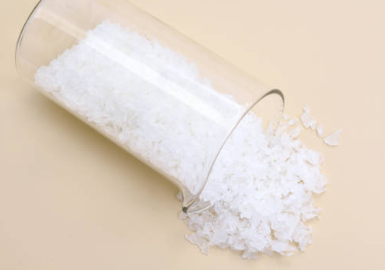
Sodium hydroxide, with the symbol NaOH, also called caustic soda or lye, is a chemical compound containing the cation sodium (Na+) and the anion hydroxide (OH-). It is solid, crystalline, white, and with no smell at room temperature, and it is not toxic to humans but highly corrosive, with the possibility to cause severe burns on all kinds of tissues, including animal and vegetable.
Sodium hydroxide is manufactured through the chloralkali process, which involves the electrolysis of an aqueous solution of sodium chloride. The sodium is reacted with water before creating NaOH. The total world production reached 45m tones already in 1998, while Asia manufactured around 14m tons and Europe around 10m.
The common use of NaOH
With its corrosive feature, sodium hydroxide is commonly applied in the industrial field. It produces many daily commodities, including cleaning products like soap, commercial cleaners and detergents; paper; aluminum, etc.
Besides everyday commodities, Hydro dioxide is also used to produce fuel cells, the essential material for electricity production, the crucial thing of modern, powering all applications to all daily operations.
Moreover, sodium hydroxide is also used to manufacture various medicines, with other pharmaceutical products, commonly used drugs such as aspirin, anticoagulants, and those cholesterol-controlling medications.
Apart from the above, NaOH is also applied to remove heavy metals in the water by producing a kind of water disinfectant, sodium hypochlorite.
Sodium Hydroxide is also used in food products, making some kinds of industrially manufactured food crispy and crunchy.
Safety caution of using NaOH
As common as it is applied, sodium hydroxide is still hazardous to people; various safety training and strong caution and awareness should be held. Sodium hydroxide is also called caustic soda; its solution is exceptionally corrosive with a solid base. It is known for its ability to cause severe chemical burns. This could answer the question, “Is NaOH soluble in water” as it is often transferred in liquid form. The following will explain how NaOH works and how NaOH is soluble in water.
How does NaOH work?
As explained above, sodium hydroxide solution is highly corrosive, but it is transferred in liquid form, which could be seen that sodium hydroxide is soluble in water. But how does it work? Sodium hydroxide is a caustic metallic base; it quickly absorbs moisture in the air. Sodium hydroxide is a caustic metallic base. As explained above, it will form a solid alkaline solution when it meets water and dissolves. NaOH absorbs moisture in the air until it dissolves. When it meets water, it will dissolve into Na+ and OH- ions and be exothermic; heat will be released, causing the corrosiveness. However, sodium hydroxide will no longer be soluble when the liquid is saturated with Na+ and OH-.
Sodium hydroxide attracts water in the surrounding very quickly; it is hygroscopic. It might cause an explosion when sodium hydroxide meets water, creating a tremendous amount of heat, and is highly acidic.
Sodium hydroxide could be kept in an aqueous solution, which is the liquid form, which means that the question “Is NaOH soluble in water” is obvious. It is soluble and will react with water strongly.
Conclusion:
To sum it up, it can be seen from above that we have a positive answer to the question, “Is NaOH soluble in water.” Sodium hydroxide is soluble in water; it can be seen from its fundamental nature, application, safety caution, and how it works. It readily reacts with water or moisture surrounding it and dissolves, creating massive heat. However, it might not be soluble if the liquid is saturated with Na+ and OH-. It reacts with water, forming discrete aquated ions; such a reaction will create great heat as bonds form between the water solvent and the individual ions.
Looking for chemical products? Let suppliers reach out to you!
You May Interested In


Glow70/KLOW80 99% China Peptides Warehouse Direct Delivery Lyophilized Powder in Stock
$1.8E+2/UNIT FOB


2026-08-27
Trade Alert
Delivering the latest product trends and industry news straight to your inbox.
(We'll never share your email address with a third-party.)

Related News
-
Applications of Caesium Iodide
-
Applications and Safety of Sodium Dichromate
-
Uses and Benefits of Sodium Selenite
-
Uses and Properties of Copper Acetate
-
Calcium Sulfate: Properties, Construction Applications & Safety Tips
-
Polyvinyl Acetate Uses: Adhesives, Industrial Applications & Safety
-
Potassium Bicarbonate Uses: Baking, Industrial Applications & Tips
-
Isoascorbic Acid: Uses and Safety
-
Sodium Alginate: Properties, Uses, and Benefits
-
Understanding PCl5: Compound Name and Uses
Recommend Reading
-
![Sulfur Hexafluoride (SF6): Applications and Safety]()
Sulfur Hexafluoride (SF6): Applications and Safety
-
![Potassium Sorbate in Food: Safety, Uses, and Alternatives]()
Potassium Sorbate in Food: Safety, Uses, and Alternatives
-
![Polyvinyl Alcohol (PVA): Properties, Uses, and Industrial Applications]()
Polyvinyl Alcohol (PVA): Properties, Uses, and Industrial Applications
-
![Sulfuric Acid Reactions: With Sugar (Dehydration), Water, and Metals]()
Sulfuric Acid Reactions: With Sugar (Dehydration), Water, and Metals
-
![What is Serine? (Amino Acid Function & Sources)]()
What is Serine? (Amino Acid Function & Sources)
-
![Geopolitical Deadlock and Tightening Inventories Drive Crude Oil Prices Higher on Friday]()
Geopolitical Deadlock and Tightening Inventories Drive Crude Oil Prices Higher on Friday
-
![Short-term correction in lithium carbonate, medium to long-term logic remains unchanged]()
Short-term correction in lithium carbonate, medium to long-term logic remains unchanged
-
![Formic Acid Moving Averages Set to Cross Upward—Rising Trend May Be About to Begin]()
Formic Acid Moving Averages Set to Cross Upward—Rising Trend May Be About to Begin
-
![China’s Marine Fuel Market in May Experiences Volatile Downward Trends]()
China’s Marine Fuel Market in May Experiences Volatile Downward Trends
-
![Multiple Positive Factors Drive Significant Increase in MTBE Market in China]()
Multiple Positive Factors Drive Significant Increase in MTBE Market in China