Unilever's Bold Move: Shifting the Paradigm in Ice Cream Storage
Unilever, the global giant behind popular brands like Magnum, Wall's, and Ben & Jerry's, is spearheading a significant transformation in the ice cream industry. Focused on environmental sustainability and cost efficiency, Unilever is reformulating its ice creams to withstand higher temperatures, challenging competitors to join this eco-friendly revolution.

The Magnum, Wal's and Ben & Jerry's owner is reformulating its products to withstand warmer temperatures, and wants others in the industry to do the same.
lmage credit: Unilever
Traditionally, the ice cream industry adheres to a standard freezer temperature of -18°C. Unilever, with its extensive network of nearly three million ice cream cabinets globally, is addressing the environmental impact of these cabinets. Approximately 20% of Unilever's greenhouse gas emissions are attributed to ice cream, with half of that stemming from energy-intensive -18°C freezers.
Committed to achieving net-zero emissions across its value chain by 2039, Unilever is raising the temperature of its freezers from -18°C to -12°C. This shift not only aligns with sustainability goals but also offers economic advantages in terms of reduced energy consumption and prolonged freezer lifespan.
To facilitate this transition, Unilever is encouraging reformulation within the industry. The company is providing a free non-exclusive license for 12 reformulation patents, motivating competitors to adjust their formulations to handle warmer temperatures effectively.
The key to successful reformulation lies in rebalancing ingredients to increase the ice content without compromising taste, flavor, or texture. Unilever emphasizes that maintaining the quality and eating experience is paramount during this process.
By collaborating with industry peers and partners, Unilever envisions a shift towards more energy-efficient freezer cabinets globally. The company's Chief R&D Officer for Ice Cream, Andy Sztehlo, highlights the importance of collective efforts in tackling emissions across the ice cream sector.
The move towards warmer freezers has undergone successful pilots in Germany, demonstrating a 25% reduction in energy consumption. Beyond the environmental benefits, warmer cabinets could potentially extend their lifespan, contributing to long-term sustainability.
Unilever's commitment to energy efficiency is not new. Initiatives dating back to 2008 have focused on transitioning to eco-friendly refrigerants, resulting in cabinets using over 40% less energy compared to 2008 levels.
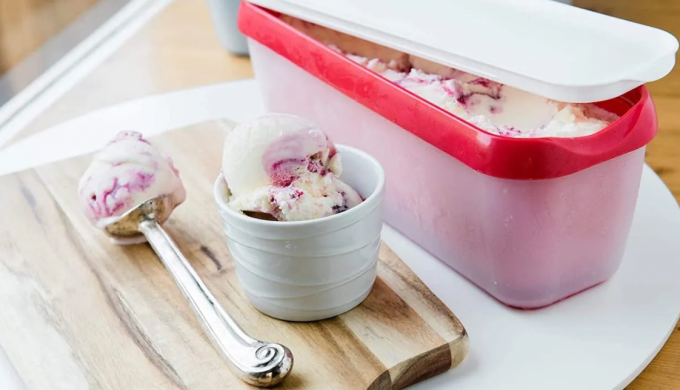
n the world of ice cream freezer cabinets, the industry standard temperature in many markets is-18C. Unilever owns close to three million ice cream cabinets, which it leases out to sellersworldwide.
The broader adoption of reformulated products by manufacturers using Unilever ice cream cabinets is expected to amplify cost and environmental savings. Collaborative efforts are deemed crucial to achieving Unilever's overarching goal of reducing the ice cream cold chain's impact on the environment while delivering high-quality products.
Unilever's sharing of reformulation patents is a strategic move aimed at fostering industry-wide collaboration. As Unilever spokesperson emphasizes, this initiative marks the beginning of a long-term program, highlighting the company's commitment to driving positive change in the ice cream sector.

You May Interested In


Glow70/KLOW80 99% China Peptides Warehouse Direct Delivery Lyophilized Powder in Stock
$169/UNIT FOB


2026-10-13
Trade Alert
Delivering the latest product trends and industry news straight to your inbox.
(We'll never share your email address with a third-party.)

Related News
-
Daiya Foods Embraces Dairy-like Culturing Methods As It Unleashes Reformulated Plant-based Cheese
-
Aquaculture Emerges as Leading Protein Growth Sector, Outpacing Beef and Pork in 2024
-
Surging Demand for High-Protein Products in the Middle East Amidst Active Nutrition and Healthy Aging Boom
-
Rheinland invested 148 million US dollars to build a plant and expand the production of sweeteners by 4,000 tons every year!
-
The steady growth in the Development Ansaimi, sucralose and steviol glycosides
-
Global Sweetener Innovation Trends
-
Global View of Sweetener Market Size
-
Celanese Sells 19% Nutrinova Stake for $152 Million; Mitsui & Co. Raises Holding to 89% to Complete Upstream Integration
-
Evonik Restructures Strategic R&D and Aims to Move Projects into Application Within Five Years
-
Zydus Brings the First Keytruda Biosimilar Showdown to North America
Recommend Reading
-
![Another Strategic Move! DuPont Launches a New Specialty Lubricants Project in Zhangjiagang]()
Another Strategic Move! DuPont Launches a New Specialty Lubricants Project in Zhangjiagang
-
![Europe’s Chemical Industry Sounds the “Shutdown Alarm”: It’s Not Just a Few Plants at Risk—The Entire Industrial Chain Is Shaking]()
Europe’s Chemical Industry Sounds the “Shutdown Alarm”: It’s Not Just a Few Plants at Risk—The Entire Industrial Chain Is Shaking
-
![Merck Establishes New Semiconductor Hub in Taiwan]()
Merck Establishes New Semiconductor Hub in Taiwan
-
![Eurofragance Opens New Creative Center in Jakarta to Expand Its Asian Footprint]()
Eurofragance Opens New Creative Center in Jakarta to Expand Its Asian Footprint
-
![“An €8 Billion Loss, Yet a 25% Price Hike”: Wacker Chemie’s Contradictory Crisis—Survival Move or Desperate Gamble?]()
“An €8 Billion Loss, Yet a 25% Price Hike”: Wacker Chemie’s Contradictory Crisis—Survival Move or Desperate Gamble?
-
![Business Society’s Market Outlook for Acrylonitrile on September 10, 2026: Clearly Downward]()
Business Society’s Market Outlook for Acrylonitrile on September 10, 2026: Clearly Downward
-
![Business Society October 10, 2026 PVC Trend Analysis: Slightly Bullish with Volatility]()
Business Society October 10, 2026 PVC Trend Analysis: Slightly Bullish with Volatility
-
![Business Society’s Trend Analysis for Propylene Oxide on September 16, 2026: Strong Consolidation (Bullish)]()
Business Society’s Trend Analysis for Propylene Oxide on September 16, 2026: Strong Consolidation (Bullish)
-
![What Color Should a Zinc-Copper Couple Be?]()
What Color Should a Zinc-Copper Couple Be?
-
![Premium Global Chemical Sourcing Requests (7-9Sep.,2026)]()
Premium Global Chemical Sourcing Requests (7-9Sep.,2026)