Why is the phenolphthalein used as an indicator in the titration between oxalic acid and sodium hydroxide?
Anyone who has ever tried to sweeten a cold drink knows the tiny frustration of watching sugar refuse to disappear. You stir and stir, but the crystals cling to the bottom or swirl around like they’re determined to stay visible. In everyday life, this is only a minor inconvenience. In a chemistry setting, though, knowing whether something is genuinely dissolved matters far more. A solution may look clear on the surface, but appearances can deceive. Being able to tell the difference between “still dissolving” and “fully dissolved” is a small skill that can save a lot of mistakes.
What It Actually Means for Something to Dissolve
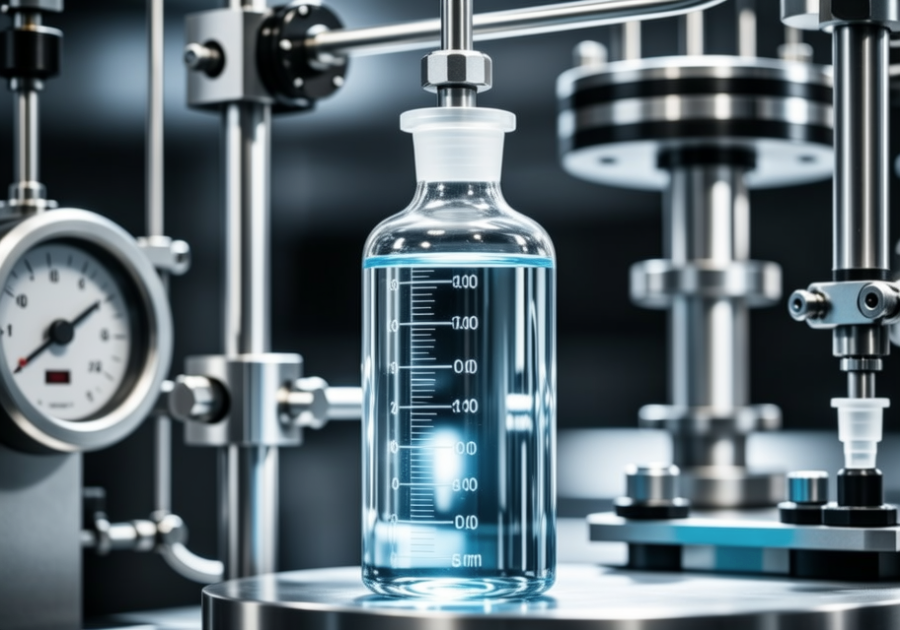
Dissolving is often described casually—people say the solid “disappears”—but nothing magical happens. The solid breaks down into its tiniest building blocks, and water molecules surround and separate those particles. Once everything is pulled apart and evenly dispersed, the mixture becomes a solution. The particles are there, but they’re far too small to see, and they no longer act like a solid. That’s why a proper solution looks just like plain liquid.
If even a little of the original solid remains clumped together, the job isn’t done. You’ll either see the particles floating around or eventually settling at the bottom.
The Visual Clue Most People Use
Our first instinct is to judge by clarity. A mixture that still looks cloudy usually hasn’t finished dissolving. Tiny suspended particles scatter light, giving the water a hazy appearance. As dissolving progresses, that haze fades until the liquid is transparent again.
But clarity alone can be misleading. Some substances appear to disappear long before the last bits actually break down. On the other hand, some dissolve so slowly that the liquid seems clear simply because the undissolved grains have sunk out of sight. A glance is a good start, but it’s rarely enough on its own.
Why Stirring Helps—And Why You Should Stop Stirring
Movement helps the water pull particles away from the solid’s surface, so stirring usually speeds things along. However, the real test begins once the stirring stops. If the liquid stays clear and calm, you’re probably getting close to complete dissolution. If particles begin drifting downward or forming a faint layer on the bottom, the process isn’t finished.
This is why students in labs are often told to “stir, then wait.” The waiting part reveals more than any amount of stirring can.
Temperature Can Change Everything
Temperature is one of the most overlooked factors. Warm water dissolves most solids far more effectively than cold water because its molecules move faster and interact more aggressively with the solid’s surface. A spoonful of sugar can sit stubbornly undissolved in iced tea for several minutes, but drop it into hot tea and it seems to melt away almost instantly.
If you’re struggling to dissolve something in cool water, the problem is probably not the technique but the temperature. Even a small increase in warmth can make a noticeable difference.
Revealing Hidden Undissolved Particles
Some solutions look clearer than they really are. A gentle swirl of the container is often enough to expose leftover grains that escaped your first inspection. If a swirl kicks up a soft cloud or brings specks drifting upward, there is still undissolved material hiding at the bottom.
This surprise is familiar to anyone who has tilted a beaker that appeared perfectly clear only to watch a pale cloud rise from below.
Knowing When the Water Has Reached Its Limit
Every substance has a maximum amount that water can hold, known as its solubility. Once this limit is reached, the solution becomes saturated. After that point, no amount of stirring or patience will help; any extra solid will remain at the bottom indefinitely.
Failing to recognize saturation is a common reason people think a solid “won’t dissolve” when, in reality, the water is simply full.
Color Can Help—Sometimes
Some materials offer a convenient visual clue. Copper salts, for example, turn water a bright blue when they dissolve. If the color spreads evenly with no streaks or darker spots, you’re usually safe to assume everything has dispersed properly.
Unfortunately, not all solids behave this way. Salt and sugar dissolve without any color changes, so relying on color only works with specific chemicals.
Tools Chemists Use When They Need Certainty
While most household tasks don’t require instruments, chemistry labs often do. A conductivity meter can tell whether ionic compounds have dissolved. A spectrophotometer can detect particles too small for the eye to notice. Turbidity meters measure cloudiness with precision. Even a simple filtration test can catch stubborn grains that refuse to dissolve.
These tools remove the guesswork when accuracy genuinely matters.
The Practical, Everyday Way to Know You’re Done
In non-lab situations, the signs of complete dissolution are simpler and easier to judge. A solid is fully dissolved when the liquid remains clear even after resting, nothing settles at the bottom, swirling doesn’t send hidden particles drifting upward, and the mixture behaves like one consistent, uniform liquid.
When all of these clues line up, you can trust that the solid is no longer acting like a solid at all—it has become part of the solution.
Looking for chemical products? Let suppliers reach out to you!
You May Interested In


Glow70/KLOW80 99% China Peptides Warehouse Direct Delivery Lyophilized Powder in Stock
$169/UNIT FOB


2026-10-23
Trade Alert
Delivering the latest product trends and industry news straight to your inbox.
(We'll never share your email address with a third-party.)

Related News
-
Chemical Properties and Uses of Tetraetil
-
Dimethyl Carbonate: Properties and Industrial Applications
-
Hydrobromic Acid: Properties, Uses, and Safety
-
Potassium Carbonate: Properties, Uses, and Applications
-
Sodium Metabisulfite: Properties, Uses, and Safety
-
Cocamidopropyl Betaine: Uses, Benefits, and Safety
-
PEG (Polyethylene Glycol): Uses in Pharma, Cosmetics, and PEGylation
-
What is HCO3? (Bicarbonate Ion Function & Normal Levels)
-
Bovine Serum Albumin (BSA): Role in Cell Culture & Laboratory Applications
-
Cytosine: Structure, DNA Pairing, and Role in Genetics
Recommend Reading
-
![Ethylene Glycol: Production, Uses, and Safety]()
Ethylene Glycol: Production, Uses, and Safety
-
![Fipronil: Uses, Safety, and Environmental Impact]()
Fipronil: Uses, Safety, and Environmental Impact
-
![Potassium Hydroxide (KOH): Soap Making, Batteries, and Safety]()
Potassium Hydroxide (KOH): Soap Making, Batteries, and Safety
-
![What is Amylum Starch? (Old Terminology & Modern Equivalent)]()
What is Amylum Starch? (Old Terminology & Modern Equivalent)
-
![What is Element Stibium? (Antimony Facts & Uses)]()
What is Element Stibium? (Antimony Facts & Uses)
-
![July China Marine Fuel Market Rises]()
July China Marine Fuel Market Rises
-
![July China Phenol Market Trended Upward with Fluctuations]()
July China Phenol Market Trended Upward with Fluctuations
-
![December’s Coking Coal Market Primarily Exhibits Weak Performance]()
December’s Coking Coal Market Primarily Exhibits Weak Performance
-
![In July, China's acetone market showed a strong reversal and upward trend]()
In July, China's acetone market showed a strong reversal and upward trend
-
![This Week’s Petrocoke Market Prices Rise]()
This Week’s Petrocoke Market Prices Rise