




Breakthrough Approval in China: Merck's PD-1 Inhibitor, Keytruda®, Granted New Indication for Combination Therapy in BTC
In a significant development for cancer treatment, Merck's PD-1 inhibitor, Keytruda® (pembrolizumab), has received approval from the National Medical Products Administration (NMPA) in China for a new indication. This breakthrough approval allows Keytruda® to be used in combination with gemcitabine and cisplatin as a first-line treatment for patients with locally advanced or metastatic biliary tract cancer (BTC). The decision is based on the compelling data from the global Phase III clinical trial, KEYNOTE-966.
Unmet Medical Need in BTC:
Biliary tract cancer is a malignant tumor that originates from the epithelial cells lining the bile duct. It is characterized by difficulties in early diagnosis, low curative resection rates, and high recurrence rates. Biliary tract cancer encompasses gallbladder cancer and intrahepatic and extrahepatic bile duct cancers. Among them, intrahepatic bile duct cancer is the second most common primary liver cancer, accounting for approximately 10% to 15% of all cases. The current treatment options for advanced BTC are limited, making this new approval for Keytruda® a significant advancement in the field.
The KEYNOTE-966 Clinical Trial:
The approval of Keytruda® for BTC was based on data from the KEYNOTE-966 Phase III clinical trial. This global study evaluated the efficacy and safety of Keytruda® in combination with gemcitabine and cisplatin compared to gemcitabine and cisplatin alone as a first-line treatment for locally advanced or metastatic BTC. The trial demonstrated promising results, showing that the combination therapy significantly improved progression-free survival and overall survival rates compared to the standard chemotherapy regimen alone.
Implications of the Approval:
The approval of Keytruda® for BTC marks a significant milestone in the treatment landscape for this challenging cancer type. By targeting the PD-1 pathway, Keytruda® unleashes the body's immune system to recognize and attack cancer cells in the biliary tract. This novel immunotherapy approach offers new hope to patients and opens up possibilities for improved outcomes and prolonged survival.
Future Perspectives:
The approval of Keytruda® for BTC in China not only provides patients with an additional treatment option but also underscores the growing importance of immunotherapy in the field of oncology. Further research and clinical trials are needed to explore the potential of combination therapies involving immunotherapeutic agents in BTC and other malignancies. Continued advancements in precision medicine and the identification of biomarkers will also contribute to tailoring treatment strategies to individual patients, maximizing therapeutic efficacy, and minimizing adverse effects.
Merck's Keytruda® has achieved a groundbreaking milestone with its approval for the treatment of locally advanced or metastatic BTC in China. This immunotherapy, in combination with gemcitabine and cisplatin, offers a new ray of hope for patients battling this challenging cancer type. The approval not only highlights the potential of immunotherapy in biliary tract cancer but also reinforces the importance of ongoing research and development in advancing cancer treatment options. As the field continues to evolve, it is expected that such innovative therapies will have a significant impact on improving patient outcomes and transforming the landscape of cancer care.

You May Interested In


Glow70/KLOW80 99% China Peptides Warehouse Direct Delivery Lyophilized Powder in Stock
$169/UNIT FOB


2026-10-16
Trade Alert
Delivering the latest product trends and industry news straight to your inbox.
(We'll never share your email address with a third-party.)

Related News
-
BASF India to Shut Two Dahej Care Chemicals Plants as Overcapacity Squeezes Margins
-
LANXESS Specialty Additives Earnings Jump 32.8%, but Chemical Demand Recovery Remains Elusive
-
BASF Brings Biomass-Balance Polyols to North America
-
Production Down 6%, Profits Cut by $3.7 Billion: Middle East Conflict Hits ExxonMobil Hard
-
Wanhua Chemical's Hungarian 650,000-ton MDI/TDI Plant to Shut Down for 35-Day Maintenance
-
Cipla CEO Calls Tirzepatide a High-Science Product with Strong Market Outlook
-
DyStar Becomes a Wholly-Owned Subsidiary of Zhejiang Longsheng Group, Ending Longstanding Shareholder Disputes with a $5 Billion Deal
-
Pfizer Seen Holding Strategic Edge in Bidding Battle for Metsera
-
Novo Nordisk Enters High-Stakes Bidding War with Pfizer for Metsera
-
Pfizer Sues Metsera and Novo Nordisk Over Rival Obesity Drug Strategy
Recommend Reading
-
![BASF Raises North American Nylon Products by $0.08/lb, Fourth Price Increase in Six Months]()
BASF Raises North American Nylon Products by $0.08/lb, Fourth Price Increase in Six Months
-
![Middle East Conflict Pushes Up Costs as Dow Warns the Chemical Industry Faces a Tougher Period]()
Middle East Conflict Pushes Up Costs as Dow Warns the Chemical Industry Faces a Tougher Period
-
![Hengli Petrochemical’s Dalian Refinery Sanctioned by the U.S.]()
Hengli Petrochemical’s Dalian Refinery Sanctioned by the U.S.
-
![BASF Partners with Sinopec to Accelerate Application of Biomethane at Nanjing]()
BASF Partners with Sinopec to Accelerate Application of Biomethane at Nanjing
-
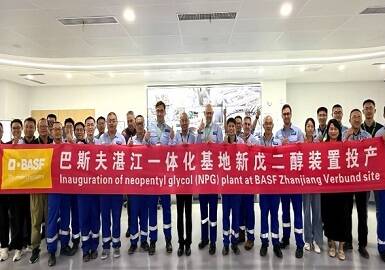
![BASF’s Zhanjiang Integrated Site Commissions New Neopentyl Glycol (NPG) Unit]()
BASF’s Zhanjiang Integrated Site Commissions New Neopentyl Glycol (NPG) Unit
-
![In April, the Chinese urea market maintained a strong performance]()
In April, the Chinese urea market maintained a strong performance
-
![Business Society’s Market Outlook for Melamine on August 19, 2026: Fluctuating Trend]()
Business Society’s Market Outlook for Melamine on August 19, 2026: Fluctuating Trend
-
![In April, China's titanium dioxide market price increased by 23.6%]()
In April, China's titanium dioxide market price increased by 23.6%
-
![Weakening Costs + Sluggish Demand: Melamine Market Prices Fluctuate and Decline]()
Weakening Costs + Sluggish Demand: Melamine Market Prices Fluctuate and Decline
-
![Business Society’s BDO Market Outlook on August 18, 2026: Clearly Upward]()
Business Society’s BDO Market Outlook on August 18, 2026: Clearly Upward





- Hot Searches
- chemical suppliers & distributors
- chlorfenapyr insecticide
- pvc resin price
- retrateutide
- na 931 buy online
- ammonium sulphate crystalline
- where to buy sodium nitrite
- gasul price now
- caustic soda pearls supplier
- glp-1 retatrutide where to buy
- aluminum chlroide
- where can you buy sulfur hexafluoride