What Happens When Salt Is Heated Without Any Additives?
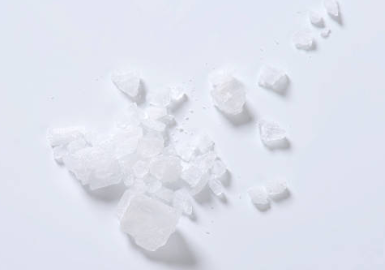
Salt, or sodium chloride (NaCl), does melt when heated—but only at temperatures far above those found in everyday cooking. Ordinary table salt remains solid at stovetop or oven temperatures, but will turn into a liquid if it’s heated above 801°C (1474°F), which is well beyond most household appliances. This property is essential in understanding how salt behaves both in the kitchen and in industrial processes.
What Happens to Salt When It's Heated?
When heated, the ions in salt begin to vibrate more rapidly. As energy builds, these vibrations eventually break the strong bonds in the crystal lattice. At the melting point (801°C), the orderly structure collapses, and the salt transitions from a solid to a liquid. This is a physical change—the sodium and chloride ions remain, but they move freely in the molten state. Unlike sugar or butter, salt doesn't brown, burn, or decompose at typical cooking temperatures.
| Factor | Impact on Melting Point |
|---|---|
| Lattice Energy | Stronger ionic bonds require more heat to break, raising the melting point. |
| Ion Size & Charge | Small, highly charged ions increase lattice strength and melting temperature. |
| Crystal Structure | Compact, stable structures (like NaCl) are harder to melt. |
| Impurities | Can lower or raise the melting point depending on how they affect the lattice. |
What About Salt Solutions or Other Salts?
If salt is dissolved in water and then dried, the resulting crystals behave the same as pure salt when reheated. Some salts, especially hydrates or those containing different ions, will decompose or release gases before reaching a melting point. For example, ammonium salts may break down into ammonia, and carbonates can release carbon dioxide.
Sodium chloride is unusually stable, which is why it’s used for molten salt baths in industry and even in some forms of energy storage.
Practical Takeaways
- Table salt won’t melt in your oven or on your stove—only in specialized, high-heat equipment.
- The melting of salt is a physical change; NaCl remains chemically unchanged.
- Different salts behave differently: some decompose before they ever melt.
- Salt’s high melting point is why it’s used in high-temperature industrial processes.
References
- Royal Society of Chemistry: Sodium Chloride Data
- CRC Handbook of Chemistry and Physics
- Standard Inorganic Chemistry Textbooks
- Industrial Materials Science References
Looking for chemical products? Let suppliers reach out to you!
You May Interested In


Glow70/KLOW80 99% China Peptides Warehouse Direct Delivery Lyophilized Powder in Stock
$169/UNIT FOB


2026-10-25
Trade Alert
Delivering the latest product trends and industry news straight to your inbox.
(We'll never share your email address with a third-party.)

Related News
-
Imidazole: Heterocyclic Chemistry, Antifungal Drugs, and Buffer Systems
-
Hydrogen Peroxide Formula: H2O2 Concentration & Safety
-
Tert Butylate: Properties and Applications
-
What is Element Stibium? (Antimony Facts & Uses)
-
ADAMA Targets Sucking Pests with Ateka
-
What is Amylum Starch? (Old Terminology & Modern Equivalent)
-
EFSA Reviews Clodinafop Risk
-
Vanillin: Properties, Uses, and Safety
-
Thymol Gel Wins EPA Approval for Beekeepers
-
Chemical Raw Materials: How to Source Quality Suppliers & Understand Grades
Recommend Reading
-
![Sodium Chloride (NaCl): Food Grade vs Industrial Grade Uses & Safety Data]()
Sodium Chloride (NaCl): Food Grade vs Industrial Grade Uses & Safety Data
-
![Sodium Nitrate: Fertilizer, Food Curing, and Explosive History]()
Sodium Nitrate: Fertilizer, Food Curing, and Explosive History
-
![Aluminum Oxide (Al2O3): Abrasive Uses, Ceramic Applications, and Safety]()
Aluminum Oxide (Al2O3): Abrasive Uses, Ceramic Applications, and Safety
-
![Nature’s Blueprint, Science’s Edge: Corteva Unveils Twin Breakthroughs to Tackle the $70 Billion Insect Threat]()
Nature’s Blueprint, Science’s Edge: Corteva Unveils Twin Breakthroughs to Tackle the $70 Billion Insect Threat
-
![Understanding Reactions Between Silver and Chloride]()
Understanding Reactions Between Silver and Chloride
-
![Insufficient Support, October Normal Butanol Continues to Decline in China]()
Insufficient Support, October Normal Butanol Continues to Decline in China
-
![Downstream Demand Steady, Ethyl Acetate Market Weakly Consolidating]()
Downstream Demand Steady, Ethyl Acetate Market Weakly Consolidating
-
![Supply and Demand Game: Flexible Trends in the Chinese Melamine Market]()
Supply and Demand Game: Flexible Trends in the Chinese Melamine Market
-
![Ammonium Sulfate Market Trend in October Shows a Strong Increase in China]()
Ammonium Sulfate Market Trend in October Shows a Strong Increase in China
-
![Soda Ash Market Trends Remain Stable]()
Soda Ash Market Trends Remain Stable