Titanium Dioxide In Skin Care | Detailed Explanation
It's crucial to use sunscreen as summer approaches and you enjoy the great outdoors to help shield your skin from the sun's harmful UV radiation. Titanium dioxide is one of the primary constituents of mineral sunscreen. Lotion, soap, shampoo, deodorant, and other skincare and personal care products all contain titanium dioxide as a major ingredient. Continue reading this article to find out more about titanium dioxide in skin care.
What is titanium dioxide?
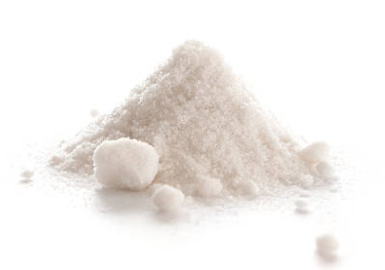
Titanium dioxide, which is mainly used as a white pigment, is also known as "titanium dioxide" and is regarded as "the best white pigment in the world". Titanium dioxide has the highest refractive index among white pigments, so it has the highest covering power (opacity), achromatic power, and other optical properties among white pigments, as well as bright whiteness, high luster, good dispersion, and compared with Lidl, it has a more economical dosage and a longer service life.
Application of titanium dioxide
The share of titanium dioxide in the field of coatings reaches more than 90%, and it is also widely used in the industries of printing ink, additives for plastics and rubber, paper-making, chemical fiber textiles, and cosmetics.
In addition, titanium dioxide is used in food additives for whitening and filling. Titanium dioxide was classified as a Group 2B carcinogen (i.e. possibly carcinogenic to humans) by the International Agency for Research on Cancer (IARC) in 2010 and confirmed by EU regulations in 2020. Widely believed to be carcinogenic at the nanometer level, and with titanium dioxide currently being the only available whitener in the food industry, titanium dioxide was removed from the EU's classification of carcinogens in November 2022, following efforts by European paint manufacturers.
However, this does not mean that a mass of sunscreen, sunscreen spray, and other cosmetics are safe enough. Titanium dioxide used in cosmetics is exactly the nanoscale titanium dioxide that has a carcinogenic risk, and nanoscale titanium dioxide can be deposited in the lungs, causing lesions.
Titanium dioxide in skin care
Numerous skincare products, including face masks, moisturizers, and sunscreen, include titanium dioxide. This multifunctional component is also used to thicken and color creams. The main products of titanium dioxide in skin care are as follows.
Sunblock
The Titanium Dioxide Manufacturers Association states that titanium dioxide is among the most significant and potent sunscreens available for shielding your skin from UV rays in all of its forms. Certain sunscreens soak into the skin, but titanium dioxide sunscreens reflect UV rays by coating the skin in a protective layer.
Cosmetics
Titanium dioxide has several properties that make it a valuable ingredient in makeup formulas. Titanium dioxide is used as a colorant in cosmetics such as foundation, lipstick, and eye shadows. It can be combined with other colors to create a wide range of tints that suit different skin tones. Titanium dioxide is added to some powder-based cosmetics. For example, foundations, loose powders, and powders. Many people use loose powder to finalize or make up after makeup. The powder ingredients contained in it can absorb the oil secreted on the face to achieve the so-called oil control effect.
Lotions and creams
Titanium dioxide is well-known for its capacity to absorb oils from the skin. There is no chance of negative health consequences. However, its texture contributes to the creation of a smooth and creamy product, and because of its waterproof properties, titanium dioxide is frequently used in lotions and creams.
Is it safe to use titanium dioxide in skin care?
The U.S. Food and Drug Administration (FDA) has evaluated the safety of titanium dioxide pigments as color additives in foods, drugs, and cosmetics. The FDA has issued guidance on the safe use of titanium dioxide pigments as food colorants and has indicated that titanium dioxide can be safely used in cosmetics, including those for use in the eye. Moreover, the FDA also regulates the safety and efficacy of active ingredients in sunscreens, including nanoscale titanium dioxide.
Particle size distribution of titanium dioxide nanoparticles is purposefully smaller than that of pigment particles during manufacturing. These transparent nanomaterials work better as photocatalysts or UV absorbers because of their increased effectiveness. Because of their transparency and capacity to absorb UV rays, they are useful sunscreen protection components.
Conclusion
In cosmetics, titanium dioxide is classified as an inert mineral due to its extremely low gas activity, and has a good safety profile, with very few cases of allergies. After reading this article, we can firmly believe that the technique used to apply titanium dioxide in skin care products is fairly advanced.
Looking for chemical products? Let suppliers reach out to you!
You May Interested In


Glow70/KLOW80 99% China Peptides Warehouse Direct Delivery Lyophilized Powder in Stock
$169/UNIT FOB


2026-10-25
Trade Alert
Delivering the latest product trends and industry news straight to your inbox.
(We'll never share your email address with a third-party.)

Related News
-
Dicalcium Phosphate: Properties, Uses, and Applications
-
Magnesium Chloride (MgCl₂): Properties, Uses, and Applications
-
Flavin Adenine Dinucleotide (FAD): Functions and Applications
-
Bivalirudin: Medical Uses, Properties, and Safety
-
Calcium Hypochlorite: Properties, Uses, and Safety
-
Thymol Gel Wins EPA Approval for Beekeepers
-
Sodium Benzoate (E211): Safety, Benzene Risk, and Preservative Uses
-
Sodium Pentothal: Medical Applications and Safety
-
Ascorbyl Palmitate: Properties, Uses, and Benefits
-
Gellan Gum (E418): Vegan Thickener vs. Xanthan Gum in Food
Recommend Reading
-
![Sodium Hydroxide Reactions: With Aluminum, Acids, and Metals]()
Sodium Hydroxide Reactions: With Aluminum, Acids, and Metals
-
![Sodium Nitrate: Fertilizer, Food Curing, and Explosive History]()
Sodium Nitrate: Fertilizer, Food Curing, and Explosive History
-
![Aluminum Oxide (Al2O3): Abrasive Uses, Ceramic Applications, and Safety]()
Aluminum Oxide (Al2O3): Abrasive Uses, Ceramic Applications, and Safety
-
![What is a Surfactant? (Definition, Types, and How They Work)]()
What is a Surfactant? (Definition, Types, and How They Work)
-
![Oxalic Acid: Acidity (pKa), Sources, and Kidney Stone Risk]()
Oxalic Acid: Acidity (pKa), Sources, and Kidney Stone Risk
-
![Supply Reduction, Rising Costs, DOP Price Increase]()
Supply Reduction, Rising Costs, DOP Price Increase
-
![Sulfate of Ammonia Market Prices Stop Falling and Rise (7.13-7.20)]()
Sulfate of Ammonia Market Prices Stop Falling and Rise (7.13-7.20)
-
![Supply Increases in Stages, China’s Acrylonitrile Market Slips Narrowly]()
Supply Increases in Stages, China’s Acrylonitrile Market Slips Narrowly
-
![Supply-side Contraction, Inventory Supports Stable Price Operations]()
Supply-side Contraction, Inventory Supports Stable Price Operations
-
![Weak Demand Pressures Adipic Acid Prices in China]()
Weak Demand Pressures Adipic Acid Prices in China