The Scientific Truth Behind Stearic Acid Uses for Skin
The stearic acid uses for skin are pretty significant and this article will explore them with the help of scientific research and more. Let’s go.
Introduction:
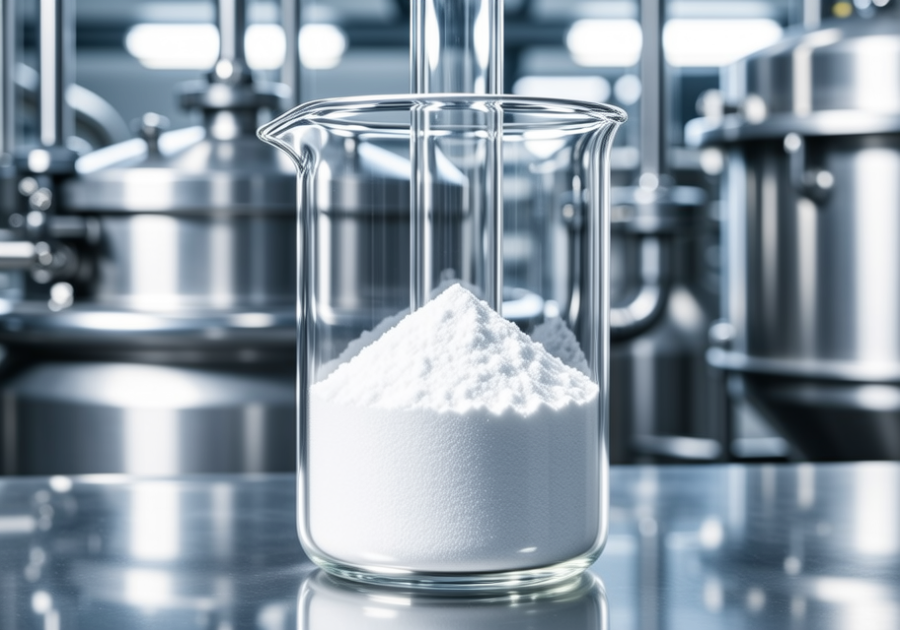
Steric Acid is a saturated fatty acid belonging to the long-chain carboxylic acid family and is one of the most significant compounds currently used in the cosmetic industry. This fatty acid exists as a solid, white, waxy substance and has a chemical formula of (CH₃(CH₂)₁₆CO₂H) in which one can observe a long-chain carboxylic acid attached with 18 carbon atoms and a carboxylic acid group (-COOH) attached at one end of the chain. It occurs in a variety of natural sources (shea butter, coconut oil, etc.) and animal fats as well. Most of the companies use plant sources for their production.
The special arrangement of atoms in its molecular structure gives it a unique set of features that are very useful in the cosmetic industry. The most significant stearic acid uses for skin health, treatment, and improvement in complexion revolve around its four core features which are explained in detail below:
1. Moisturizing Effect:
The long chain in the molecular structure of steric acid fatty acid has a polar carboxylic acid group (-COOH) which can make hydrogen bond with the polar water molecules in the ointments and cosmetic products. This gives such products the ability to hydrate and moisturize the skin as steric acid can retain water on the skin's surface due to its polarized carboxylic acid group attached to its tail.
Aside from this, it also helps create smooth textured cosmetic products, improves their shelf life, and helps in smooth application with increased spreadability on human skin. Sunscreens containing stearic acid are also found to have better textures for application and adhere significantly better to the skin as compared to those who don’t have it in them. It is also found to provide stabilization to sunscreens and also helps in increasing their potency.
2. Absorption:
This fatty acid has a large molecule and it cannot pass through the skin pores but it helps other hydrating and healthy ingredients in the skin care product to get absorbed in the skin. Both its hydrophobic nature and ability to create an occlusive layer maintain hydration while helping the absorption of other hydrating ingredients.
Along with increased absorption, it also acts as a surfactant by essentially acting as an active ingredient that helps cleanse the skin. This feature is unique to the fatty acid like this which act both as emollient and surfactant. Due to these two features, it is commonly used as both a moisturizing and cleansing agent in facial cleansers as it can bind together oil-water and can be easily removed from the surface of the skin while leaving the skin hydrated.
3. Skin Barrier
One of the significant stearic acid uses for skin is that it helps create a skin barrier, the skin's outermost layer which is responsible for keeping irritants out and natural moisture in our skin to keep it in a healthy and youthful state as much as possible. It does that by keeping the building blocks of this barrier properly bonded and free of visible cracks along with other fatty acids like cholesterol and ceramides. This significantly helps in antiaging symptoms of skin near the eyes and other facial areas prone to early signs of aging.
4. Treatment:
Based on the results of the latest research, creams with stearic acid and docosanol (a long-changed fatty alcohol) were found to help treat skin lesions and cold sores in mice caused by herpes simplex virus. The intensity and progression of the lesions were significantly reduced when the creams with steric acid were applied by the researchers. The same is expected with humans but more research is awaited. Medicated and cosmetic creams containing steric acid are heavily studied and have found significant evidence that it helps in reducing symptoms of skin conditions like eczema.
Wrapping Up:
The most significant stearic acid uses for skin products are its moisturizing properties along with its ability to resist aging signs by creating and maintaining the natural skin barrier. Moreover, it also acts as an anti-inflammatory agent, increasing absorption of ingredients present in skin creams, and is being studied to help recover against eczema and its potential recovery effect on lesions and cold sores.
Looking for chemical products? Let suppliers reach out to you!
An Exploration of Stearic Acid in Food
You May Interested In


SS-31 Cosmetic peptides, discounted price improving cognitive impairment factory supply
$8E+1/UNIT FOB


2026-09-11
Trade Alert
Delivering the latest product trends and industry news straight to your inbox.
(We'll never share your email address with a third-party.)

Related News
-
Potassium Hydroxide (KOH): Soap Making, Batteries, and Safety
-
Aluminum Sulfate: Industrial and Water Treatment Applications
-
What is Trametenolic Acid? (Structure, Sources & Research)
-
Sulfuric Acid (H2SO4): Properties, Battery Uses, and Extreme Safety Hazards
-
What is Aconitic Acid? (Chemistry & Occurrence)
-
What are Acetoglycerides? (Definition & Food Industry Uses)
-
Oxalic Acid: Acidity (pKa), Sources, and Kidney Stone Risk
-
What is a Surfactant? (Definition, Types, and How They Work)
-
L-Alanine: Amino Acid Profile, Sports Nutrition, and Metabolic Role
-
Potassium Nitrate Reactions & Uses (KNO3)
Recommend Reading
-
![Isopropyl Alcohol (IPA) vs Ethanol: Which Solvent or Disinfectant is Better?]()
Isopropyl Alcohol (IPA) vs Ethanol: Which Solvent or Disinfectant is Better?
-
![Sodium Hypochlorite: Uses, Concentration Guide, and Critical Safety Hazards]()
Sodium Hypochlorite: Uses, Concentration Guide, and Critical Safety Hazards
-
![EDTA (Ethylenediaminetetraacetic acid): Chelation Therapy & Industrial Uses]()
EDTA (Ethylenediaminetetraacetic acid): Chelation Therapy & Industrial Uses
-
![Magnesium Stearate in Supplements: Is it Safe? (Vegan Status & Function)]()
Magnesium Stearate in Supplements: Is it Safe? (Vegan Status & Function)
-
![Polystyrene (PS): Properties, Foam Applications, and Recycling Challenges]()
Polystyrene (PS): Properties, Foam Applications, and Recycling Challenges
-
![Bearish Factors Persist, Adipic Acid Prices in China Decline]()
Bearish Factors Persist, Adipic Acid Prices in China Decline
-
![The Market Trend of Butadiene Rubber Weakens and Declines]()
The Market Trend of Butadiene Rubber Weakens and Declines
-
![Styrene-Butadiene Rubber Market Shows Weak Downward Trend]()
Styrene-Butadiene Rubber Market Shows Weak Downward Trend
-
![Cost Weakening Combined with Weak Demand: Toluene Market Shakes and Declines in February]()
Cost Weakening Combined with Weak Demand: Toluene Market Shakes and Declines in February
-
![Supply and Demand Loosening—February Sees a Noticeable Decline in Butanol Prices]()
Supply and Demand Loosening—February Sees a Noticeable Decline in Butanol Prices