Avantium has completed commissioning of the purification unit at its FDCA Flagship Plant in the Netherlands, bringing the production of bio-based FDCA one step closer to commercial scale.
The development marks an important milestone for the chemical industry as producers look for alternatives to fossil-based feedstocks and new building blocks for next-generation polymers.
All Major Process Units Now Commissioned
Avantium announced on September 7, 2026, that it had successfully completed commissioning of the purification unit at its FDCA Flagship Plant in Delfzijl, the Netherlands.
The plant is described by the company as the world's first commercial-scale facility dedicated to the production of FDCA (furandicarboxylic acid). With the purification unit now commissioned, all major process units have completed commissioning.
The company is continuing integrated start-up activities and preparing for the production of the first batches of FDCA. Commercial deliveries under existing offtake agreements are expected to begin toward the end of 2026, subject to successful plant start-up and product qualification.
The facility is designed for an annual production capacity of approximately 5,000 tonnes of FDCA. Avantium has been progressively commissioning the plant since the start-up of its sugar dehydration unit in 2025.
What Is FDCA?
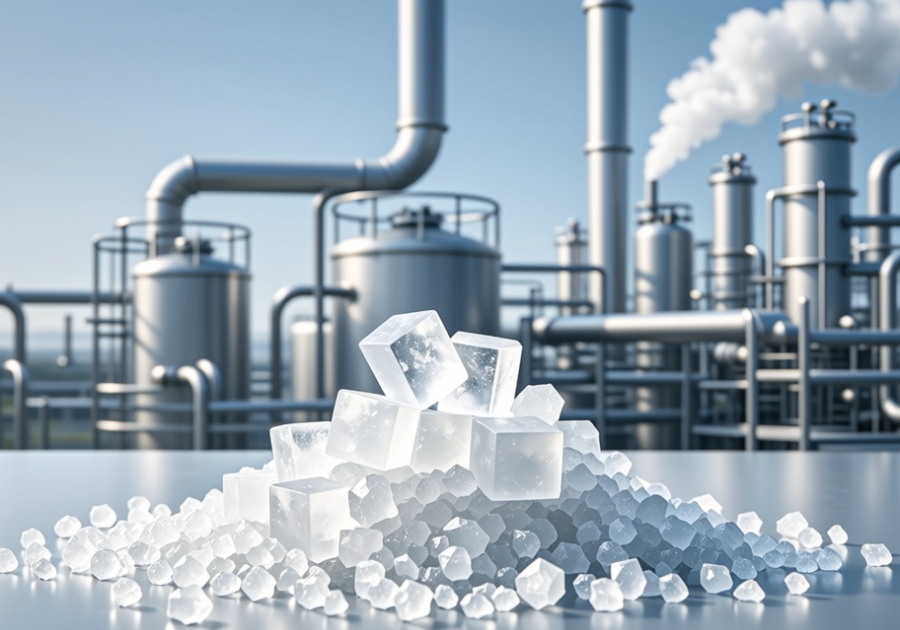
FDCA, or 2,5-furandicarboxylic acid, is an important bio-based chemical building block used to produce PEF (polyethylene furanoate).
Avantium's YXY® Technology converts plant-based sugars into FDCA. The resulting FDCA can then be polymerized with mono-ethylene glycol (MEG) to produce PEF, a polyester designed for applications including packaging, films and textiles.
The development is attracting attention because FDCA provides a potential route toward polymers based on renewable carbon rather than relying entirely on conventional fossil-based aromatic feedstocks.
From Plant-Based Sugars to FDCA
The production route developed by Avantium is based on a series of chemical processing steps.
The basic process can be summarized as:
Plant-based sugars → Sugar Dehydration → MMF → Oxidation → Purification → FDCA
The sugar dehydration stage converts sugars into methoxymethyl furfural (MMF), an important intermediate in the process. The intermediate is subsequently processed through oxidation and purification to produce FDCA.
The successful start-up of the sugar dehydration unit in 2025 demonstrated the first major stage of the commercial-scale process. The latest commissioning milestone completes the major downstream process units required for FDCA production.
Why FDCA Matters for the Polymer Industry
One of the main areas of interest is the production of PEF, a next-generation polyester.
PEF has been developed as a potential alternative to conventional PET in selected applications. According to Avantium, PEF offers high mechanical strength and strong barrier properties against oxygen and carbon dioxide, characteristics that can be relevant to packaging applications.
This creates a potential new value chain:
Renewable feedstock → FDCA → PEF → Packaging / Films / Textiles
For chemical producers, the significance extends beyond a single new polymer. Commercial-scale FDCA production could help establish a new market for bio-based aromatic building blocks and create opportunities for companies across feedstock, monomer, polymer and packaging value chains.
Commercial Scale Is the Key Test
The latest milestone is particularly important because the technology is moving beyond pilot-scale validation.
Avantium has operated FDCA technology at pilot scale and is now using the Delfzijl facility to demonstrate its YXY® Technology at commercial scale. The company also views successful operation of the flagship plant as an important step toward licensing the technology to industrial partners.
According to Avantium's strategy, future licensed plants could be designed at substantially larger capacities, allowing the technology to expand beyond the initial flagship facility.
However, the transition from first-of-a-kind production to a reliable commercial supply chain will depend on successful plant ramp-up, product qualification, customer adoption and the economics of FDCA and PEF compared with established materials.
What Chemical Suppliers Should Watch
The development of commercial-scale FDCA production could be relevant to several parts of the chemical supply chain.
For chemical raw material suppliers, FDCA represents an emerging bio-based building block with potential demand from polymer producers.
For polymer manufacturers, the availability of commercial FDCA could support further development and scale-up of PEF-based materials.
For packaging companies, increased availability of PEF could provide another material option for applications where barrier performance, mechanical properties and renewable feedstocks are important.
For technology licensors and chemical producers, the successful operation of a commercial-scale FDCA plant could provide a reference point for future projects using renewable carbon feedstocks.
A New Chapter for Bio-Based Chemical Building Blocks
The completion of the purification unit does not yet mark the end of the commercialization process. Avantium still needs to complete plant start-up, produce and qualify the first FDCA batches, and progress toward commercial deliveries.
Nevertheless, the development represents an important step in the transition from laboratory and pilot-scale bio-based chemistry to industrial production.
If the Delfzijl plant successfully reaches stable commercial operation, FDCA could become an increasingly visible building block in the emerging market for renewable and circular polymers.
For the chemical industry, the key question is no longer only whether bio-based FDCA can be produced. The next question is whether it can be produced reliably, competitively and at a scale large enough to support a new polymer value chain.