




Sugar Tax Under Fire for Failing to Offer Incentive

Under current plans, there will be two bands – one at 18p per litre (ppl) for soft drinks with total sugar content of 5g or more per 100ml, and a second, higher band at 24ppl for those with 8g or more per 100ml.
“There are a couple of drawbacks in the way the tax is designed that could probably quite easily be fixed,” said IFS associate director Dr Martin O’Connell, speaking at a seminar on sugar reduction policy organised by the Westminster Food & Nutrition Forum.
“One, is that the incentives for reformulation aren’t as strong as what they potentially could be,” he said.
The same tax liability
Secondly, O’Connell pointed out that the same tax liability would hit drinks such as Coca-Cola, containing 10.6g of sugar per 100ml, as very high sugar energy drinks such as Rockstar, which contained 15.7g of sugar per 100ml – nearly 50% more sugar.
“The tax rate in terms of the sugar in that product is actually lower than it is for Coke,” he explained. “And there are quite a lot of popular products in this part of the tax schedule.”
Therefore, there was no incentive for reformulating products with very high sugar content, O’Connell suggested, unless the levels could be reduced below 8g/ml.
“Instead of levying the tax on volume, if we simply set the tax rate directly on the sugar in soft drinks illustrated at a rate of 20p per 100g of sugar, then, regardless of where a product is on the tax schedule, there would always be an incentive to reformulate.
“It would also mean that a higher sugar product would attract more tax.”
In need of ‘corrective intervention’
The tax’s effectiveness would be determined by whether it was well targeted at those in need of “corrective intervention” – in this case, children, who tended to get most of their added sugar intake from soft drinks, O’Connell explained.
Soft drinks were an obvious target since they could be reformulated without the risk of substitution with other highly calorific nutrients, he added.
However, focusing on soft drinks only targeted about 20% of dietary intake of sugar and also created the potential for a price differential between sugar in soft drinks and other forms of sugar.
“That may induce some people to switch to alternative sugars,” O’Connell said.

You May Interested In


High Quality β-Nicotinamide adenine dinucleotide CAS 53-84-9 NADwith ready stock and best price
$3E+1/UNIT FOB


2026-10-26
Trade Alert
Delivering the latest product trends and industry news straight to your inbox.
(We'll never share your email address with a third-party.)

Related News
-
In 2023, the international food price index fell nearly 14% YoY , and only the price index of sugar and rice rose
-
Shanghai Takes the Lead in Curbing Sugary Beverage Consumption with Innovative Health Warning Labels
-
Bulgaria plans to introduce regulations on sugar consumption requirements
-
High sugar prices in Bangladesh show no signs of abating
-
Detect Sugar In Your Food: New Reagent To Test For Starch Is Here!
-
Is anti-sugar makeup out of market?
-
Supply and demand two-way power generation sugar market is still a great 'article' to do
-
Why Is Sugar an Organic Molecule
-
Sugar For Reducing Glucose Levels? Why Is Fructose A Reducing Sugar?
-
Countdown to Thailand's crushing season: total granulated sugar production 9.6 million tonnes
Recommend Reading
-
![Kemira Acquires AquaBlue]()
Kemira Acquires AquaBlue
-
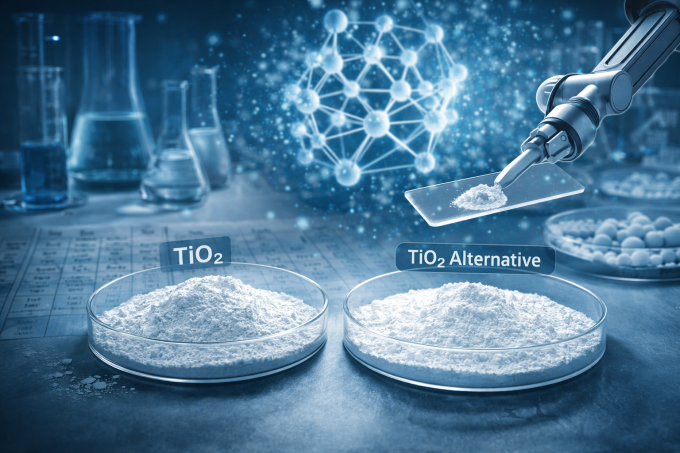
![New Titanium Dioxide Alternative Moves Closer to Market]()
New Titanium Dioxide Alternative Moves Closer to Market
-
![Rising API Costs Threaten Drug Prices]()
Rising API Costs Threaten Drug Prices
-
![Lilly Bets Bigger on China]()
Lilly Bets Bigger on China
-
![Arkema's New Singapore Plant Commences Operations, Tripling Polyamide Capacity]()
Arkema's New Singapore Plant Commences Operations, Tripling Polyamide Capacity
-
![Business Society’s Styrene Trend Analysis for September 17, 2026: Volatile Trend]()
Business Society’s Styrene Trend Analysis for September 17, 2026: Volatile Trend
-
![Upstream Production Cuts Lead to Stable but Supported Formic Acid Prices]()
Upstream Production Cuts Lead to Stable but Supported Formic Acid Prices
-
![Demand Supports, Hydrogen Peroxide Market Continues to Rise]()
Demand Supports, Hydrogen Peroxide Market Continues to Rise
-
![Acrylic Acid Market]()
Acrylic Acid Market "Hovers" Between Rise and Fall, When is This Temporary Calm Expected to End in China?
-
![Business Society’s Trend Analysis for Caustic Soda on September 17, 2026: Relatively Strong Fluctuations]()
Business Society’s Trend Analysis for Caustic Soda on September 17, 2026: Relatively Strong Fluctuations




- Hot Searches
- 2-ethylhexanol suppliers
- chemical suppliers & distributors
- aeo 7 surfactant
- price of formaldehyde
- ammonium sulphate crystalline
- pure sodium nitrite
- price naoh
- compounded retatrutide
- johnson matthey chemical products
- retatrutide buy online
- formic acid price
- heat+shrinkable+fluoropolymer+tubing