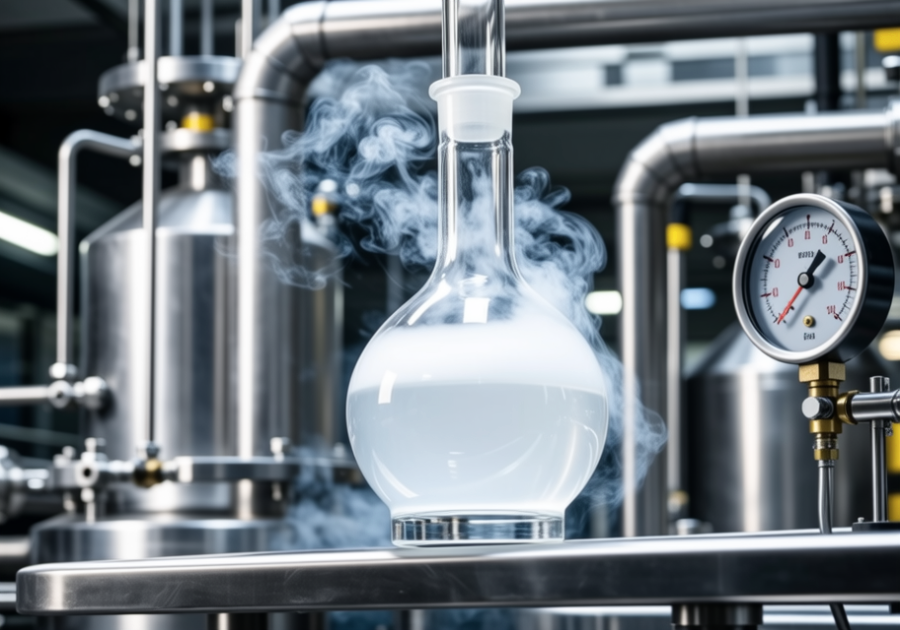
What is the Commercial Use of Nitrogen
Do you know any commercial use of nitrogen? Well, there are numerous commercial uses of nitrogen in the world today. It is used in various applications, mostly due to its inert properties. Nitrogen is best known for being used to preserve food and drinks, but it can be used in many other ways as well. Nitrogen's versatility makes it an indispensable element that you will find in many commercial settings. From breweries and wine cellars to hospitals and fire departments, you will find nitrogen being put to work no matter where you go. Here are several ways nitrogen is being put to work by businesses around the world:
Nitrogen's uses in the food and drink preservation
One of the most common commercials used for nitrogen is food and beverages. Nitrogen can preserve food and drinks up to 10x longer than standard pressure. It is often used to store wine, beer, vegetables, and other foods that need to be stored without oxygen.
Foods put under a nitrogen blanket will stay fresh and keep their shape. This is very useful in the foodservice industry as it means the quality of food served will stay more consistent over time. Beer breweries also use nitrogen to ensure they have a constant supply of beer on hand. Nitrogen can also be used to produce whipped cream since it doesn't contain any water content, which would cause bacteria growth.
Nitrogen can be used to provide oxygen for those in need
Nitrogen is used to provide oxygen for those in need in many hospitals and fire departments. This element is also a key component of the air we breathe.
Nitrogen is a safe alternative for fire suppression
When a fire breaks out in a building, you need to do whatever it takes to put it out. If your regular water system isn't enough, you can use nitrogen. Nitrogen is great for fire suppression because it doesn't produce flames or smoke. This makes it perfect for places like hospitals and labs with flammable materials around. It also leaves no residue, which means there is less cleanup and restoration work after the fires are extinguished.
Nitrogen's safe properties make it a great option for these settings and many others. The fact that it's inert makes nitrogen safe to use in any environment with flammable materials. And the lack of residue means there will be less cleanup required afterward to get rid of any soot or other contaminants left by water-based extinguishing systems.
Aerospace and Defense
Another commercial use of nitrogen is in the aerospace and defense industry for military jets, spacecraft, and missiles. Nitrogen keeps these vehicles from encountering extreme pressure or temperature changes.
Nitrogen is an inert gas.
One of the biggest benefits of nitrogen is that it is a very inert gas. This means nitrogen will not react with other substances, making it a popular choice for preservation. It could be used to preserve some foods and drinks, which may go bad if they were exposed to oxygen instead. Nitrogen can also be used as a preservative for wood products like plywood, flooring, furniture, and much more.
Nitrogen in the Brewery Industry
Breweries are one of the most common commercial entities that use nitrogen. The natural carbonation process is sped up with nitrogen gas, which creates a lighter, more bubbly beer. Nitrogen gas also reduces the amount of sugar in the beer, and it helps proteins coagulate for better head retention. This makes for a smoother tasting beer than one without nitrogen added to the mix.
Nitrogen in the Wine Industry
The wine industry is one of the most popular industries that employ nitrogen. It helps maintain consistent pressure in tanks used to store wine, which helps keep the product fresh. Winemakers know how important it is to preserve their product, and nitrogen plays a major role in helping them do so.
Manufacturing Industries
Manufacturing industries use nitrogen in various ways, from making steel to purging components. Nitrogen is used in the steel-making process because it removes oxygen from the air, allowing for a complete iron burn.
Nitrogen is also used to purge certain components during manufacturing processes. Purging is an important step that helps prevent residual matter from getting into the system and causing potential problems. Nitrogen is also commonly used as a coolant fluid and a compressed gas source for robotics or other automation equipment.
Nitrogen used in environmental conservation
Nitrogen is used in environmental conservation to prevent atmospheric ozone depletion, as it is a non-reactive gas. Nitrogen contributes to ozone depletion by combining with free oxygen atoms to create nitric oxide, which then reacts with other compounds in the air and breaks down into nitrogen dioxide.
Conclusion
Nitrogen is used in various industries and has many uses.
There are numerous commercial use of nitrogen, with healthcare, food and drink preservation, fire suppression, and oxygen provision being just a few. Learn more about the many ways nitrogen can be used to keep you
Looking for chemical products? Let suppliers reach out to you!
How Chemistry Colors Our World?
You May Interested In


Glow70/KLOW80 99% China Peptides Warehouse Direct Delivery Lyophilized Powder in Stock
$169/UNIT FOB


2026-10-21
Trade Alert
Delivering the latest product trends and industry news straight to your inbox.
(We'll never share your email address with a third-party.)

Related News
-
Uses and Properties of Chromium Oxide
-
PEG (Polyethylene Glycol): Uses in Pharma, Cosmetics, and PEGylation
-
What is HCO3? (Bicarbonate Ion Function & Normal Levels)
-
Cytosine: Structure, DNA Pairing, and Role in Genetics
-
Bovine Serum Albumin (BSA): Role in Cell Culture & Laboratory Applications
-
What is a Surfactant? (Definition, Types, and How They Work)
-
Oxalic Acid: Acidity (pKa), Sources, and Kidney Stone Risk
-
Thymol Gel Wins EPA Approval for Beekeepers
-
Potassium Hydroxide (KOH): Soap Making, Batteries, and Safety
-
Dicalcium Phosphate: Properties, Uses, and Applications
Recommend Reading
-
![Magnesium Chloride (MgCl₂): Properties, Uses, and Applications]()
Magnesium Chloride (MgCl₂): Properties, Uses, and Applications
-
![Flavin Adenine Dinucleotide (FAD): Functions and Applications]()
Flavin Adenine Dinucleotide (FAD): Functions and Applications
-
![Ammonia Chemical Formula: NH3 Structure & Properties]()
Ammonia Chemical Formula: NH3 Structure & Properties
-
![Benzyl Alcohol: Uses in Cosmetics, Preservative Efficacy, and Safety]()
Benzyl Alcohol: Uses in Cosmetics, Preservative Efficacy, and Safety
-
![Potassium Nitrate Reactions & Uses (KNO3)]()
Potassium Nitrate Reactions & Uses (KNO3)
-
![Business Society’s October 9, 2026 Natural Rubber Market Outlook: Prices Rebound and Trend Mostly Upward]()
Business Society’s October 9, 2026 Natural Rubber Market Outlook: Prices Rebound and Trend Mostly Upward
-
![Cost Support, Supply Tightening, PTA Prices Fluctuating and Rising]()
Cost Support, Supply Tightening, PTA Prices Fluctuating and Rising
-
![Cost Benefits Drive Shandong Cyclohexanone Prices Upward Along with Raw Material Prices]()
Cost Benefits Drive Shandong Cyclohexanone Prices Upward Along with Raw Material Prices
-
![Cost Pressure Rises, Anhydrous Hydrogen Fluoride Prices Increase in China]()
Cost Pressure Rises, Anhydrous Hydrogen Fluoride Prices Increase in China
-
![Business Society October 9, 2026 PC Trend Analysis: Volatility]()
Business Society October 9, 2026 PC Trend Analysis: Volatility