UK faces 2% GDP hit by 2020 under no-deal Brexit, recession risks grow
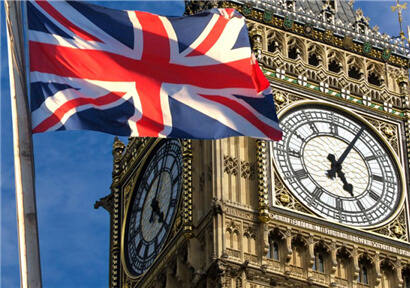
The impact of leaving the EU without a deal could slash UK GDP by two percentage points by the end of 2020 on the back of trade barriers and uncertainty deterring investment, the country's watchdog Office for Budget Responsibility (OBR) said on Thursday.
The UK may already be on the verge of a “full-blown” recession on the back of the bearishness of recent economic indicators, the OBR said, while a no-deal Brexit would decimate economic growth as uncertainty and declining confidence stifle investment and harder borders increase costs.
“Surveys were particularly weak in June, suggesting that the pace of growth is likely to remain weak,” the OBR said in its financial risks report.
“This raises the risk that the economy may be entering a full-blown recession.”
Economic growth paused or may have contracted in the second quarter, the OBR said, due in large part to the unwinding of stockpiles built up before the expected 29 March leaving date, but more general weakness may persist or intensify up to the new projected 31 October departure date.
“Many of the fiscal risks we discussed two years ago remain. That is not surprising, as in many cases the Government can only seek to manage and mitigate them, not to eliminate them.”
Even assuming a relatively benign no-deal scenario, where disruptions to border traffic are limited and short-lived, a departure from the EU without a trade arrangement agreed is likely to add £30bn/year to borrowing from 2020-21 onwards, and around 12% of GDP to net debt by 2023-24.
Mid-term fiscal policy is dependent on the new Prime Minister and his Chancellor of the Exchequer (economy minister), but uncosted tax cuts and spending increase proposals are also likely to increase government spending by tens of billions of pounds, the OBR said.
The defiant tone struck on Brexit by both prime ministerial hopefuls, Boris Johnson and Jeremy Hunt, is what prompted the OBR’s decision to delve deeper into its assumptions for a no-deal Brexit.
The Conservative Party leadership contest runs until the end of the month, but former Foreign Secretary Boris Johnson is regarded as a fait accompli for the job.
In earlier projections, the financial watchdog had not strongly factored in a no-deal outcome but, with both candidates expressing some degree of willingness to resort to leaving the EU without a deal if necessary on 31 October, the decision was taken to look in more depth at the impact of such a departure.
“Heightened uncertainty and declining confidence deter investment, while higher trade barriers with the EU weigh on exports,” the OBR said.
“Together, these push the economy into recession, with asset prices and the pound falling sharply.”
Uncertainty is already weighing on demand for producers in the country, according to trade groups.
The UK’s Chemical Business Association (CBA), the country’s key trade group for chemicals distributors, noted a 60% drop in orders for the three months to July amid a “uniformly negative” outlook.
“A combination of cash flow constraints and the limited availability of storage capacity has now brought this stock building process to an end," said CBA’s CEO Peter Newport.
"The three-month outlook for order books, sales, and margins is uniformly negative as Brexit uncertainty continues,” he added, speaking last week.

You May Interested In


High Quality β-Nicotinamide adenine dinucleotide CAS 53-84-9 NADwith ready stock and best price
$3/UNIT FOB


2026-10-14
Trade Alert
Delivering the latest product trends and industry news straight to your inbox.
(We'll never share your email address with a third-party.)

Related News
-
L'Oréal UK sales hit £1.5 billion
-
Pesticide Usage in Scotland--Outdoor Vegetable Crops 2021
-
The British chemical industry is in trouble
-
British malters use malt in plant-based meat products
-
Total social retail sales from January to February amounted to RMB 242.73 billion in Beijing
-
Us Stocks Rally Strongly On Positive Economic Recovery As Jobless Number Hits 53-Year Low
-
The Amount of Non-cash Payments Nationwide During the Spring Festival Holiday was 14.9 Trillion Yuan
-
Chinese Catering Has Ushered in a New Track, and Listing Has Become a New Trend
-
U.S. Chemical Manufacturers: Supply Chain Disruptions Cause Serious Losses
-
Britain considers banning solid urea
Recommend Reading
-
![Qatar LNG Supply Disruption Persists for Nearly Six Months, Exports Plunge 96%]()
Qatar LNG Supply Disruption Persists for Nearly Six Months, Exports Plunge 96%
-
![South Korea to Impose Anti-Dumping Duties on Caustic Soda: Chinese Mainland Firms Face Up to 22.21%, Taiwan Region 38.89%]()
South Korea to Impose Anti-Dumping Duties on Caustic Soda: Chinese Mainland Firms Face Up to 22.21%, Taiwan Region 38.89%
-
![Chung Lien Oil’s 8,000-Ton Soybean Oil BaP Scandal: NT$165 Million Fine, 401 Product Recalls, Source Still Unknown]()
Chung Lien Oil’s 8,000-Ton Soybean Oil BaP Scandal: NT$165 Million Fine, 401 Product Recalls, Source Still Unknown
-
![Death Toll from Fire at China-Russia Amur Polyolefins Project Rises to 15 as Construction Continues]()
Death Toll from Fire at China-Russia Amur Polyolefins Project Rises to 15 as Construction Continues
-
![September 1: Chemical Price Hikes Take Effect Across the Board]()
September 1: Chemical Price Hikes Take Effect Across the Board
-
![Business Society’s Market Outlook for Ethyl Acetate on August 28, 2026: Volatile]()
Business Society’s Market Outlook for Ethyl Acetate on August 28, 2026: Volatile
-
![August Natural Rubber Market Trend Fluctuates Upward in China]()
August Natural Rubber Market Trend Fluctuates Upward in China
-
![Business Society’s PVC Market Outlook on August 28, 2026: Relatively Weak and Volatile]()
Business Society’s PVC Market Outlook on August 28, 2026: Relatively Weak and Volatile
-
![Premium Global Chemical Sourcing Requests (12 - 16 Mar, 2026)]()
Premium Global Chemical Sourcing Requests (12 - 16 Mar, 2026)
-
![Business Society’s MTBE Market Outlook for September 1, 2026: Clearly Downward]()
Business Society’s MTBE Market Outlook for September 1, 2026: Clearly Downward