Shanxi from Digging Coal and Selling Coal to Energy Revolution
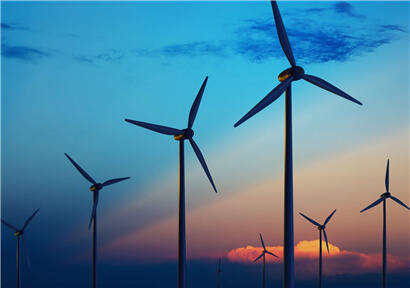
Shanxi pursues the energy revolution. From 2016 till now, Shanxi has withdrawn from the chair of the first coal-producing province for many years, replaced by Inner Mongolia. Liyangfeng, a former coal worker, was trying to adapt to a new position as a tallyman in Huozhou Coal and Electricity Supermarket in Huozhou, Shanxi Province, on May 25. Since the founding of the People's Republic of China 70 years ago, Shanxi has also made great efforts to shift from the extensive economy of "digging coal and selling coal" to a new journey of leading the energy revolution. Like Liyang Feng, Li Peiquan, who has retired for many years, was a coal miner. In the 1970s, Li Peiquan became an industrial worker through recruitment in coal mines. The dark underground roadways, caves excavated in accordance with the mountain situation, and a mine surrounded by mountains are the work and life scenes he faces.
"In underground mining, explosive blasting is used first, then artificial roof support is used, and then artificial coal mining is used." Recalling the production scenario decades ago, Li Peiquan said that at that time, the underground production conditions were poor and the efficiency was low, and a lot of work relied on human resources to complete. The varicose veins in his legs were occupational diseases left over from that year. Official statistics of Shanxi Province show that in the early 1970s, Shanxi's annual coal production remained at 560 million tons. With the pace of reform and opening up, Shanxi was positioned as the national coal energy base. Driven by the "water fast flow" policy, various types of capital have entered the coal industry intensively. Since then, China's economy has developed at a high speed for decades, and the demand for basic energy has been increasing day by day. Meanwhile, Shanxi coal industry plays an engine role. In the 1980s, in Shuozhou, Shanxi Province, the first large-scale Sino-foreign cooperative project in the early stage of China's reform and opening up, Antaibao Open-pit Coal Mine in Pingshuo, started construction. Huang Shufang, a former builder, said that under the mode of Sino-foreign cooperation, Pingshuo project used only a quarter of the time of the construction period in China at that time to create a high efficiency, high technology, high efficiency and fast pace, which promoted the level of open-pit mining in China's coal industry to span 30 years. Antaibao Coal Mine is thus known as the "experimental field" of China's reform and opening up.
Data shows that Shanxi has been the largest coal producer and supplier in the country in the past 40 years of reform and opening up. Coal output has accounted for more than 1/4 of the country's total for a long time. More than 70% of coal output has been transported to other provinces, and it is also the largest coke producer and supplier in the country. Since the founding of New China 70 years ago, Shanxi has mined 19.3 billion tons of coal and transferred 13 billion tons of coal.
Peng Jinfeng is the president of Shanxi Jincheng Private Economic Federation. In the 1990s, as a gateway to the southeast of Shanxi Province, Jincheng coal industry developed. Peng Jinfeng's engineering machinery industry is closely related to coal.
Peng Jinfeng said that he often stood at the Jincheng section of the Taijiao Railway (one of Shanxi's coal export routes). Every day, a large number of coal-laden trains continue to travel to other provinces. This is the most intuitive scene of Shanxi coal supporting China's economy. At that time, Shanxi people often took pride in "lighting half the lights in the whole country and heating half of the Kang in North China".
Looking back on 70 years, in 1949 when New China was founded, Shanxi produced only 267,000 tons of raw coal in the whole year. In 2018, that number jumped to 926.34 million tons. Today, Shanxi produces raw coal in one day almost 70 years ago. Over the past decades, while bringing glory to Shanxi, coal has also been accompanied by the resource curse of single industry, ecological destruction and weak economic growth. It is Shanxi's distinct attitude on the new journey from the traditional coal province to the leader of the energy revolution that "we should not be the leader of the coal industry and strive to be the leader of the energy revolution". On May 29, 2019, at the 8th meeting of the Committee for the Comprehensive and Deepening Reform of the Central Committee of the Communist Party of China, Shanxi formally became the first pilot project of comprehensive reform of the energy revolution in China. The outsiders interpret this as that Shanxi, a major energy province, is exploring the way for the comprehensive reform of the national energy revolution and providing reference experience for other energy provinces. During the period, Shanxi has launched the "energy revolution" in the dimensions of energy supply, consumption, technology and system, and the coal industry has embarked on the road of "reduction, excellence and green". From 2016 to 2018, Shanxi has withdrawn nearly 90 million tons of excess coal production capacity in three years, and the advanced coal production capacity accounts for more than 57%. Shanxi coal-bed methane surface extraction accounts for more than 90% of the country, new energy power generation accounted for more than 30% of the province's electricity installed, photovoltaic leader power generation scale ranks first in the country, and hydrogen industry accelerates the layout.
Yangquan, Shanxi Province, is rich in coal resources, but the content of gas (coalbed methane) is generally high, which seriously threatens the safety of coal mines. In recent years, extracting coal bed methane and providing clean energy are becoming a new choice for Shanxi coal enterprises.
At Shangshe Coal Mine Reserve Station, Yangquan, Jinneng Group, a silvery-white pipeline with a diameter of more than 1 meter meanders among the trees. Gas from underground mining is piped into the gas storage tank.
Not far from here, in the blue and white workshop, "Liyu Shangshe" gas power station is running, where gas is converted into electricity. Tian Lijun, head of Liyu Shangshe Gas Power Station, said that according to the designed installed capacity, this power station can generate 324 million degrees of electricity annually, save 100,000 tons of standard coal, reduce carbon dioxide emissions by 1.2 million tons and sulfur dioxide by 10,000 tons.
Today, the same scene is being staged in many mines in Shanxi Province. Up to now, the cumulative proven reserves of coal-bed methane in Shanxi Province are 667.5 billion cubic meters, and more than 15,000 drilling wells have been drilled. By the end of 2018, Shanxi's CBM production reached 56.3.

You May Interested In


High Quality β-Nicotinamide adenine dinucleotide CAS 53-84-9 NADwith ready stock and best price
$3/UNIT FOB


2026-10-09
Trade Alert
Delivering the latest product trends and industry news straight to your inbox.
(We'll never share your email address with a third-party.)

Related News
-
Egypt Energy Show 2027
-
ADIPEC 2026 to mobilise investment in resilient, intelligent energy systems that power global growth
-
U.S.-Iran Détente Triggers Oil Price Plunge, Energy and Chemical Sectors Tumble
-
"Zipper-Like" Opening and Closing of Hormuz Coupled with Russian Export Ban Send Energy and Chemical Prices Soaring
-
2026 Week 19 Commodity Weekly Report: Chemicals Lead Decline, Energy and Non-ferrous Metals Show Strength in Some Areas
-
Total energy consumption will increase by 2.9% in 2022
-
Qatar Energy CP Chemical Co-construction of Ras Lavan Petrochemical Plant
-
Uncertainty still has green transformation -2023 World Energy Situation Prospective
-
The First Plant of BASF's Zhanjiang Integrated Base was Officially Put into Production!
-
Global LNG Investment to Peak at $42 Billion in 2024
Recommend Reading
-
![India Launches Concentrated Anti-Dumping Actions Against Eight Categories of Chinese Chemicals, Covering APIs/Intermediates, Polyurethanes, and Refrigerants]()
India Launches Concentrated Anti-Dumping Actions Against Eight Categories of Chinese Chemicals, Covering APIs/Intermediates, Polyurethanes, and Refrigerants
-
![Middle East Crude Exports Rebound Sharply in September as Saudi Arabia Returns to Market at 5.4 Million bpd]()
Middle East Crude Exports Rebound Sharply in September as Saudi Arabia Returns to Market at 5.4 Million bpd
-
![Geno and Sojitz Collaborate to Accelerate the Commercialization of Nylon 6]()
Geno and Sojitz Collaborate to Accelerate the Commercialization of Nylon 6
-
![BASF's Zhanjiang Integrated Site Reaches Major Milestone: Butyl Acrylate Production Commences Ahead of Schedule, Steam Cracker Completes Mechanical Completion]()
BASF's Zhanjiang Integrated Site Reaches Major Milestone: Butyl Acrylate Production Commences Ahead of Schedule, Steam Cracker Completes Mechanical Completion
-
![Behind Japan's Tungsten Hexafluoride Crisis: Can China's Electronic Specialty Gases Seize a New Opportunity?]()
Behind Japan's Tungsten Hexafluoride Crisis: Can China's Electronic Specialty Gases Seize a New Opportunity?
-
![Business Society’s Market Outlook for Phthalic Anhydride on September 4, 2026: Stagnant Growth]()
Business Society’s Market Outlook for Phthalic Anhydride on September 4, 2026: Stagnant Growth
-
![Strong Rally in the September Asphalt Market]()
Strong Rally in the September Asphalt Market
-
![Business Society’s Market Outlook for Phthalic Anhydride on September 3, 2026: Volatile and Bearish]()
Business Society’s Market Outlook for Phthalic Anhydride on September 3, 2026: Volatile and Bearish
-
![September Hydrogen Peroxide Market Warming Up in China]()
September Hydrogen Peroxide Market Warming Up in China
-
![Business Society’s Aniline Market Outlook on September 4, 2026: Downward Trend]()
Business Society’s Aniline Market Outlook on September 4, 2026: Downward Trend