Korla fragrant pear will be on the market
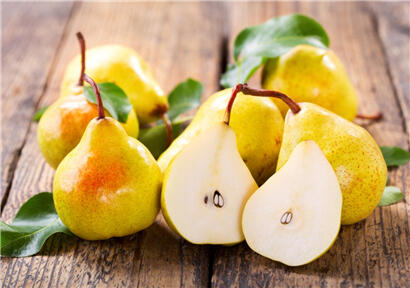
On September 1, Korla fragrant pear began to be picked on trial; on September 6, Korla fragrant pear will be officially picked. This means that in a few days, the fragrant Korla fragrant pear will be on the market in batches. On August 26, the reporter learned the above information from Kurla Fragrant Pear Association in Bayinguoling Mongolian Autonomous Prefecture, Xinjiang. This year's Korla fragrant pear is no longer classified according to the criteria of super grade and first grade. The price of Korla fragrant pear is determined by its sensory index, physical and chemical index and food safety index. On the afternoon of August 26, Zhang Jun, a pear grower, was preparing to pick pears in the orchard of Avati Fishing Ground, Avati Township, Korla City. "We expect to collect 100 tons of fragrant pears this year. Our family is simply too busy to hire more workers." Zhang Jun said that this year, his family's 260 mu Korla fragrant pear, 200 mu of fruit.
This year's output has declined due to strong winds in July. In 2000, Zhang Junjia planted 40 mu Korla fragrant pear besides cotton. "Now only fragrant pears are grown." Zhang Jun said that this year his fragrant pears had been booked by a fruit company in Hangzhou, Zhejiang Province, "just waiting to be picked for money." Journalist learned from Korla Fragrant Pear Association that nearly 630,000 mu of Korla Fragrant Pear were planted in Korla, Yuli and Luntai counties of Bazhou this year, of which 423,000 Mu was planted in Korla. The output of Korla fragrant pear is estimated to be 280,000 tons to 300,000 tons this year. On August 20, the Korla Fragrant Pear Association determined the guiding price and picking time of the pear in 2019, and officially issued two group standards, namely, Korla Fragrant Pear and Korla Fragrant Pear Certification Trademark Management Standard. Unlike previous years, Korla Fragrant Pear is no longer classified according to the criteria of super grade and first grade, but according to the group criteria issued by Korla Fragrant Pear Association, that is, "more than 90-150 grams" is the criterion for the weight of Korla Fragrant Pear commercial fruit. The grade of Korla fragrant pear commodity fruit was determined from sensory index, physical and chemical index and food safety index. It was divided into three grades: A, B and C. The price was determined according to these three grades. According to the "Korla Fragrant Pear Group Standards", this year's purchase price of Korla Fragrant Pear is 11 yuan/kg for grade A fruit, 7.9 yuan/kg for grade B fruit and 6 yuan/kg for grade C fruit. So, how to understand the classification criteria of Korla Fragrant Pear this year? Sheng Zhenming, president of Korla Fragrant Pear Association, introduced that the group standard of Korla Fragrant Pear highlighted the characteristics of Korla Fragrant Pear, such as "fine meat, thin skin, crisp, juicy, refreshing, rich aroma", and paid more attention to food safety and pesticide residue indicators. Among the three classifications, sensory indexes were classified as Korla fragrant pear from six aspects: appearance, taste, color, fruit surface defect, seed maturity and single fruit weight. Grade A fruit has a good shape, smooth surface, fresh peel and complete peduncle.
"25% of the total output of Class A Korla Fragrant Pear has been booked this year." Sheng Zhenming said that at present, Korla Fragrant Pear has been booked by businessmen in Urumqi, Dongguan City, Guangdong Province, Shanghai and other places. In addition, Korla Fragrant Pear also implements the management of "double label and double code" from the packaging. The double labels include GI logo of Chinese geographical indication and certification trademark of "Korla Fragrant Pear" geographical indication with peacock pattern. The double codes include the code of authorized printing and use of trademark and the code of authorized use of trademark. This code is uniquely authorized by the Fragrant Pear Association and its member units once a year. In addition, consumers can also distinguish whether the supplier's supply channel is reliable by whether the merchant has the "Korla Fragrant Pear Origin Geographical Indication Certification Trademark License".

You May Interested In


High Quality β-Nicotinamide adenine dinucleotide CAS 53-84-9 NADwith ready stock and best price
$3E+1/UNIT FOB


2026-10-24
Trade Alert
Delivering the latest product trends and industry news straight to your inbox.
(We'll never share your email address with a third-party.)

Related News
-
SIBUR’s Massive Siberian Petrochemical Complex Shuts After Drone Attack, LPG Supply Disrupted
-
Korea’s First Petrochemical Restructuring Approved, LDPE Market Concentration Surges to 82%
-
Libya’s Largest Refinery Faces Full Shutdown After Five Rounds of Airstrikes
-
Behind Arkema’s ¥430 Million Claim: A Patent War Over Acrylic Acid Is Tearing Off the “Technical Fig Leaf” of China’s Chemical Giants
-
Hormuz Traffic Remains 90% Below Pre-Conflict Levels as Limited Tanker Access Offers Partial Relief
-
South Korea Tests Arctic Commercial Route as Asian Exporters Seek New Logistics Alternatives
-
Another Major Coating Manufacturer Acquired by a Central SOE: BNBM Acquires SUNROAD Group for Over RMB 300 Million, Locks in Three-Year Performance Pledge
-
Kemira Acquires AquaBlue
-
French Cosmetics Exports Poised for First Drop in Over Two Decades in 2025
-
Wacker Under Global Cost Pressure: Dual-Track Restructuring Through Layoffs, Consolidation, and Strategic Repositioning
Recommend Reading
-
![UAE Breaks Ground on World’s First Gigascale Round-the-Clock Renewable Energy Project, Setting a New Global Standard For Clean Energy]()
UAE Breaks Ground on World’s First Gigascale Round-the-Clock Renewable Energy Project, Setting a New Global Standard For Clean Energy
-
![U.S. EPA Targets Perchlorate: A New Safety Line Drawn in Drinking Water Standards]()
U.S. EPA Targets Perchlorate: A New Safety Line Drawn in Drinking Water Standards
-
![Singapore Orders Nestlé Formula Recall as Infant Safety Comes Under the Spotlight]()
Singapore Orders Nestlé Formula Recall as Infant Safety Comes Under the Spotlight
-
![Corn’s Surprise Surge: Export Fireworks Ignite Bullish Sentiment]()
Corn’s Surprise Surge: Export Fireworks Ignite Bullish Sentiment
-
![Cheap Sugar, Costly Lives: WHO Pushes Governments Toward a New Era of Health Taxes]()
Cheap Sugar, Costly Lives: WHO Pushes Governments Toward a New Era of Health Taxes
-
![This Week's Titanium Dioxide Market in China Remains Stable (11.10-11.14)]()
This Week's Titanium Dioxide Market in China Remains Stable (11.10-11.14)
-
![Business Society September 20, 2026 Maleic Anhydride Trend Analysis: Volatility]()
Business Society September 20, 2026 Maleic Anhydride Trend Analysis: Volatility
-
![Premium Global Chemical Sourcing Requests (3-7 Nov 2025)]()
Premium Global Chemical Sourcing Requests (3-7 Nov 2025)
-
![Construction Starts Decline; Isooctanol Prices Fluctuate and Fall This Week]()
Construction Starts Decline; Isooctanol Prices Fluctuate and Fall This Week
-
![Business Society, September 20, 2026: Propylene Oxide Trend Analysis – Market Trends Remain Volatile]()
Business Society, September 20, 2026: Propylene Oxide Trend Analysis – Market Trends Remain Volatile