On August 20, the Korea Fair Trade Commission conditionally approved the "Daesan No. 1" petrochemical business restructuring project, marking the official implementation of the first case in South Korea's petrochemical industry restructuring. The Daesan Industrial Complex integration plan, promoted by Lotte Chemical and HD Hyundai Chemical, had been under review for nine months since its preliminary application in November 2025, ultimately clearing the final hurdle.
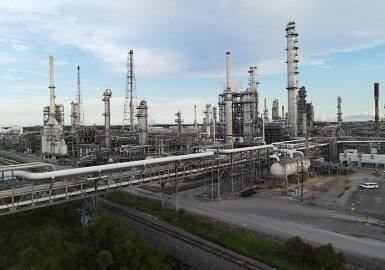
HD Hyundai Chemical will absorb and merge Lotte Daesan Petrochemical, while Lotte Chemical will make additional acquisitions of HD Hyundai Chemical shares. The final structure will give Lotte Chemical and HD Hyundai Oilbank each a 50% stake in the new entity. The two companies' naphtha cracking complexes (NCC) and other petrochemical production facilities within the same complex will be consolidated, with 1.1 million tons per year of ethylene capacity entering the countdown to shutdown.
The Fair Trade Commission's review focused on another number. Before the merger, Korea's LDPE (low-density polyethylene) and EVA (ethylene-vinyl acetate) markets had four producers: Hanwha Solutions, LG Chem, Lotte Chemical, and HD Hyundai Chemical. After the merger, this will shrink to three, and the three companies together will hold a combined 82% market share in LDPE and 95% in EVA. The Fair Trade Commission determined that this level of concentration would significantly increase the potential for coordination among companies on prices, output, and trading terms, materially restricting market competition.
The Fair Trade Commission attached a five-year set of behavioral conditions. The new company's domestic price increases for LDPE and EVA must be tied to export price increases, with no arbitrary price hikes allowed. The company must maintain all product grades supplied before the merger, and sharing sensitive commercial information such as prices, volumes, costs, and inventory with affiliates is prohibited. Certain personnel overlap restrictions also apply.
The Fair Trade Commission's restrictions focus on downstream polymers like LDPE and EVA. However, they do not address how upstream ethylene and propylene capacity reductions will transmit downstream or affect actual LDPE and EVA output. If ethylene shortages force a passive decline in LDPE and EVA production, downstream small and medium-sized enterprises will face a very real supply disruption risk.
"Daesan No. 1" is the first approved project since the government released its petrochemical industry restructuring roadmap in August 2025. The government simultaneously launched a support package totaling over 2.1 trillion won, covering finance, taxation, electricity tariff reductions, and other areas. The Yeosu Petrochemical Complex restructuring is already under review, and subsequent No. 2 and No. 3 plans are expected to accelerate.
South Korea is digesting its overcapacity through a combination of shutdowns and consolidation. When Korean companies begin to consolidate, Chinese producers of similar products will face a more concentrated and price-competitive counterpart.