Before Carrefour and after metro, foreign giants hitchhiked local retail to zero
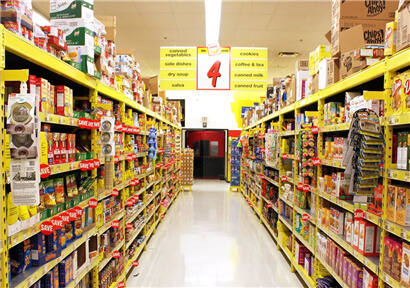
Carries local retail, or re enters, which means a new beginning for foreign retail. After 23 years' entry into China, the first batch of foreign hypermarkets, Metro, once settled in the Chinese market, were finally sold to local supermarket Wumart. Once upon a time, foreign retailers were the initiators of local retail in China and the objects of study. There were many supply chain and talent experiences in international retail giants. But up to now, foreign retail enterprises have made substantial adjustments to the Chinese market, including the sale to Wumart's Metro China and Carrefour China, which was acquired by Suning. On the other hand, a number of new foreign retail enterprises, such as Aldi and Costco, have also entered the market. In the view of the insiders, the change and adjustment of the market environment, the demands of people's consumption upgrading, and the change of shopping habits... All kinds of variables require retailers to adjust in real time to meet the market demand. In fact, it means a new beginning for foreign retailers to take advantage of local retailing or re-entry.
The news that Wumart has acquired Metro China is settled. From the result, Wumart, multipoint and Metro China have a trend of "peach garden triple bond". It can be seen that up to now, although a group of foreign retail enterprises that came earlier in the current domestic commercial market still maintain their independence and have a high visibility of players, only Wal Mart, AEON and so on are few. But it doesn't mean that China's consumer market is not attractive to foreign retail enterprises. On the contrary, on the one hand, in 2018, the total retail sales of consumer goods in China reached 38098.7 billion yuan, an increase of 9.0% over the previous year, and by 2019, the proportion of consumption in GDP has risen for eight consecutive years. From the data changes, we can see that China's consumer market is still expanding year by year; on the other hand, with the admission of a number of new foreign retail enterprises, such as Aldi and Costco, it can still be proved that The attraction of China's consumer market. The key to the problem lies in the change of market environment and the enterprise's own coping strategies. Pei Liang, President of China chain operation association, once mentioned in the signed article "Reflection on the departure of foreign investors in retail industry" that during the ten years from 2009 to 2018, the main costs (rent, labor, water and electricity) of domestic real retail industry continued to rise, accounting for 8.9% of sales in 2018, up from 4.5% in 2009. With the continuous increase of operating costs, the downward pressure on the return on investment of retail industry is increasing.
In Pei Liang's view, in the 1990s, foreign investment in China's newly opened retail industry was eager to focus on the fast-growing consumer market, low labor force and low-level market competition. Now, with the disappearance and weakening of some favorable factors in the past. In the face of rising cost and declining performance, it is a universal choice for foreign supermarkets to choose to adjust. Hu Chuncai, an expert in retail industry and general manager of Shanghai Shangyi consulting company, also told reporters that as for metro, when it first entered the Chinese market, it seized the earliest dividend of Chinese consumers. At that time, China was moving from poverty to a well-off society, and consumers needed standardized and rich commodities, which was a foreign retail including Metro. The advantages of giants. However, as consumers pursue personalized and differentiated products, foreign retail enterprises fail to adapt to the adjustment in time from the commodity level. In fact, this is a new beginning for foreign retailers. In this new competition, foreign retail enterprises need to adjust their mentality, and stand in the same line with local enterprises in China, competing cost, technology and user stickiness. As for metro, according to the final agreement signed with Wumart, the two parties will establish a joint venture, and metro will still hold 20% of the equity of the joint venture. This means that Metro is not completely out of the Chinese market. From Hu Chuncai's point of view, based on the decision of Metro to retain 20% of the shares of the joint venture company and the result of maintaining the independent operation of "Metro" brand and the existing staff team under the Wumart agreement, the biggest benefit of Metro China's sale is that it can not only catch the train of retail digital upgrade, but also maintain one Metro in the Chinese market. A position that can be advanced or retreated. In addition, as far as the current domestic market is concerned, e-commerce has a huge impact on the traditional retail model. According to the data of the Bureau of statistics, in the first half of 2019, the total retail sales of social consumer goods in China reached 19521 billion yuan, a nominal increase of 8.4% year-on-year; the national online retail sales reached 4816.1 billion yuan, a year-on-year increase of 17.8%. Among them, the online retail sales of physical goods reached 3816.5 billion yuan, an increase of 21.6%, accounting for 19.6% of the total retail sales of consumer goods, an increase of 2.2 percentage points over the same period last year. In recent years, both local retailers and foreign retail enterprises are upgrading their digital stores. In the middle of 2018, Wal Mart China and Tencent formed a deep strategic partnership, focusing on shopping.

You May Interested In


High Quality β-Nicotinamide adenine dinucleotide CAS 53-84-9 NADwith ready stock and best price
$3/UNIT FOB


2026-10-18
Trade Alert
Delivering the latest product trends and industry news straight to your inbox.
(We'll never share your email address with a third-party.)

Related News
-
Total social retail sales from January to February amounted to RMB 242.73 billion in Beijing
-
German Crocodile Paint Turns Strategic Focus to Retail Market
-
India Imposes Anti-Dumping Duties on Rubber Chemicals from China, EU and U.S.
-
Venezuela’s Moron Petrochemical Complex Restarts as Regional Supply Risks Remain
-
Two Contractors Hospitalized After Deflagration at BASF Ludwigshafen Site
-
Urea Market Lacks Direction as China, Iran Supply and India Tender Shape Outlook
-
“Milk Sugar 2.0” Cleared for Takeoff: EU Greenlights Next-Gen Human-Identical Oligosaccharide for Infant Nutrition
-
Egypt’s Chemical Surge: $9.4 Billion Export Boom Signals Industrial Powerhouse Rise
-
Glenmark’s $1 Billion Cancer Bet: Oncology Revolution Set to Ignite in FY28
-
China Suspends Sulfuric Acid Exports, Global Copper and Fertilizer Supply Under Strain
Recommend Reading
-
![Celanese Raises Acetyl Chain Prices Globally, VAM Up $150/MT in Latin America]()
Celanese Raises Acetyl Chain Prices Globally, VAM Up $150/MT in Latin America
-
![EU Finalizes Anti-Dumping Duties on BDO from China, with Rates up to 113.7%]()
EU Finalizes Anti-Dumping Duties on BDO from China, with Rates up to 113.7%
-
![India Imposes Final Anti‑Dumping Duties on Ethylenediamine from China, EU, Saudi Arabia, and Taiwan, China, with Top Rate of $575/tonne]()
India Imposes Final Anti‑Dumping Duties on Ethylenediamine from China, EU, Saudi Arabia, and Taiwan, China, with Top Rate of $575/tonne
-
![European Petrochemicals Enter 'Era of Downsizing' as Dow, TotalEnergies, Shell Exit Older Cracker Assets]()
European Petrochemicals Enter 'Era of Downsizing' as Dow, TotalEnergies, Shell Exit Older Cracker Assets
-
![Kraton Announces Strategic Plan to Streamline Polymer Operations in Berre, France]()
Kraton Announces Strategic Plan to Streamline Polymer Operations in Berre, France
-
![June China Urea Market Fluctuates]()
June China Urea Market Fluctuates
-
![June China Isopropanol Market Prices Decline]()
June China Isopropanol Market Prices Decline
-
![In June, the overall market for maleic anhydride in China saw a significant decline]()
In June, the overall market for maleic anhydride in China saw a significant decline
-
![Multiple Negative Factors Weigh on Butadiene in June, Driving Prices Lower]()
Multiple Negative Factors Weigh on Butadiene in June, Driving Prices Lower
-
![June Shandong Asphalt Market Exhibits an Overall Trend of Rising First and Then Falling]()
June Shandong Asphalt Market Exhibits an Overall Trend of Rising First and Then Falling