Product
Supplier
Encyclopedia
Inquiry
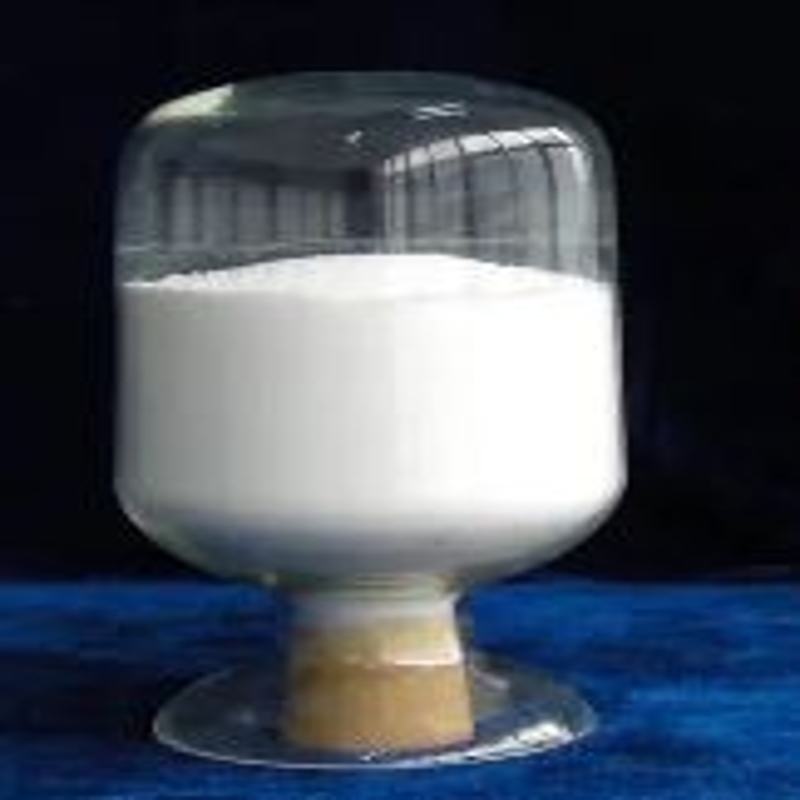
L - Glutamic Acid buy - large image1
L - Glutamic Acid buy - image1

L - Glutamic Acid

15 Inquiries

Unit Price: Get Latest Price
CAS No.:

56-86-0

Grade:

Pharmaceutical grade / Food grade

Content:

99%

Port:

Qingdao

Brand:

East Chemsources

Packaging:

25kg/Cardboard Drum

Price valid (until):

2025-10-24

Company Type:
Trader
Location:
China
Qualification:
Main Products:

Food additives,Pharmaceutical raw materials,Chemicals,Comestic raw materials

  • Product Description

  • Seller Information

  • Inquiry History

  • Description


      Product Detail  


    • Basic Information
      • Definition and Structure:L - Glutamic acid is an α - amino acid with the chemical formula C₅H₉NO₄ and a molecular weight of 147.13. It contains an amino group (-NH₂) and two carboxyl groups (-COOH) in its structure, and its chemical name is (S)-2 - aminopentanedioic acid.
      • CAS Number:56 - 86 - 0.

    • Physicochemical Properties
      • Appearance:Usually white crystalline powder.
      • Melting Point:205℃ (decomposition).
      • Solubility:Slightly soluble in cold water and easily soluble in hot water. 
      • Acidity and Alkalinity:It has acidity. The two carboxyl groups in the molecule can dissociate hydrogen ions in aqueous solution, and its isoelectric point is 3.22.

    • Physiological Functions
      • Involved in Protein Synthesis:It is one of the basic units that make up proteins. During the process of protein biosynthesis, it is connected to other amino acids through peptide bonds to form protein molecules with specific functions. The content and arrangement order of L - glutamic acid in different proteins are different, which determines the diversity of protein structures and functions.

      • Neurotransmitter Function:In the nervous system, L - glutamic acid is an important excitatory neurotransmitter that transmits signals between neurons and plays a key role in the cognitive, learning, and memory functions of the brain. It is involved in regulating synaptic plasticity and neuronal excitability and is closely related to the normal physiological functions of the brain.

    •  Sources
      • Food Sources:There are many foods rich in L - glutamic acid, such as meat, fish, dairy products, beans, nuts, and some vegetables and fruits. For example, kelp, mushrooms, soybeans, and milk are all good sources of glutamic acid. In addition, in some fermented foods such as soy sauce and miso, there is also a high content of glutamic acid, which is produced by the decomposition of proteins by microorganisms during the fermentation process.

      • Synthesis in the Body:The human body can synthesize L - glutamic acid from other substances, and it belongs to non - essential amino acids. In cells, it can be produced by the transamination of α - ketoglutaric acid.
    • Application Fields

      • Food Industry:As a food additive, L - glutamic acid and its sodium salt (such as monosodium glutamate, i.e., sodium glutamate) are widely used to enhance the umami taste of food. It can significantly improve the flavor of food and make the food more delicious, so it has a wide range of applications in cooking and food processing. In addition, L - glutamic acid can also be used as a nutritional fortifier to increase the nutritional value of food.

      • Feed Industry:It is an important additive in animal feed. It can improve the growth performance and feed utilization rate of animals and promote the growth and development of animals. In aquaculture, it also has a positive effect on the growth and immunity of aquatic animals such as fish and shrimp.

      • Pharmaceutical Field:It is often used as an intermediate in drug synthesis for the preparation of some drugs for the treatment of liver diseases, neurological diseases, etc. For example, L - glutamic acid can be used to treat hepatic encephalopathy and improve liver function by promoting the metabolism of ammonia. In addition, it is also used in health products and has the effects of improving memory and anti - fatigue.
    • Basic Information
      • Definition and Structure:L - Glutamic acid is an α - amino acid with the chemical formula C₅H₉NO₄ and a molecular weight of 147.13. It contains an amino group (-NH₂) and two carboxyl groups (-COOH) in its structure, and its chemical name is (S)-2 - aminopentanedioic acid.
      • CAS Number:56 - 86 - 0.
    • Physicochemical Properties
      • Appearance:Usually white crystalline powder.
      • Melting Point:205℃ (decomposition).
      • Solubility:Slightly soluble in cold water and easily soluble in hot water. It is insoluble in organic solvents such as ethanol, ether, and acetone.
      • Acidity and Alkalinity:It has acidity. The two carboxyl groups in the molecule can dissociate hydrogen ions in aqueous solution, and its isoelectric point is 3.22.
    • Physiological Functions
      • Involved in Protein Synthesis:It is one of the basic units that make up proteins. During the process of protein biosynthesis, it is connected to other amino acids through peptide bonds to form protein molecules with specific functions. The content and arrangement order of L - glutamic acid in different proteins are different, which determines the diversity of protein structures and functions.
      • Neurotransmitter Function:In the nervous system, L - glutamic acid is an important excitatory neurotransmitter that transmits signals between neurons and plays a key role in the cognitive, learning, and memory functions of the brain. It is involved in regulating synaptic plasticity and neuronal excitability and is closely related to the normal physiological functions of the brain.
      • Metabolic Regulation:L - glutamic acid plays an important role in the body's metabolic process. It can participate in the urea cycle, help the body excrete ammonia, and maintain the body's nitrogen balance. At the same time, it is also an important precursor for the synthesis of other amino acids such as glutamine and proline, and has an important position in amino acid metabolism and biosynthesis.
    • Sources
      • Food Sources:There are many foods rich in L - glutamic acid, such as meat, fish, dairy products, beans, nuts, and some vegetables and fruits. For example, kelp, mushrooms, soybeans, and milk are all good sources of glutamic acid. In addition, in some fermented foods such as soy sauce and miso, there is also a high content of glutamic acid, which is produced by the decomposition of proteins by microorganisms during the fermentation process.
      • Synthesis in the Body:The human body can synthesize L - glutamic acid from other substances, and it belongs to non - essential amino acids. In cells, it can be produced by the transamination of α - ketoglutaric acid.
    • Application Fields
      • Food Industry:As a food additive, L - glutamic acid and its sodium salt (such as monosodium glutamate, i.e., sodium glutamate) are widely used to enhance the umami taste of food. It can significantly improve the flavor of food and make the food more delicious, so it has a wide range of applications in cooking and food processing. In addition, L - glutamic acid can also be used as a nutritional fortifier to increase the nutritional value of food.
      • Feed Industry:It is an important additive in animal feed. It can improve the growth performance and feed utilization rate of animals and promote the growth and development of animals. In aquaculture, it also has a positive effect on the growth and immunity of aquatic animals such as fish and shrimp.
      • Pharmaceutical Field:It is often used as an intermediate in drug synthesis for the preparation of some drugs for the treatment of liver diseases, neurological diseases, etc. For example, L - glutamic acid can be used to treat hepatic encephalopathy and improve liver function by promoting the metabolism of ammonia. In addition, it is also used in health products and has the effects of improving memory and anti - fatigue.
    Items Specifications


    Basic Info
    Product Name:

    L-Glutamic acid

    Other Name:

    L-Glutamic acid;Glutamic acid,L-;Aciglut;Glusate;Glutacid;α-Glutamic acid;l-Glutaminic acid;Glutaminol;Glutaminic acid;Glutaton;Pentanedioic acid,2-amino-,(S)-;L-(+)-Glutamic acid;α-Aminoglutaric acid;1-Aminopropane-1,3-dicarboxylic acid;Glutamic acid;(S)-(+)-Glutamic acid;Glutamicol;Glutamidex;(S)-Glutamic acid;(S)-2-Aminopentanedioic acid;2-Aminoglutaric acid;(2S)-2-Aminopentanedioic acid;L-α-Aminoglutaric acid;L-Glutaminic acid;E 620;NSC 143503;(S)-2-Amino-1,5-pentanedioic acid;(+)-L-Glutamic acid;Sortem;(2S)-2-Azaniumyl-5-hydroxy-5-oxopentanoate;138-16-9;6899-05-4;10549-13-0;2087491-17-4

    CAS No.:

    56-86-0

    Molecular Formula:

    C5H9NO4

    InChIKeys:

    InChIKey=WHUUTDBJXJRKMK-VKHMYHEASA-N

    Molecular Weight:

    147.12900

    Exact Mass:

    147.13

    EC Number:

    612-072-6

    UNII:

    3KX376GY7L

    DSSTox ID:

    DTXSID5020659

    Color/Form:

    Orthorhombic plates from dilute alcohol

    HScode:

    2922421000

    Characteristics
    PSA:

    100.62000

    XLogP3:

    -3.7

    Appearance:

    White crystalline powder

    Density:

    1.46 g/cm3

    Melting Point:

    224 °C (decomp)

    Boiling Point:

    333.8ºC at 760 mmHg

    Flash Point:

    155.7ºC

    Refractive Index:

    1.508

    Water Solubility:

    H2O: 7.5 g/L (20 ºC)

    Storage Conditions:

    Keep container tightly closed in a dry and well-ventilated place. /L-Glutamic acid hydrochloride/

    Vapor Pressure:

    <1.10X10⁻⁵ mm Hg at 20 deg C (OECD Guideline 104 (Vapor Pressure Curve))

    Toxicity:

    LD50 orally in Rabbit: > 30000 mg/kg

    Odor:

    Odorless

    Taste:

    Umami sour taste|Acidic (glutamate-like) taste

    Henrys Law Constant:

    Henry's Law constant = 3.8X10⁻¹³ atm-cu m/mole at 25 °C (est)

    Dissociation Constants:

    2.23 (at 0 °C)|pK1: 2.19; pK2: 4.25; pK3: 9.67

    Collision Cross Section:

    127.72 Ų [M-H]- [CCS Type: DT, Method: stepped-field]|123 Ų [M+H]+ [CCS Type: TW, Method: calibrated with polyalanine]|131.1 Ų [M+H]+ [CCS Type: DT, Method: single field calibrated with ESI Low Concentration Tuning Mix (Agilent)]|149.8 Ų [M+K]+ [CCS Type: DT, Method: single field calibrated with ESI Low Concentration Tuning Mix (Agilent)]|123.8 Ų [M-H]- [CCS Type: DT, Method: single field calibrated with ESI Low Concentration Tuning Mix (Agilent)]|131.8 Ų [M+Na-2H]- [CCS Type: DT, Method: single field calibrated with ESI Low Concentration Tuning Mix (Agilent)]|125.65 Ų [M-H]- [CCS Type: DT, Method: stepped-field]|132 Ų [M-2H+Na]-

    Experimental Properties:

    Decomposes at 160 °C|log Kow: <4.0 at 20 °C, pH unknown (OECD Guideline 107 (Partition Coefficient (n-octanol / water), Shake Flask Method))|Crystalline solid. Sublimes when heated to 200 °C. d: 1.54 kg/l (20 °C). Soluble in water. /L-Glutamic acid/|Releases hydrochloric acid on contact with water /Hydrochloride/|For more Other Experimental Properties (Complete) data for GLUTAMIC ACID (8 total), please visit the HSDB record page.

    Hazard Identification

    Classification of the substance or mixture

    Not classified.

    GHS label elements, including precautionary statements

    Pictogram(s) No symbol.
    Signal word

    No signal word

    Hazard statement(s)

    none

    Precautionary statement(s)
    Prevention

    none

    Response

    none

    Storage

    none

    Disposal

    none

    Other hazards which do not result in classification

    no data available

    Handling and Storage

    Precautions for safe handling

    Handling in a well ventilated place. Wear suitable protective clothing. Avoid contact with skin and eyes. Avoid formation of dust and aerosols. Use non-sparking tools. Prevent fire caused by electrostatic discharge steam.

    Conditions for safe storage, including any incompatibilities

    Keep container tightly closed in a dry and well-ventilated place. L-Glutamic acid hydrochloride

  • Seller Information
    Business Type:

    Trader

    Main Products:

    Food additives,Pharmaceutical raw materials,Chemicals,Comestic raw materials

    Location:

    Room 501, Unit 6, No. 40, hushan road,Licang,Qingdao

    Payment Terms:

    TT against copy of documents,TT against B/L draft before shipment,100% TT in advance

    Average lead Time:

    10

    Total Annual Revenue:

    $1 million-$2.5 million

    Total Employees:

    11-50

    Year of Establishment:

    2017

    QINGDAO EASTCHEMSORCES TRADE LIMITED is a leading Manufactory supplier of Sorbitol, Citric acid, Sodium hypochlorite based in Qingdao, Shandong, China. With a commitment to quality and customer satisfaction, QINGDAO EASTCHEMSORCES TRADE LIMITED has become a trusted name in the industry. Our product line includes a range of high-quality Sorbitol, Citric acid, Sodium hypochlorite, which are available at competitive prices. QINGDAO EASTCHEMSORCES TRADE LIMITED has established itself as a reliable supplier of chemical products on the echemi.com.

  • Inquiry History
    15 Inquiries
    Country Product Purchase Quantity Date Posted
    Turkey

    L- Glutamic Acid

    1 20' Fcl Sep 6, 2024
    United Arab Emirates

    L-Glutamic Acid

    300 MT Mar 27, 2026
    Egypt

    Glutamic Acide

    1.00 MT Jul 7, 2026
    Romania

    L-Glutamic acid

    100 KG May 15, 2025
    India

    L- Glutamic Acid

    20 MT Nov 17, 2025
    Greece

    GLUTAMIC ACID

    300.00 KG Sep 24, 2025
    Egypt

    Glutamic Acide

    1 MT Aug 18, 2025
    Poland

    L-Glutamic acid

    300 KG Mar 11, 2025
    Oman

    L-Glutamic Acid

    1000 KG Aug 30, 2024
    India

    L-Glutamic acid 99-100.5%

    10 KG Jun 10, 2024
    Turkey

    L-Glutamic Acid

    1 KG Apr 17, 2025
    India

    L-Glutamic acid 99-100.5%

    10 KG Jun 10, 2024
    Egypt

    Glutamic acid

    2000 KG Apr 19, 2024
    India

    L-series amino acid

    25 KG Feb 22, 2024
    Turkey

    L- Glutamic Acid

    1 20' Fcl Nov 21, 2024
    Post an enquiry for this product
pic ×

Scan the QR Code to Share

All products displayed on this website are only for non-medical purposes such as industrial applications or scientific research, and cannot be used for clinical diagnosis or treatment of humans or animals. They are not medicinal or edible.

According to relevant laws and regulations and the regulations of this website, units or individuals who purchase hazardous materials should obtain valid qualifications and qualification conditions.

The information shown above is provided by the enterprise itself, and the authenticity, accuracy and legitimacy of the content are the responsibility of the publishing company. ECHEMI does not bear any guarantee responsibility for this. Please be aware that risks in internet transactions objectively exist.

Feedback & Suggestions
Send Message

Thank you for your feedback. If you require further assistance, please contact us by email at info@echemi.com or call us at +86-532-55729510.