Product
Supplier
Encyclopedia
Inquiry
Home > Specialty Chemicals > 2-Ethylhexanoic acid for Sale > 2-Ethylhexanoic acid TOP 1 Supplier
2-Ethylhexanoic acid TOP 1 Supplier buy - large image1
2-Ethylhexanoic acid TOP 1 Supplier buy - image1
2-Ethylhexanoic acid TOP 1 Supplier buy - image2
2-Ethylhexanoic acid TOP 1 Supplier buy - image3
2-Ethylhexanoic acid TOP 1 Supplier buy - image4
2-Ethylhexanoic acid TOP 1 Supplier buy - image5
2-Ethylhexanoic acid TOP 1 Supplier buy - image6

2-Ethylhexanoic acid TOP 1 Supplier

TDS 12 Inquiries

Unit Price: Get Latest Price
CAS No.:

149-57-5

Grade:

Industrial Grade

Content:

99%

Port:

Qingdao

Brand:

WONDER

Packaging:

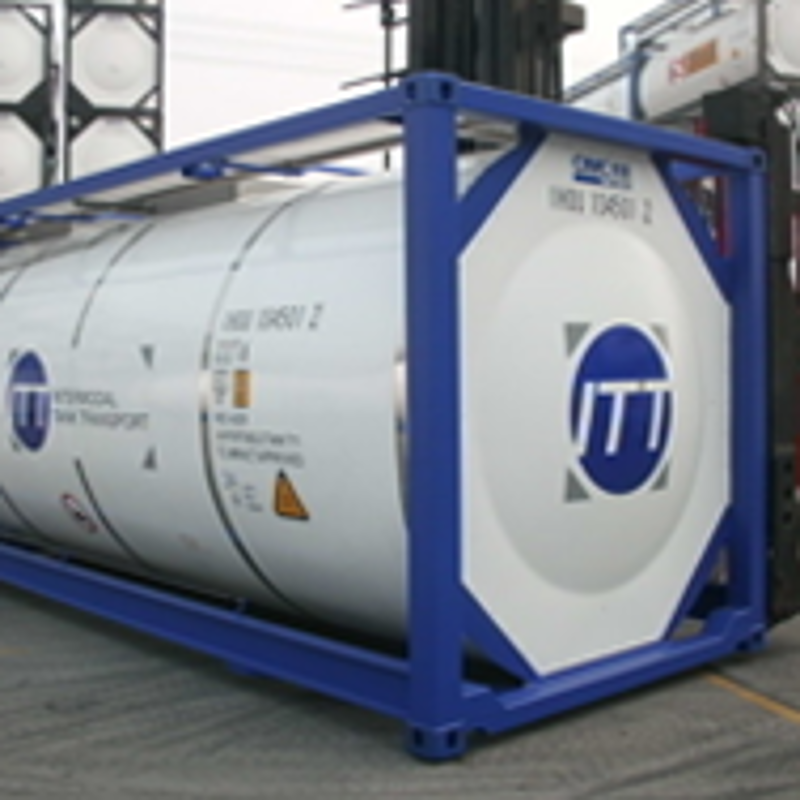
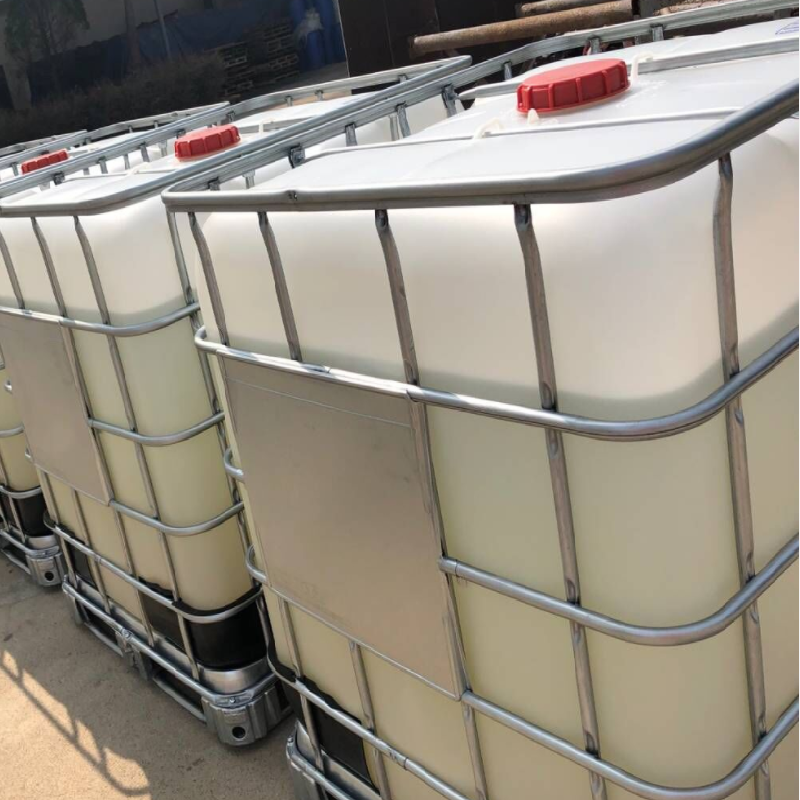
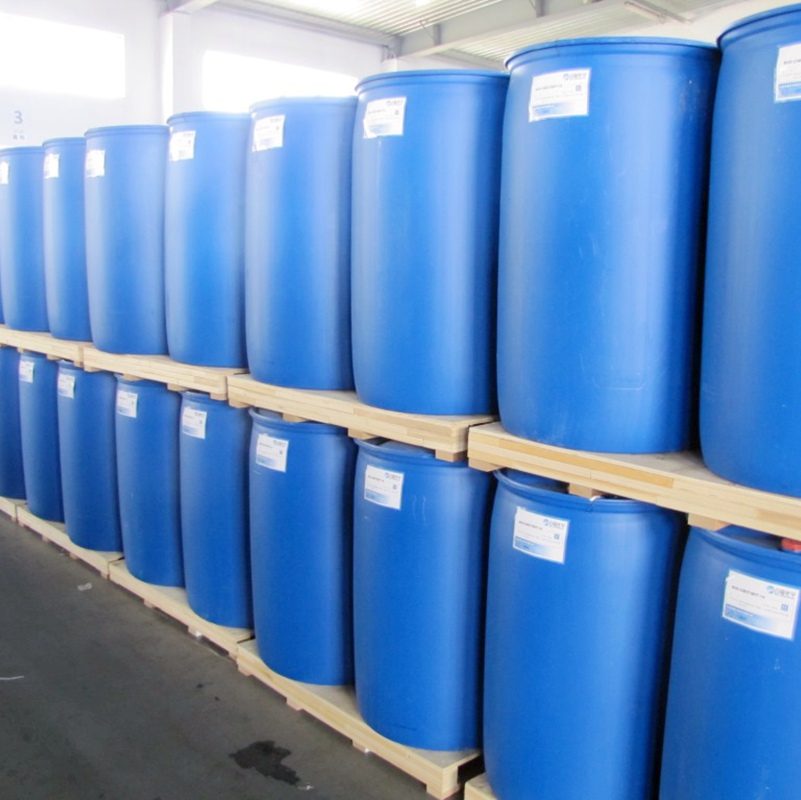
200L Drum, IBC, ISO TANK

Price valid (until):

2025-06-24

Company Type:
Manufactory
Location:
China
Qualification:
Main Products:

2 ethylhexyl nitrate; cetane number improver;,diesel fuel additives,diesel lubricity improver,2-EHN,anti-knock additives, MMT,additives for diesel fuel

  • Product Description

  • Seller Information

  • Inquiry History

  • Description

    Product Data   Sheet

    2 - EHA  (2- Ethylhexanoic   Acid )

    Product Name

    2-Ethylhexanoic Acid

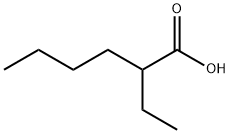
    C4H9C (C2H5) HCOOH

    CAS NO.: 149-57-5

    C8H16O2=144.21

    Characteristic

    Dissolve   in   the   ether . Dissolve   in   the ethanol a little. It is oily liquid with gentle smell.


    Application

    (1) 2-EHA can be transformed into metal salt ,   such as Cobalt, Manganese, L ead , Zinc ,   Calcium , Zirconium , Rare   earth   and   so   on . It   can   be   used   in   coating dryer, unsaturated   p olyester   resin   accelerator , catalytic   agent .

    (2) Could   be   used   for   making   complex   lube , refrigeration   lube , Oil   product , Dispel   bubble ,   antir ust .

    (3 )   Some   of   its   metal   salt   could   be   used   for   making   PVC   hot   stabilization   agent , some   of its met al   salt   could   be   used   in   plastic   pressing   or   engaging   product ;

    ( 4 ) Could   be   used   in   bactericid , antiseptic , cosmetics , perfume   etc .

    (5) Could   be   used   for   making   automobile   anti - freeze , the   additive   of   shake   preventing glass   film .

    ( 6 )   It   could   be   used   as   thickening   agent , Hydrocarbon   gelling   agent   etc.

    ( 7 )   Some of its salt could be used for making food additive and feed additive. It   could   be used   instead   of   naphthenic   acid   or   use   with   naphthenic   acid , the   effect will be better.


    Physical & Chemical Properties


    NAME

    SP E CIFICATION

    D ensity   (20 )/ kg/m3

    0 .905 0.91 8

    Flashing   Point  

    1 27

    Viscosity  @ 2 0

    7 .7*10 -3 Pa.s

    Appearance      

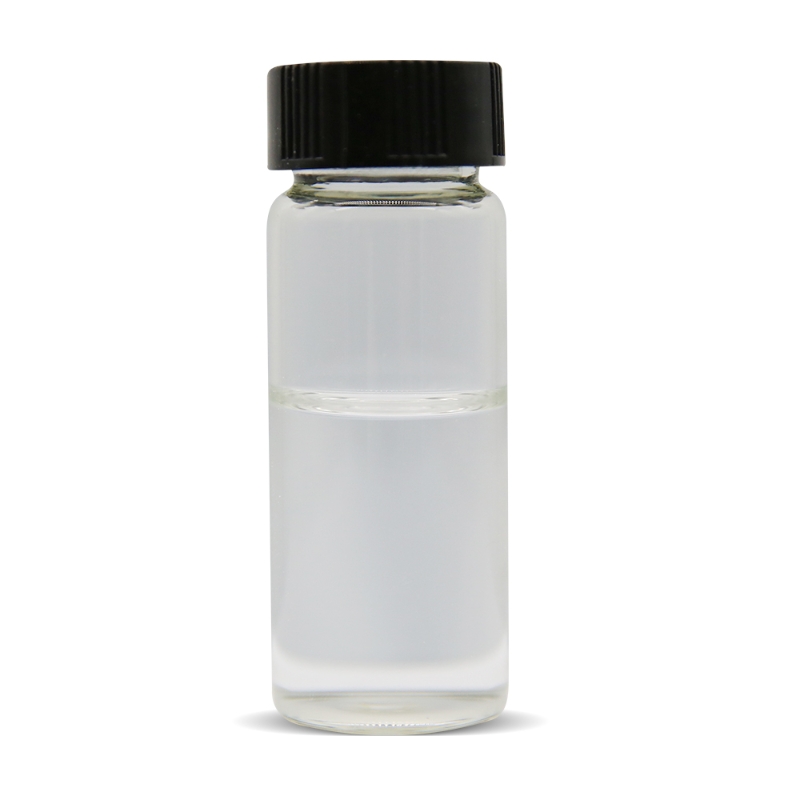
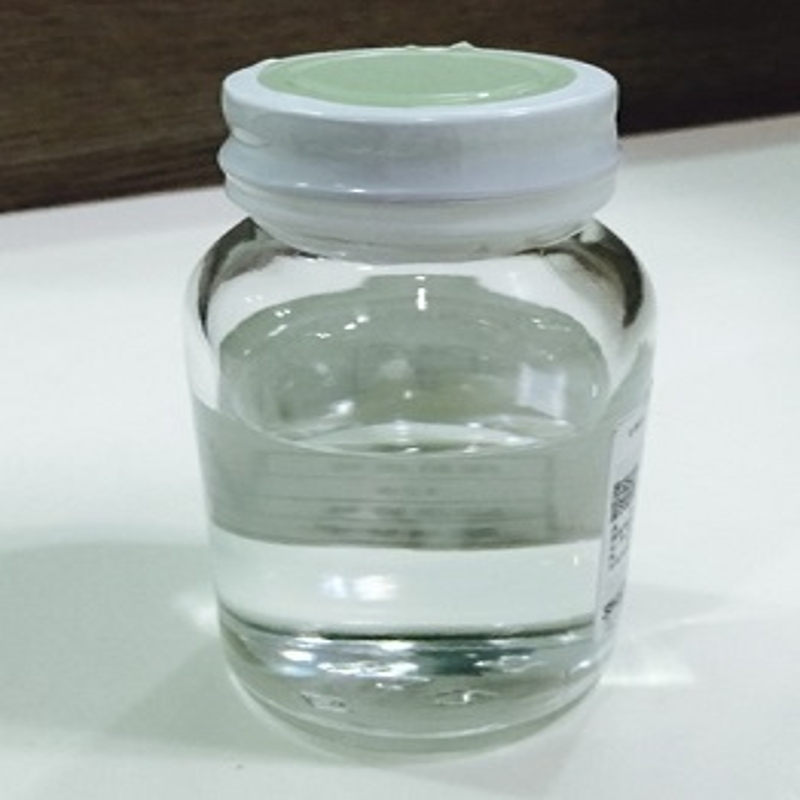
    Clear   and   transparent   oiled   liquid

    P urity

    99%

    Acid   Value   KOH   mg / g

    385

    Boiling   point

    7 60 mmHg   228 C

    Condensation   point   

    -118


    Packaging : Net  190 kgs   per   plastic   drum


    2-Ethylhexanoic acid Basic information
    Product Name: 2-Ethylhexanoic acid
    Synonyms: (RS)-2-Ethylhexansαure;2-Ethyl-1-hexanoic acid;2-Ethyl-1-hexanoicacid;2-BUTYLBUTANOIC ACID;(+/-)-2-ETHYLHEXANOIC ACID;2-ETHYLHEXOIC ACID;2-ETHYLCAPROIC ACID;2-ETHYLCAPRONIC ACID
    CAS: 149-57-5
    MF: C8H16O2
    MW: 144.21
    EINECS: 205-743-6
    Product Categories: Building Blocks;C8;Carbonyl Compounds;Carboxylic Acids;Chemical Synthesis;Organic Building Blocks;Industrial/Fine Chemicals;149-57-5
    Mol File: 149-57-5.mol
    Shop 2-Ethylhexanoic acid TOP 1 Supplier-Detailed Image 1

    2-Ethylhexanoic acid Chemical Properties
    Melting point  -59 °C
    Boiling point  228 °C(lit.)
    density  0.906
    vapor density  4.98 (vs air)
    vapor pressure  <0.01 mm Hg ( 20 °C)
    refractive index  n20/D 1.425(lit.)
    Fp  230 °F
    storage temp.  Store below +30°C.
    solubility  1.4g/l
    form  Liquid
    pka pK1:4.895 (25°C)
    color  Clear
    PH 3 (1.4g/l, H2O, 20℃)
    Odor Mild odour
    PH Range 3 at 1.4 g/l at 20 °C
    biological source synthetic
    explosive limit 1.04%, 135°F
    Water Solubility  2 g/L (20 ºC)
    BRN  1750468
    Exposure limits ACGIH: TWA 5 mg/m3
    Stability: Stable. Combustible. Incompatible with strong oxidizing agents, reducing agents, bases.
    InChIKey OBETXYAYXDNJHR-UHFFFAOYSA-N
    LogP 2.7 at 25℃
    CAS DataBase Reference 149-57-5(CAS DataBase Reference)
    NIST Chemistry Reference Hexanoic acid, 2-ethyl-(149-57-5)
    EPA Substance Registry System 2-Ethylhexanoic acid (149-57-5)

    Safety Information
    Hazard Codes  Xn
    Risk Statements  63-41-37/38-20/21/22
    Safety Statements  36/37-36/37/39-26-2
    RIDADR  UN 3265 8/PG 2
    WGK Germany  1
    RTECS  MO7700000
    13
    Autoignition Temperature 699 °F
    TSCA  Yes
    HazardClass  8
    PackingGroup  III
    HS Code  29159080
    Hazardous Substances Data 149-57-5(Hazardous Substances Data)
    Toxicity LD50 orally in Rabbit: 3640 mg/kg LD50 dermal Rabbit > 2000 mg/kg
    MSDS Information

    2-Ethylhexanoic acid Usage And Synthesis
    Chemical Properties colourless liquid
    Uses Paint and varnish driers (metallic salts). Ethylhexoates of light metals are used to convert some mineral oils to greases. Its esters are used as plasticizers.
    Uses 2-Ethylhexanoic acid is used in the preparation of metal derivatives, which act as a catalyst in polymerization reactions. For example, tin 2-ethylhexanoate is used in the manufacturing of poly(lactic-co-glycolic acid). It is also used as a stabilizer for polyvinyl chlorides. It is also involved in solvent extraction and dye granulation. Further, it is used to prepare plasticizers, lubricants, detergents, flotation aids, corrosion inhibitors and alkyd resins. In addition to this, it serves as a catalyst for polyurethane foaming.
    Uses 2-Ethylhexanoic acid can be used:
    • As a reactant in esterification , decarboxylative alkynylation , and preparation of alkyl coumarins via decarboxylative coupling reactions.
    • In the organocatalytic medium for the preparation of various 3,4-dihydropyrimidin-2(1H)-ones/thiones by Biginelli reaction.

    Definition ChEBI: 2-Ethylhexanoic acid is a branched-chain fatty acid.
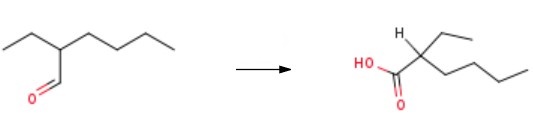
    Preparation In a dry 1L three-neck bottle, Add isooctyl aldehyde (80g, 0.62mol) And the solvent 2-ethylhexanoic acid (240g, 1.66mol), ligand L8 (5.24mg, 0.007mmol), cesium carbonate (18.24mg, 0.056mmol), potassium acetate 160mg, placed in a water bath, mechanical under nitrogen atmosphere Stir, after the temperature rises to 30 ° C, Air flow was started at a flow rate of 11.9 g/h, and the reaction temperature was maintained at 30-35 ° C by adding cooling water to the water bath. After 6 hours of reaction, the conversion of isooctyl aldehyde was calculated to be 99.6%. The selectivity of 2-ethylhexanoic acid was 99.5%, and the yield was 99.10%.
    Shop 2-Ethylhexanoic acid TOP 1 Supplier-Detailed Image 2
    General Description 2-Ethylhexanoic acid is a colorless to light yellow liquid with a mild odor. 2-Ethylhexanoic acid will burn though 2-Ethylhexanoic acid may take some effort to ignite. 2-Ethylhexanoic acid is slightly soluble in water. 2-Ethylhexanoic acid is corrosive to metals and tissue. 2-Ethylhexanoic acid is used to make paint dryers and plasticizers.
    Reactivity Profile 2-Ethylhexanoic acid is a carboxylic acid. Carboxylic acids donate hydrogen ions if a base is present to accept them. They react in this way with all bases, both organic (for example, the amines) and inorganic. Their reactions with bases, called "neutralizations", are accompanied by the evolution of substantial amounts of heat. Neutralization between an acid and a base produces water plus a salt. Carboxylic acids with six or fewer carbon atoms are freely or moderately soluble in water; those with more than six carbons are slightly soluble in water. Soluble carboxylic acid dissociate to an extent in water to yield hydrogen ions. The pH of solutions of carboxylic acids is therefore less than 7.0. Many insoluble carboxylic acids react rapidly with aqueous solutions containing a chemical base and dissolve as the neutralization generates a soluble salt. Carboxylic acids in aqueous solution and liquid or molten carboxylic acids can react with active metals to form gaseous hydrogen and a metal salt. Such reactions occur in principle for solid carboxylic acids as well, but are slow if the solid acid remains dry. Even "insoluble" carboxylic acids may absorb enough water from the air and dissolve sufficiently in 2-Ethylhexanoic acid to corrode or dissolve iron, steel, and aluminum parts and containers. Carboxylic acids, like other acids, react with cyanide salts to generate gaseous hydrogen cyanide. The reaction is slower for dry, solid carboxylic acids. Insoluble carboxylic acids react with solutions of cyanides to cause the release of gaseous hydrogen cyanide. Flammable and/or toxic gases and heat are generated by the reaction of carboxylic acids with diazo compounds, dithiocarbamates, isocyanates, mercaptans, nitrides, and sulfides. Carboxylic acids, especially in aqueous solution, also react with sulfites, nitrites, thiosulfates (to give H2S and SO3), dithionites (SO2), to generate flammable and/or toxic gases and heat. Their reaction with carbonates and bicarbonates generates a harmless gas (carbon dioxide) but still heat. Like other organic compounds, carboxylic acids can be oxidized by strong oxidizing agents and reduced by strong reducing agents. These reactions generate heat. A wide variety of products is possible. Like other acids, carboxylic acids may initiate polymerization reactions; like other acids, they often catalyze (increase the rate of) chemical reactions.
    Health Hazard Harmful if swallowed, inhaled or absorbed through skin. Material is extremely destructive to tissues of mucous membranes and upper respiratory tract, eyes and skin. Inhalation may be fatal as a result of spasm, inflammation and edema of the larynx, bronchii, chemical pneumonitis and pulmonary edema. Symptoms of exposure may include burning sensation, coughing, wheezing, laryngitis, shortness of breath, headache, nausea and vomiting.
    Fire Hazard 2-Ethylhexanoic acid is combustible.
    Flammability and Explosibility Not classified
    Safety Profile Moderately toxic by ingestion and skin contact. An experimental teratogen. A skin and severe eye irritant. Combustible when exposed to heat or flame. When heated to decomposition, it emits acrid and irritating fumes.
    Toxics Screening Level The Initial Threshold Screening Level (ITSL) for 2-ethylhexanoic acid (2-EHA) is 70 μg/m3 based on an annual averaging time.

    Certificates

    Basic Info
    Product Name:

    2-Ethylhexanoic acid

    Other Name:

    Hexanoic acid,2-ethyl-;Caproic acid,α-ethyl-;2-Ethylhexanoic acid;Butylethylacetic acid;α-Ethylcaproic acid;2-Ethylhexoic acid;3-Heptanecarboxylic acid;2-Ethylcaproic acid;Ethylhexanoic acid;α-Ethylhexanoic acid;2-Butylbutanoic acid;2-Ethyl-1-hexanoic acid;(±)-2-Ethylhexanoic acid;NSC 8881;Octylic acid;83829-68-9;202054-39-5

    CAS No.:

    149-57-5

    Molecular Formula:

    C8H16O2

    InChIKeys:

    InChIKey=OBETXYAYXDNJHR-UHFFFAOYSA-N

    Molecular Weight:

    144.21100

    Exact Mass:

    144.21

    EC Number:

    262-971-9

    ICSC Number:

    0477

    NSC Number:

    8881

    UN Number:

    1993

    DSSTox ID:

    DTXSID9025293

    Color/Form:

    Clear liquid

    HScode:

    29159080

    Categories:

    Characteristics
    PSA:

    37.30000

    XLogP3:

    2.6

    Appearance:

    Ethylhexoic acid is a colorless to light yellow liquid with a mild odor. It will burn though it may take some effort to ignite. It is slightly soluble in water. It is corrosive to metals and tissue. It is used to make paint dryers and plasticizers.

    Density:

    0.9031 g/cm3 @ Temp: 25 °C

    Melting Point:

    -59 °C

    Boiling Point:

    228 °C

    Flash Point:

    114ºC

    Refractive Index:

    1.424-1.426

    Water Solubility:

    Solubility in water, g/100ml: 0.14 (very poor)

    Storage Conditions:

    Keep container closed when not in use. Store in a cool, dry, well-ventilated area away from incompatible substances.

    Vapor Pressure:

    <0.01 mm Hg ( 20 °C)

    Vapor Density:

    4.98 (vs air)

    Flammability characteristics:

    Lower flammable limit: 0.8% by volume; Upper flammable limit: 6.0% by volume

    Explosive limit:

    vol% in air: 0.8

    Odor:

    Mild odor

    Henrys Law Constant:

    Henry's Law constant = 2.8X10⁻⁶ atm-cu m/mol at 25 °C (est)

    Experimental Properties:

    Hydroxyl radical reaction rate constant = 8.18X10⁻¹² cu cm/molec-sec at 25 °C (est)

    Air and Water Reactions:

    No rapid reaction with air. No rapid reaction with water.

    Reactive Group:

    Acids, Carboxylic

    Reactivity Profile:

    ETHYLHEXOIC ACID is a carboxylic acid. Carboxylic acids donate hydrogen ions if a base is present to accept them. They react in this way with all bases, both organic (for example, the amines) and inorganic. Their reactions with bases, called "neutralizations", are accompanied by the evolution of substantial amounts of heat. Neutralization between an acid and a base produces water plus a salt. Carboxylic acids with six or fewer carbon atoms are freely or moderately soluble in water; those with more than six carbons are slightly soluble in water. Soluble carboxylic acid dissociate to an extent in water to yield hydrogen ions. The pH of solutions of carboxylic acids is therefore less than 7.0. Many insoluble carboxylic acids react rapidly with aqueous solutions containing a chemical base and dissolve as the neutralization generates a soluble salt. Carboxylic acids in aqueous solution and liquid or molten carboxylic acids can react with active metals to form gaseous hydrogen and a metal salt. Such reactions occur in principle for solid carboxylic acids as well, but are slow if the solid acid remains dry. Even "insoluble" carboxylic acids may absorb enough water from the air and dissolve sufficiently in it to corrode or dissolve iron, steel, and aluminum parts and containers. Carboxylic acids, like other acids, react with cyanide salts to generate gaseous hydrogen cyanide. The reaction is slower for dry, solid carboxylic acids. Insoluble carboxylic acids react with solutions of cyanides to cause the release of gaseous hydrogen cyanide. Flammable and/or toxic gases and heat are generated by the reaction of carboxylic acids with diazo compounds, dithiocarbamates, isocyanates, mercaptans, nitrides, and sulfides. Carboxylic acids, especially in aqueous solution, also react with sulfites, nitrites, thiosulfates (to give H2S and SO3), dithionites (SO2), to generate flammable and/or toxic gases and heat. Their reaction with carbonates and bicarbonates generates a harmless gas (carbon dioxide) but still heat. Like other organic compounds, carboxylic acids can be oxidized by strong oxidizing agents and reduced by strong reducing agents. These reactions generate heat. A wide variety of products is possible. Like other acids, carboxylic acids may initiate polymerization reactions; like other acids, they often catalyze (increase the rate of) chemical reactions.

    Autoignition Temperature:

    699 °F (USCG, 1999)|700 °F (371 °C)|371 °C

    Flammable Limits:

    Lower flammable limit: 0.8% by volume; Upper flammable limit: 6.0% by volume

    Critical Temperature & Pressure:

    Critical temperature: 615.2 K

    Hazard Identification

    Classification of the substance or mixture

    Reproductive toxicity, Category 2

    GHS label elements, including precautionary statements

    Pictogram(s)

    Signal word

    Warning

    Hazard statement(s)

    none

    Precautionary statement(s)
    Prevention

    P203 Obtain, read and follow all safety instructions before use.

    P280 Wear protective gloves/protective clothing/eye protection/face protection/hearing protection/...

    Response

    P318 IF exposed or concerned, get medical advice.

    Storage

    P405 Store locked up.

    Disposal

    P501 Dispose of contents/container to an appropriate treatment and disposal facility in accordance with applicable laws and regulations, and product characteristics at time of disposal.

    Other hazards which do not result in classification

    no data available

    Handling and Storage

    Precautions for safe handling

    NO open flames. Handling in a well ventilated place. Wear suitable protective clothing. Avoid contact with skin and eyes. Avoid formation of dust and aerosols. Use non-sparking tools. Prevent fire caused by electrostatic discharge steam.

    Conditions for safe storage, including any incompatibilities

    Separated from strong oxidants. Store in an area without drain or sewer access.Separated from strong oxidants. Store in an area without drain or sewer access.

  • Seller Information
    Business Type:

    Manufactory

    Main Products:

    2 ethylhexyl nitrate; cetane number improver;,diesel fuel additives,diesel lubricity improver,2-EHN,anti-knock additives, MMT,additives for diesel fuel

    Location:

    15th, Floor, B-2 Jinye Shidai No.32 JinyeRd, High-Tech District Xi'an Shaanxi China

    Payment Terms:

    TT against copy of documents,L/C,O/A

    Average lead Time:

    60

    Total Annual Revenue:

    $25 million-$50 million

    Total Employees:

    101-200

    Year of Establishment:

    1998

                    Xi 'an wonder energy chemical co., LTD. (hereinafter referred to as "company") is in the oil additives industry in China and have the core competitiveness of high-tech enterprises, mainly engaging in raising the quality of petroleum and petrochemical production, energy conservation and emissions reduction, recycling research and development, production and sales of specialty chemicals, fine chemicals fields used as committed to become the world's influential high-end manufacturing technology suppliers.

  • Inquiry History
    12 Inquiries
    Country Product Purchase Quantity Date Posted
    Malaysia

    2-ethyl hexanoic acid

    1 KG Mar 16, 2026
    India

    2 Ethyl Hexanoic Acid 50-60%.

    10.00 MT May 11, 2024
    India

    2-Ethyl hexanoic acid

    50 MT Feb 18, 2024
    Malaysia

    2-ethyl hexanoic acid

    1 20' Fcl Mar 25, 2026
    India

    2-Ethylhexanoic Acid

    20 MT Feb 4, 2026
    Peru

    2-Ethylhexanoic acid

    1 KG Oct 14, 2024
    India

    2-ethylhexanoic acid

    50 MT Jun 13, 2024
    India

    2-Ethylhexanoic Acid

    60 MT Jun 11, 2024
    Kazakstan

    2-Ethylhexanoic acid

    20 MT May 18, 2024
    India

    2 Ethylhexanoic Acid

    50 MT Apr 7, 2024
    India

    2 Ethyl Hexanoic Acid

    15.00 MT Dec 1, 2023
    Turkey

    Hexanoic acid(2-ethyl)

    1.00 20' Fcl Oct 23, 2023
    Post an enquiry for this product
pic ×

Scan the QR Code to Share

All products displayed on this website are only for non-medical purposes such as industrial applications or scientific research, and cannot be used for clinical diagnosis or treatment of humans or animals. They are not medicinal or edible.

According to relevant laws and regulations and the regulations of this website, units or individuals who purchase hazardous materials should obtain valid qualifications and qualification conditions.

The information shown above is provided by the enterprise itself, and the authenticity, accuracy and legitimacy of the content are the responsibility of the publishing company. ECHEMI does not bear any guarantee responsibility for this. Please be aware that risks in internet transactions objectively exist.

Feedback & Suggestions
Send Message

Thank you for your feedback. If you require further assistance, please contact us by email at info@echemi.com or call us at +86-532-55729510.