Product
Supplier
Encyclopedia
Inquiry
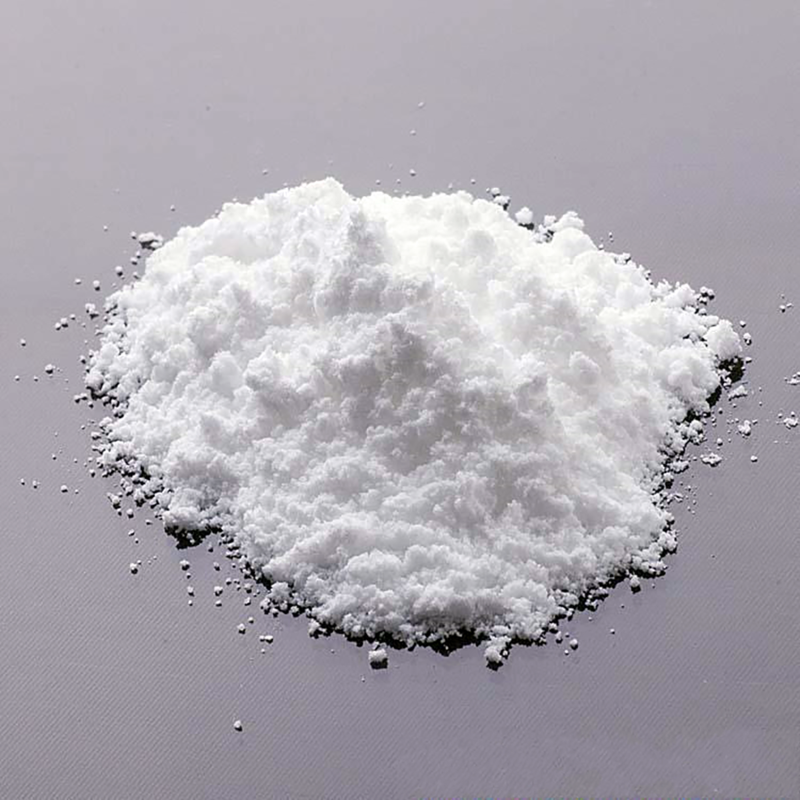
Triphenylphosphine CAS:603-35-0 buy - large image1
Triphenylphosphine CAS:603-35-0 buy - image1
Triphenylphosphine CAS:603-35-0 buy - image2
Triphenylphosphine CAS:603-35-0 buy - image3
Triphenylphosphine CAS:603-35-0 buy - image4
Triphenylphosphine CAS:603-35-0 buy - image5
Triphenylphosphine CAS:603-35-0 buy - image6

Triphenylphosphine CAS:603-35-0

TDS 4 Inquiries

Unit Price: Get Latest Price
CAS No.:

603-35-0

Grade:

Industrial Grade

Content:

99%

Port:

SHANGHAI

Brand:

Orient

Packaging:

25kg/bag,500kg/bag, customized

Price valid (until):

2025-12-26

Company Type:
Trader
Location:
China
Qualification:
Main Products:

pharmaceutical intermediates,peptides,electronic chemicals

  • Product Description

  • Seller Information

  • Inquiry History

  • Description
    Triphenylphosphine Chemical Properties
    Melting point  79-81 °C(lit.)
    Boiling point  377 °C(lit.)
    bulk density 500-600kg/m3
    density  1.132
    vapor density  9 (vs air)
    vapor pressure  5 mm Hg ( 20 °C)
    refractive index  1.6358
    Fp  181 °C
    storage temp.  Store below +30°C.
    solubility  water: soluble0.00017 g/L at 22°C
    form  Crystals, Crystalline Powder or Flakes
    color  White
    Specific Gravity 1.132
    Odor odorless
    Water Solubility  Insoluble
    Hydrolytic Sensitivity 8: reacts rapidly with moisture, water, protic solvents
    Merck  14,9743
    BRN  610776
    Stability: Stable. Incompatible with oxidizing agents, acids.
    InChIKey RIOQSEWOXXDEQQ-UHFFFAOYSA-N
    CAS DataBase Reference 603-35-0(CAS DataBase Reference)
    NIST Chemistry Reference Phosphine, triphenyl-(603-35-0)
    EPA Substance Registry System Triphenylphosphine (603-35-0)

    Triphenylphosphine Usage And Synthesis
    Chemical properties Triphenylphosphine is a common organophosphorus compound with the formula P(C6H5)3 - often abbreviated to PPh3 or Ph3P. It is widely used in the synthesis of organic and organometallic compounds. PPh3 exists as relatively air stable, colorless to pale yellow monoclinic crystals at room temperature. It is a colorless to pale yellow transparent oily liquid above the room temperature with skin irritation and a pungent odour. It dissolves in non-polar organic solvents such as benzene and diethyl ether.
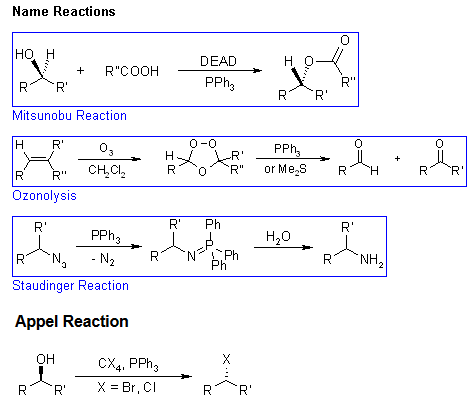
    Name Reactions
    1. Mitsunobu reactions
      The triphenylphosphine combines with DEAD to generate a phosphonium intermediate that binds to the alcohol oxygen, activating it as a leaving group. Substitution by the carboxylate, mercaptyl, or other nucleophile completes the process.
    2. Ozonolysis reactions
      Ozonolysis allows the cleavage of alkene double bonds by reaction with ozone. Depending on the work up, different products may be isolated: reductive work-up gives either alcohols or carbonyl compounds, while oxidative work-up leads to carboxylic acids or ketones.
    3. Staudinger reactions
      Triphenylphosphine reacts with the azide to generate a phosphazide, which loses N2 to form an iminophosphorane. Aqueous work up leads to the amine and the very stable phosphine oxide.
    4. Appel reactions
      The reaction of triphenylphosphine and tetrahalomethanes (CCl4, CBr4) with alcohols is a ready method to convert an alcohol to the corresponding alkyl halide under mild conditions. The yields are normally high.
      This reaction is somewhat similar to the Mitsunobu Reaction, where the combination of a phosphine, a diazo compound as a coupling reagent, and a nucleophile are used to invert the stereochemistry of an alcohol or displace it.
    Shop Triphenylphosphine CAS:603-35-0-Detailed Image 1
    Uses Triphenylphosphine is first sulfonated with oleum to form the trisulfonic acid.
    Triphenylphosphine can be used in Wittig synthesis. It is a standard ligand in homogeneous catalysis.
    Triphenylphosphine is used in the synthesis of an organophosphorus intermediate, trimethyl phosphite in ester exchange method. And then a series of organophosphorus pesticides such as dichlorvos, monocrotophos and phosphamidon can be further obtained.
    In addition, it can be used as stabilizers in the synthesis of rubber and resins, antioxidants in polyvinyl chloride, and raw material in the synthesis of alkyd resins and polyester resins.
    Production methods In this preparation method, phenol and phosphorus trichloride was used as raw materials. After esterification and vacuum distillation, the product namely triphenyl phosphite can be obtained.
    3C6H5OH + PCl3 [15~20 ℃] → (C3H5O) 3P + 3HCl
    Specific process can be classified into batch and continuous processes.
     (1) Batch process
    The phenol was added into the reactor, after warming to melt phosphorus trichloride was added to react with phenol at 70~90 ℃. After the phosphorus trichloride addition was completed, the temperature of reaction mixture was raised to about 150 ℃. After the removal of hydrogen chloride and unreacted phenol dissolved under reduced pressure at a high temperature, the product can be achieved.
    (2) The use of a tower reactor
    Phenol was feeding under the condenser located in the upper portion of the tower, while phosphorus trichloride enters above the receptacle located in the lower portion of the tower. Both reacted in the tower, and the product was collected in the receiver, meanwhile by-product hydrogen chloride was introduced into the absorber tower via the upper end of the condenser. After some process of the crude ester such as distillation, the product can be obtained.
    Description Triphenylphosphine: a member of tertiary phosphines
    Triphenylphosphine (TPP) is a member of tertiary phosphines, which is phosphane, in which the three hydrogens are replaced by phenyl groups. It has a role as a reducing agent and an NMR chemical shift reference compound. It is a crucial ligand utilized in the Wittig reaction for alkene synthesis. This reaction involves the formation of alkyliden-etriphenylphosphoranes from the action of butyllithium or another base on the quarternary halide. Triphenylphosphine is used to synthesise organic compounds due to its nucleophilicity and reducing character.
    Chemical Properties Triphenylphosphine is a white to light tan flaked solid. Insoluble inwater; slightly soluble in alcohol; soluble in benzene, acetone, carbon tetrachloride. Combustible.
    Uses Triphenylphosphine is a versatile and efficient compound with a wide range of applications. It serves as a crucial ligand in homogeneous catalysts for petrochemical and fine chemical production, and as a co-catalyst in the production of isobutanol and n-butanol. It is also the basic raw material for rhodium phosphine complex catalysts, such as Wilkinson's catalyst (RhCl(PPh3)3) for alkene hydrogenation and tetrakis(triphenylphosphine)palladium(0) for C-C coupling reactions in organic synthesis. In the dye industry, it is utilized as a sensitizer, heat stabilizer, light stabilizer, antioxidant, flame retardant, antistatic agent, rubber antiozonant, and analytical reagent. The rhodium and triphenylphosphine catalyst system is employed in the hydroformylation of vegetable oils and their methyl esters, and polymer-supported triphenylphosphine catalyzes the γ-addition of pronucleophiles to alkynoates. It also participates in the Heck reaction of 4-bromoanisole and ethyl acrylate in ionic liquids. Triphenylphosphine can be sulfonated to form trisulfonic acid and is used in Wittig synthesis as a standard ligand in homogeneous catalysis. It is involved in the synthesis of trimethyl phosphite, leading to the production of organophosphorus pesticides like dichlorvos, monocrotophos, and phosphamidon. Furthermore, it is used as a stabilizer in rubber and resin synthesis, an antioxidant in polyvinyl chloride, and a raw material in the synthesis of alkyd resins and polyester resins. Triphenylphosphine is also used in the synthesis of Chlorambucil, a cytotoxic agent for breast and pancreatic cancers, and in the preparation of α-Tocopherol analogues for monitoring antioxidant status.
    Production Methods Triphenylphosphine is one of the most widely used phosphorus-containing reagents in organic synthesis for many types of transformations such as the Mitsunobu, the Wittig, and the Staudinger reaction. Triphenylphosphine can be prepared in the laboratory by treatment of phosphorus trichloride with phenylmagnesium bromide or phenyllithium. The industrial synthesis involves the reaction between phosphorus trichloride, chlorobenzene, and sodium.
    PCl3 + 3 PhCl + 6 Na → PPh3 + 6 NaCl


    Shop 4,4'-Diphenylmethane diisocyanate 101-68-8-Detailed Image 1

    Shop Trimellitic Anhydride  C9H4O5 552-30-7-Detailed Image 2

    Shop Trimellitic Anhydride  C9H4O5 552-30-7-Detailed Image 3


    Shop Trimellitic Anhydride  C9H4O5 552-30-7-Detailed Image 4

    Shop Trimellitic Anhydride  C9H4O5 552-30-7-Detailed Image 5

    Shop Trimellitic Anhydride  C9H4O5 552-30-7-Detailed Image 6


    Shop Trimellitic Anhydride  C9H4O5 552-30-7-Detailed Image 7


    Shop Trimellitic Anhydride  C9H4O5 552-30-7-Detailed Image 8

    Shop Trimellitic Anhydride  C9H4O5 552-30-7-Detailed Image 9

    Shop Trimellitic Anhydride  C9H4O5 552-30-7-Detailed Image 10

    Shop Trimellitic Anhydride  C9H4O5 552-30-7-Detailed Image 11

    Shop Trimellitic Anhydride  C9H4O5 552-30-7-Detailed Image 12

    ——  Q&A  ——

    Q1:Do you provide sample?

    A: Yes, we can provide free sample, you only need pay the shipping cost.

    Q2: What is the lead time?

    A: For stock goods, it usually take about 5-7 days by air, 15-30 days by sea,For customized products, the delivery time needs to be confirmed based on the actual situation.

    Q3: How can I buy? What is the payment method?

    A: You can contract us through Email or you can browse our website:orientchem.cc, we have bank transfer,

    A:We attach great importance to after-sales service of our products. If there are any quality issues, please contact us within 30 days of receiving the goods and we will handle returns and exchanges for you.


    Certificates

    Basic Info
    Product Name:

    Triphenylphosphine

    Other Name:

    Phosphine,triphenyl-;Triphenylphosphine;Triphenylphosphorus;Triphenylphosphide;PP 360;P 100;P 100 (accelerator);JC 263;Triphenylphosphane;TPP;NSC 10;NSC 215203;EPCAT-P;PP 200;PPh3;Hokko TPP;T 0519;112771-47-8;630403-25-7;1198579-87-1

    CAS No.:

    603-35-0

    Molecular Formula:

    C18H15P

    InChIKeys:

    InChIKey=RIOQSEWOXXDEQQ-UHFFFAOYSA-N

    Molecular Weight:

    262.28500

    Exact Mass:

    262.29

    EC Number:

    238-154-8

    UNII:

    26D26OA393

    ICSC Number:

    0700

    NSC Number:

    215203|10

    UN Number:

    3077

    DSSTox ID:

    DTXSID5026251

    Color/Form:

    MONOCLINIC PLATELETS OR PRISMS FROM ETHER|WHITE CRYSTALLINE SOLID

    HScode:

    2919900090

    Characteristics
    PSA:

    13.59000

    XLogP3:

    3.44480

    Appearance:

    Triphenyl phosphine appears as white crystals. (NTP, 1992)

    Density:

    1.075 g/cm3 @ Temp: 80 °C

    Melting Point:

    80.5 °C

    Boiling Point:

    >360 °C

    Flash Point:

    181ºC

    Refractive Index:

    1.5918 (20ºC)

    Water Solubility:

    H2O: Insoluble

    Storage Conditions:

    Store at RT.

    Vapor Pressure:

    5 mm Hg ( 20 °C)

    Vapor Density:

    9 (vs air)

    Toxicity:

    LD50 orally in Rabbit: 700 mg/kg LD50 dermal Rabbit > 4000 mg/kg

    Odor:

    ODORLESS

    Experimental Properties:

    TRIBOLUMINESCENT

    Air and Water Reactions:

    Triphenylphosphine is a flammable solid which slowly oxidizes in air to form triphenylphosphine oxide. It is insoluble in water.

    Reactive Group:

    Amines, Phosphines, and Pyridines

    Reactivity Alerts:

    Highly Flammable

    Reactivity Profile:

    TRIPHENYL PHOSPHINE reacts vigorously with oxidizing materials. (NTP, 1992).

    Autoignition Temperature:

    425 °C

    Physical Dangers:

    Dust explosion possible if in powder or granular form, mixed with air.

    Hazard Identification

    Classification of the substance or mixture

    Acute toxicity - Category 4, Oral

    Skin sensitization, Sub-category 1B

    Specific target organ toxicity – repeated exposure, Category 2

    GHS label elements, including precautionary statements

    Pictogram(s)

    Signal word

    Danger

    Hazard statement(s)

    H302 Harmful if swallowed

    H317 May cause an allergic skin reaction

    H373 May cause damage to organs through prolonged or repeated exposure

    Precautionary statement(s)
    Prevention

    P264 Wash ... thoroughly after handling.

    P270 Do not eat, drink or smoke when using this product.

    P261 Avoid breathing dust/fume/gas/mist/vapours/spray.

    P272 Contaminated work clothing should not be allowed out of the workplace.

    P280 Wear protective gloves/protective clothing/eye protection/face protection/hearing protection/...

    P260 Do not breathe dust/fume/gas/mist/vapours/spray.

    Response

    P301+P317 IF SWALLOWED: Get medical help.

    P330 Rinse mouth.

    P302+P352 IF ON SKIN: Wash with plenty of water/...

    P333+P317 If skin irritation or rash occurs: Get medical help.

    P321 Specific treatment (see ... on this label).

    P362+P364 Take off contaminated clothing and wash it before reuse.

    P319 Get medical help if you feel unwell.

    Storage

    none

    Disposal

    P501 Dispose of contents/container to an appropriate treatment and disposal facility in accordance with applicable laws and regulations, and product characteristics at time of disposal.

    Other hazards which do not result in classification

    no data available

    Handling and Storage

    Precautions for safe handling

    NO open flames. Closed system, dust explosion-proof electrical equipment and lighting. Prevent deposition of dust. Handling in a well ventilated place. Wear suitable protective clothing. Avoid contact with skin and eyes. Avoid formation of dust and aerosols. Use non-sparking tools. Prevent fire caused by electrostatic discharge steam.

    Conditions for safe storage, including any incompatibilities

    Separated from oxidants and acids. Keep in a well-ventilated room.

  • Seller Information
    Business Type:

    Trader

    Main Products:

    pharmaceutical intermediates,peptides,electronic chemicals

    Location:

    Room 102, 1st Floor, East Office Building, No. 45 Pengwan Road, Qianwan Bonded Port Area, Qingdao Zone, China (Shandong) Pilot Free Trade Zone

    Payment Terms:

    100% TT in advance

    Average lead Time:

    10

    Total Annual Revenue:

    $10 million-$25 million

    Total Employees:

    51-100

    Year of Establishment:

    2024

    A reliable supplier is like insurance.

    We are mainly specilized in supply of pharmaceutical intermediates, electronic chemicals,food additives, and other fine chemical products.
    Integrity is the foundation, quality is life. We would like to work together with you to build a greener and brighter future.

    Website: orientchem.cc
    Email: scarlett@orientchem.cc
    WhatsApp: +86 17753254221

  • Inquiry History
    4 Inquiries
    Country Product Purchase Quantity Date Posted
    Malaysia

    Triphenylphosphine

    10000 KG Feb 18, 2025
    Russia

    Triphenylphosphine

    10 MT Jan 14, 2026
    Malaysia

    Triphenylphosphine (TPP) Flakes

    50 MT Dec 31, 2024
    Russia

    Triphenylphosphine

    1 MT May 6, 2024
    Post an enquiry for this product
pic ×

Scan the QR Code to Share

All products displayed on this website are only for non-medical purposes such as industrial applications or scientific research, and cannot be used for clinical diagnosis or treatment of humans or animals. They are not medicinal or edible.

According to relevant laws and regulations and the regulations of this website, units or individuals who purchase hazardous materials should obtain valid qualifications and qualification conditions.

The information shown above is provided by the enterprise itself, and the authenticity, accuracy and legitimacy of the content are the responsibility of the publishing company. ECHEMI does not bear any guarantee responsibility for this. Please be aware that risks in internet transactions objectively exist.

Feedback & Suggestions
Send Message

Thank you for your feedback. If you require further assistance, please contact us by email at info@echemi.com or call us at +86-532-55729510.