Product
Supplier
Encyclopedia
Inquiry
Sodium methoxide124-41-4 buy - large image1
Sodium methoxide124-41-4 buy - image1
Sodium methoxide124-41-4 buy - image2
Sodium methoxide124-41-4 buy - image3
Sodium methoxide124-41-4 buy - image4
Sodium methoxide124-41-4 buy - image5
Sodium methoxide124-41-4 buy - image6

Sodium methoxide124-41-4

7 Inquiries

Unit Price:

$33-34/MT FOB

Get Latest Price
CAS No.:

124-41-4

Grade:

Pharmaceutical Grade

Content:

99.5%

Port:

上海

Brand:

OORENT

Packaging:

Vial/Bottle/Bag/Carton

Price valid (until):

2026-07-17

Company Type:
Trader
Location:
China
Qualification:
Main Products:

pharmaceutical intermediates,peptides,electronic chemicals

  • Product Description

  • Seller Information

  • Inquiry History

  • Description

    Product Detail


    Sodium Methoxide Basic information
    Outline Soda process for producing sodium methylate Sodium process for producing sodium methylate The comparison soda process with sodium process Solution quality reference standard How to separate solid sodium hydroxide and sodium methylate Production Process Identification test Chemical properties Uses Production method Category
    Product Name: Sodium Methoxide
    Synonyms: feldalatnm;Methanol, sodium salt;Methanol,sodiumsalt;methoxysodium;methylatedesodium(french);Sodium methoxide, anhydrous powder, pure;Sodium methoxide, titrant, (0.5 M in methanol), pure;SODIUM METHOXIDE 25% in METHYL ALCOHOL
    CAS: 124-41-4
    MF: CH3NaO
    MW: 54.02
    EINECS: 204-699-5
    Product Categories: Sodium Methylate (30% solution in methanol);Classes of Metal Compounds;Organics;Na (Sodium) Compounds (excluding simple sodium salts);Typical Metal Compounds;metal alkoxide;124-41-4
    Mol File: 124-41-4.mol
    Shop Sodium methoxide124-41-4-Detailed Image 1

    Sodium Methoxide Chemical Properties
    Melting point  -98 °C
    Boiling point  65 °C
    bulk density 500-600kg/m3
    density  0.97 g/mL at 20 °C
    vapor density  1.1 (vs air)
    vapor pressure  50 mm Hg ( 20 °C)
    refractive index  1.3700
    Fp  11 °C
    storage temp.  Store at +5°C to +30°C.
    solubility  Miscible with ethanol, methanol, fats and esters.Immiscible with hydrocarbons and organic solvents.
    pka 15.17[at 20 ℃]
    form  Powder
    color  clarity
    Specific Gravity 0.945
    PH 11 (20°C, 20g/L in H2O)
    explosive limit 36%
    Water Solubility  reacts
    Sensitive  Moisture Sensitive
    Hydrolytic Sensitivity 8: reacts rapidly with moisture, water, protic solvents
    Merck  14,8643
    BRN  3592982
    Exposure limits ACGIH: Ceiling 2 mg/m3
    OSHA: TWA 2 mg/m3
    NIOSH: IDLH 10 mg/m3; Ceiling 2 mg/m3
    Dielectric constant 1.5(Ambient)
    Stability: Stability Highly flammable. Reacts violently with water. Keep container dry. Incompatible with water, acids, chlorinated solvents.
    InChI 1S/CH3O.Na/c1-2;/h1H3;/q-1;+1
    InChIKey WQDUMFSSJAZKTM-UHFFFAOYSA-N
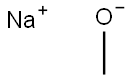
    SMILES [Na+].C[O-]
    LogP -0.77 at 25℃
    CAS DataBase Reference 124-41-4(CAS DataBase Reference)
    NIST Chemistry Reference Sodium methoxide(124-41-4)
    EPA Substance Registry System Sodium methoxide (124-41-4)

    Safety Information
    Hazard Codes  F,T,C
    Risk Statements  11-23/24/25-34-39/23/24/25-36/38-14-36/37/38-22-10
    Safety Statements  8-16-26-43-45-7-36/37-7/8-36/37/39
    RIDADR  UN 1289 3/PG II/III (SODIUM METHYLATE SOLUTION in alcohol)
    RIDADR  UN 1431 4.2/PG II (SODIUM METHYLATE)
    WGK Germany  1
    RTECS  PC3570000
    9-21
    Autoignition Temperature 878 °F
    TSCA  TSCA listed
    HazardClass  4.2
    PackingGroup  II
    HS Code  29051900
    Storage Class 4.2 - Pyrophoric and self-heating hazardous materials
    Hazard Classifications Acute Tox. 4 Oral
    Flam. Sol. 1
    Met. Corr. 1
    Self-heat. 1
    Skin Corr. 1A
    Hazardous Substances Data 124-41-4(Hazardous Substances Data)
    Toxicity LD50 orally in Rabbit: 2037 mg/kg LD50 dermal Rat > 2000 mg/kg
    MSDS Information
    Provider Language
    Sodium methanolate English
    SigmaAldrich English
    ACROS English
    ALFA English

    Sodium Methoxide Usage And Synthesis
    Outline Sodium methanolate is one of alkoxides that are generated by methanol. Its chemical formula is CH3ONa. It is strong base that is commonly used in organic synthesis.
    Sodium methanolate is often stored in methanol, ethanol or the like alcohol solvent. It can generate suspension when it dissolves in ether. It can decompose into methanol and sodium hydroxide with water:
    CH3ONa + H2O→CH3OH + NaOH
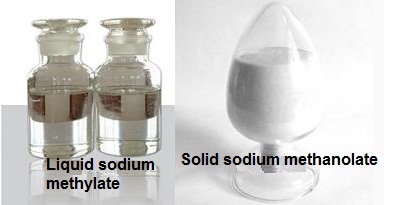
    Sodium methanolate product has two forms: solid and liquid. Solid is pure sodium methanolate. The liquid is methanol solution of sodium methanolate and the content of sodium methylate is 27.5% to 31%.
    Liquid sodium methanolate is colorless or slightly yellow viscous liquid. It is sensitive to oxygen. It is flammable, explosive and easily hygroscopic. It is soluble in methanol and ethanol, and can decompose into methanol and sodium hydroxide with water. It decomposes at 126.6℃ in the air. It is not soluble in benzene and toluene. It is strong irritant and highly corrosive. Sodium methanolate can be used as condensing agent, strong alkaline catalyst and methoxy agent for the preparation of vitamin B1, vitamin A, sulfadiazine and other drugs. Few can be used in production of pesticides. It can also be used as catalyst in processing edible fats and oils (especially processing lard). It is used as analytical reagent.
    Solid sodium methanolate is colorless amorphous powder. It is sensitive to oxygen, and it is flammable. It is soluble in methanol and ethanol, and can decompose into methanol and sodium hydroxide with water. It decomposes at 126.6℃ in the air. It is mainly used for the production of sulfa drugs, VB6 and VA. Sodium methylate is a kind of catalyst for organic synthesis. It can be used for the production of pesticides and oil processing industries.
    Shop Sodium methoxide124-41-4-Detailed Image 2
    Solid sodium methanolate and sodium methoxide methanol solution
    Sodium methylate is a kind of mature chemical products. It has several decades of production history in China. The overall price is high in the south than in the north. Its price is 4500 yuan/T in the southwest, and 4,000 yuan/T in Shandong. Its price changed little with the increase of methanol’s price in 2004. The profit of per ton of product is 500 to 700.
    Soda process for producing sodium methylate Sodium methylate is prepared by the reaction of methanol with sodium hydroxide for soda method. Their reaction is as follows:
    CH3OH + NaOH→CH3ONa + H2O
    1. The preparation of methanol lye
    Crush the solid sodium hydroxide. Then add it into melting pot base containing methanol (99.8%) in proportion. Start circulating pump, and dissolve the sodium hydroxide below 70℃. When its content is 20% to 23%, cool down to 40℃ and inject into the settling tank. Stand 12h and spare.
    2. The preparation of sodium methylate
    Pass into the steam to the vaporization pot and reaction tower mezzanine. Heat it and control the temperature at 85~100℃. Add anhydrous methanol to vaporization pot at the flow rate of 180L/h. Meanwhile add methanol lye in the top of the reaction tower at the flow rate of 25kg/h. Methanol gas containing 2% of water produced by the reaction from the reaction distill the reaction tower overhead into the purification distillation column to remove water. Then it becomes absolute methanol recycling. Control the temperature of reaction bottoms (i.e. vaporization pot) at 65~70℃, and check the bottoms. When containing 27%~31% Sodium methanolate, 1% or less of the free base, products are obtained. The yield is 86% (as sodium hydroxide).
    Fixed consumption of the process is as follows: methanol (95%) 973kg/t, sodium hydroxide (99.5%) 209kg/t.
    The above information is edited by the chemicalbook of Ge Qian.


    Solution quality reference standard Item Index
    Appearance colorless to pale yellow viscous liquid
    Content (total base number) 29.5%~31.0%
    Sodium methoxide (NaOCH3) 28.9%~31.0%
    Sodium hydroxide (NaOH) ≤0.5%
    Sodium carbonate (Na2CO3) ≤0.1%
    Water (H2O) ≤0.2%
    Methanol 69.0%~70.7%
    How to separate solid sodium hydroxide and sodium methylate 1. Dissolved in water (sodium alcoholate reacts violently with water to generate alcohol and sodium hydroxide)
    2. Distillation (separate alcohol)
    3. Evaporation (separate sodium hydroxide)
    4. Try to dry alcohol to anhydrous state (repeated distillation)
    6. Distill alcohol to get solid alcohol sodium. (It should be avoided being exposed to the air when distilling. If it is exposed to the air or it is taken down before drying up and cooling, the state of alcohol sodium that is separated out is not well. The good one is white. if not, it will be tan is. But it doesn’t have any great impact. It is easy to be prepared.)
    Production Process Solid sodium hydroxide and methanol mix at a certain proportion. After stirring the mixture to dissolve, solid impurities are removed by sedimentation and clarification. The clear liquid is pumped into the top of the dehydration reaction column, while the refined methanol vapor is added from the bottom of the tower with continuous dehydration reaction. Then the product can be obtained from tower bottom. Aqueous methanol vapor is purified from the top of the column into the distillation system, while anhydrous methanol can be used repeatedly.
    Identification test It can react with oxygen and carbon dioxide. It decomposes in water. Sodium test of the solution (IT-28) is positive.
     After placing 5min, add 0.2ml 25% sodium sulfite solution and 3ml sulfate. Then add 0.2ml chromium changed acid solution (TS-l66). The solution is amaranth to purple.
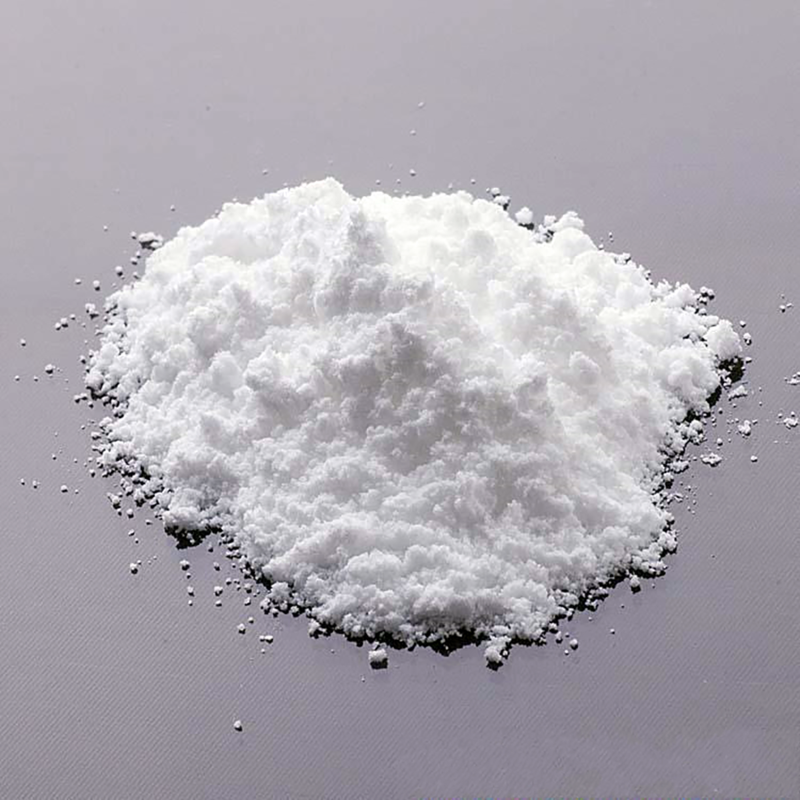
    Chemical properties Colorless amorphous fine powder. Dissolved in methanol, ethanol.
    Uses 1. Sodium methoxide can be used as alkaline condensing agent and catalyst in organic synthesis. It can be used to synthesize perfumes, dyes and the like. It is also the raw material of vitamin B1, A and sulfadiazine.
    2. It can be used as condensing agent in organic synthesis and catalyst in edible oil process. It is also the important raw material to synthesize sulfadiazine, sulfamethoxazole, sulfa synergist and the like.
    3. It is the main raw material used for medicine, pesticide. It is also used in dyes and chemical fiber industry.
    4. Fatty transesterification catalyst. It can change the fat structure so that it is suitable for margarine. It must be removed in the final food.
    5. It is mainly used as condensing agent, strong alkaline catalyst and methoxy agent. It can be used for the preparation of vitamin B1 and A, sulfadiazine and other drugs. And little can be used in the production of pesticides. It can also be used as the catalyst for processing edible fats and oils (especially processing lard). It can also be used as analytical reagent.
    6. It is widely used in perfumes, dyes and other industries. It is mainly used as condensing agent, strong alkaline catalyst and methoxy agent for the preparation of vitamin B1 and A, sulfadiazine and other drugs. Little can be used in the production of pesticides. It can also be used as the catalyst for processing edible fats and oils (especially processing lard). It can also be used as analytical reagent.
    7. It can be used as condensing agent in organic synthesis.
    Production method It can be obtained by the reaction of sodium hydroxide and methanol in benzene.
    Category Corrosive materials
    Chemical Properties white powder
    Uses Sodium methoxide is mainly used as a condensation agent, a strong alkaline catalyst and a methoxylating agent for the production of  B1 and A, sulfadiazine and other , and in small quantities for the production of pesticides. It is also used as a catalyst for treatment ofedible fats and oils, as an intermediate inmany synthetic reactions, to prepare ; and as a reagent in chemicalanalysis.
    General Description Sodium methylate is a white amorphous powder. It reacts with water to form sodium hydroxide, a corrosive material, and methyl alcohol, a flammable liquid. The heat from this reaction may be sufficient to ignite surrounding combustible material or the sodium methylate itself if the water is present in only small amounts. It is used to process edible fats and oils, and to make other chemicals.
    Air & Water Reactions Highly flammable. Ignites in moist air [Wischmeyer 1966]. Reacts with water to produce a mixed solution of sodium hydroxide and methyl alcohol.
    Reactivity Profile SODIUM METHYLATE is a strong base. Reacts with light metals forming H2 gas, with fire and explosion hazards. Sodium methoxide is incompatible with 4-chloronitrobenzene and fluorinated cyclopropenyl methyl ethers, such as perfluoromethoxycyclopropene. The reactions are vigorous and may initiate ignition [Bretherick, 1995, pg. 191].
    Hazard (Solid) Flammable when exposed to heat or flame. (Solution) Flammable, moderate fire risk.


    Fire Hazard Non-combustible, substance itself does not burn but may decompose upon heating to produce corrosive and/or toxic fumes. Some are oxidizers and may ignite combustibles (wood, paper, oil, clothing, etc.). Contact with metals may evolve flammable hydrogen gas. Containers may explode when heated.
    Flammability and Explosibility Flammable
    Safety Profile A corrosive and irritating material. It hydrolyzes into methanol and sodlum hydroxide. May ignite spontaneously in moist air. Flammable when exposed to heat or flame. Ignites on contact with water,  When heated to decomposition it emits toxic fumes of Na2O.
    Purification Methods It behaves in the same way as sodium ethoxide. It is hygroscopic and is hydrolysed by moist air to NaOH and MeOH. Material that has been kept under N2 should be used. 
    Toxics Screening Level The ITSL for sodium methylate has been changed from 0.04 μg/m3 to 0.1 μg/m3 based on an annual averaging time.

    Sodium Methoxide Preparation Products And Raw materials
    Raw materials Sodium hydroxide-->Methanol-->Benzene


    Shop Fluorobenzene462-06-6C6H5F-Detailed Image 2 Shop Fluorobenzene462-06-6C6H5F-Detailed Image 3 Shop Fluorobenzene462-06-6C6H5F-Detailed Image 4 Shop Fluorobenzene462-06-6C6H5F-Detailed Image 5 Shop Fluorobenzene462-06-6C6H5F-Detailed Image 6 Shop Fluorobenzene462-06-6C6H5F-Detailed Image 7


    Basic Info
    Product Name:

    Sodium methoxide

    Other Name:

    Methanol,sodium salt (1:1);Sodium methoxide;Methanol,sodium salt;Sodium methylate;Sodium methanolate;Feldalat NM;Methoxysodium;SM 24;Sodium methoxylate;SM 28;27419-20-1;879636-47-2;1633026-84-2

    CAS No.:

    124-41-4

    UN No.:

    1431

    Molecular Formula:

    CH4O.Na

    InChIKeys:

    InChIKey=YWOITFUKFOYODT-UHFFFAOYSA-N

    Molecular Weight:

    54.02370

    Exact Mass:

    54.00820

    EC Number:

    204-699-5

    UNII:

    IG663U5EMC

    ICSC Number:

    0771

    UN Number:

    1431

    DSSTox ID:

    DTXSID8027030

    Color/Form:

    Amorphous, free flowing powder|Tetragonal crystals

    HScode:

    2905199090

    Characteristics
    PSA:

    23.06000

    XLogP3:

    0.04670

    Appearance:

    Sodium methylate is a white amorphous powder. It reacts with water to form sodium hydroxide, a corrosive material, and methyl alcohol, a flammable liquid. The heat from this reaction may be sufficient to ignite surrounding combustible material or the sodium methylate itself if the water is present in only small amounts. It is used to process edible fats and oils, and to make other chemicals.

    Density:

    0.45 g/cm3

    Melting Point:

    127 °C (decomp)

    Boiling Point:

    80 °C (approx) @ Press: 0.4 Torr

    Flash Point:

    11ºC

    Refractive Index:

    1.37

    Water Solubility:

    Solubility in water: reaction

    Storage Conditions:

    Flammables area

    Vapor Pressure:

    50 mm Hg ( 20 °C)

    Vapor Density:

    1.1 (vs air)

    Explosive limit:

    vol% in air: 7.3 36

    Experimental Properties:

    Decomposes in air above 127 °C|Reacts violently with water forming flammable methanol and corrosive sodium hydroxide|White powder /Solvated form/

    Air and Water Reactions:

    Ignites in moist air [Wischmeyer 1966]. with moist air, autoignition is possible; strong reducing agent; reacts with light metals forming H2 gas, with fire and explosion hazards; reacts violently with water to form methanol and sodium hydroxide, and with acids, causing hazard of methanol ignition [Handling Chemicals Safely 1980 p. 850].

    Reactive Group:

    Bases, Strong

    Reactivity Alerts:

    Strong Reducing Agent

    Reactivity Profile:

    SODIUM METHYLATE is a strong base. Reacts with light metals forming H2 gas, with fire and explosion hazards. Too rapid addition of sodium methylate to a mixture of chloroform and methanol initiated an uncontrolled exothermic reaction between the chloroform and the methylate that caused a violent explosion [MCA Case History 693 1961]. Sodium methoxide is incompatible with 4-chloronitrobenzene and fluorinated cyclopropenyl methyl ethers, such as perfluoromethoxycyclopropene. The reactions are vigorous and may initiate ignition [Bretherick, 5th Ed., 1995].

    Autoignition Temperature:

    240 °C|>50 °C

    Physical Dangers:

    Dust explosion possible if in powder or granular form, mixed with air.

    Hazard Identification

    Classification of the substance or mixture

    Self- heating substances and mixtures, Category 1

    Skin corrosion, Sub-category 1B

    GHS label elements, including precautionary statements

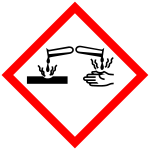
    Pictogram(s)
    Signal word

    Danger

    Hazard statement(s)

    H251 Self-heating; may catch fire

    H314 Causes severe skin burns and eye damage

    Precautionary statement(s)
    Prevention

    P235 Keep cool.

    P280 Wear protective gloves/protective clothing/eye protection/face protection/hearing protection/...

    P260 Do not breathe dust/fume/gas/mist/vapours/spray.

    P264 Wash ... thoroughly after handling.

    Response

    P301+P330+P331 IF SWALLOWED: Rinse mouth. Do NOT induce vomiting.

    P363 Wash contaminated clothing before reuse.

    P304+P340 IF INHALED: Remove person to fresh air and keep comfortable for breathing.

    P316 Get emergency medical help immediately.

    P321 Specific treatment (see ... on this label).

    P305+P351+P338 IF IN EYES: Rinse cautiously with water for several minutes. Remove contact lenses, if present and easy to do. Continue rinsing.

    Storage

    P407 Maintain air gap between stacks or pallets.

    P410 Protect from sunlight.

    P413 Store bulk masses greater than … kg/…lbs at temperatures not exceeding …°C/…°F.

    P420 Store separately.

    P405 Store locked up.

    Disposal

    P501 Dispose of contents/container to an appropriate treatment and disposal facility in accordance with applicable laws and regulations, and product characteristics at time of disposal.

    Other hazards which do not result in classification

    no data available

    Handling and Storage

    Precautions for safe handling

    NO open flames, NO sparks and NO smoking. NO contact with water. Handling in a well ventilated place. Wear suitable protective clothing. Avoid contact with skin and eyes. Avoid formation of dust and aerosols. Use non-sparking tools. Prevent fire caused by electrostatic discharge steam.

    Conditions for safe storage, including any incompatibilities

    Fireproof. Separated from strong oxidants, acids, metals and food and feedstuffs. Dry. Cool. Well closed. Store in an area having corrosion resistant concrete floor. Store in an area without drain or sewer access.

  • Seller Information
    Business Type:

    Trader

    Main Products:

    pharmaceutical intermediates,peptides,electronic chemicals

    Location:

    Room 102, 1st Floor, East Office Building, No. 45 Pengwan Road, Qianwan Bonded Port Area, Qingdao Zone, China (Shandong) Pilot Free Trade Zone

    Payment Terms:

    100% TT in advance

    Average lead Time:

    10

    Total Annual Revenue:

    $10 million-$25 million

    Total Employees:

    51-100

    Year of Establishment:

    2024

    A reliable supplier is like insurance.

    We are mainly specilized in supply of pharmaceutical intermediates, electronic chemicals,food additives, and other fine chemical products.
    Integrity is the foundation, quality is life. We would like to work together with you to build a greener and brighter future.

    Website: orientchem.cc
    Email: scarlett@orientchem.cc
    WhatsApp: +86 17753254221

  • Inquiry History
    7 Inquiries
    Country Product Purchase Quantity Date Posted
    India

    Sodium Methoxide

    50 MT Aug 5, 2024
    Brazil

    sodium methoxide 30% solution

    1 L Jun 17, 2025
    India

    Sodium Methoxide

    450 MT Apr 17, 2025
    India

    Sodium Methoxide

    300 MT Feb 5, 2025
    India

    Sodium Methoxide

    300 MT Jan 8, 2025
    Oman

    Sodium Methoxide

    1000 TON Oct 15, 2023
    Sweden

    Sodium methoxide 99% Industrial Grade Colorless amorphous powder

    20 MT Aug 24, 2023
    Post an enquiry for this product
pic ×

Scan the QR Code to Share

All products displayed on this website are only for non-medical purposes such as industrial applications or scientific research, and cannot be used for clinical diagnosis or treatment of humans or animals. They are not medicinal or edible.

According to relevant laws and regulations and the regulations of this website, units or individuals who purchase hazardous materials should obtain valid qualifications and qualification conditions.

The information shown above is provided by the enterprise itself, and the authenticity, accuracy and legitimacy of the content are the responsibility of the publishing company. ECHEMI does not bear any guarantee responsibility for this. Please be aware that risks in internet transactions objectively exist.

Feedback & Suggestions
Send Message

Thank you for your feedback. If you require further assistance, please contact us by email at info@echemi.com or call us at +86-532-55729510.