Product
Supplier
Encyclopedia
Inquiry
Lithium hydroxide1310-65-2 buy - large image1
Lithium hydroxide1310-65-2 buy - image1
Lithium hydroxide1310-65-2 buy - image2
Lithium hydroxide1310-65-2 buy - image3
Lithium hydroxide1310-65-2 buy - image4
Lithium hydroxide1310-65-2 buy - image5
Lithium hydroxide1310-65-2 buy - image6

Lithium hydroxide1310-65-2

3 Inquiries

Unit Price:

$33-34/MT FOB

Get Latest Price
CAS No.:

1310-65-2

Grade:

Pharmaceutical Grade

Content:

99.5%

Port:

上海

Brand:

OORENT

Packaging:

Vial/Bottle/Bag/Carton

Price valid (until):

2026-07-17

Company Type:
Trader
Location:
China
Qualification:
Main Products:

pharmaceutical intermediates,peptides,electronic chemicals

  • Product Description

  • Seller Information

  • Inquiry History

  • Description

    Product Detail


    Lithium hydroxide Basic information
    Physical Properties Uses Preparation Reaction
    Product Name: Lithium hydroxide
    Synonyms: "Lithium hydroxide, anhydrous/ 99%";Lithium hydroxide ,99% [anhydrous];Lithium Hydroxide Anhydrous [for General Organic Chemistry];LithiuM hydroxide, anhydrous, pure, 98% 500GR;LITHIUM HYDROXIDE 98+ 100 G;LITHIUM HYDROXIDE 98+ 1 KG;Lithium hydroxide powder, reagent grade, >=98%;Lithium hydroxide reagent grade, 98%
    CAS: 1310-65-2
    MF: LiOH
    MW: 23.95
    EINECS: 215-183-4
    Product Categories: iOH;Inorganic chemical, lithium;LEssential Chemicals;Alphabetic;Analytical Standards;metal hydroxide;Inorganics;Reagent Grade;Routine Reagents;K00001
    Mol File: 1310-65-2.mol
    Shop Lithium hydroxide1310-65-2-Detailed Image 1

    Lithium hydroxide Chemical Properties
    Melting point  470 °C (dec.) (lit.)
    Boiling point  925°C
    bulk density 550kg/m3
    density  1.43
    storage temp.  Store below +30°C.
    solubility  water: soluble71g/L at 20°C
    pka 14[at 20 ℃]
    form  Solid
    color  White to light yellow
    Specific Gravity 2.54
    Odor odorless
    PH 12 (50g/l, H2O, 50℃)
    Water Solubility  113 g/L (20 ºC)
    Sensitive  Air Sensitive & Hygroscopic
    Merck  14,5534
    Stability: Stable. Incompatible with moisture. strong acids, carbon dioxide.
    Cosmetics Ingredients Functions HAIR WAVING OR STRAIGHTENING
    BUFFERING
    InChI 1S/Li.H2O/h;1H2/q+1;/p-1
    InChIKey WMFOQBRAJBCJND-UHFFFAOYSA-M
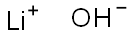
    SMILES [Li+].[OH-]
    CAS DataBase Reference 1310-65-2(CAS DataBase Reference)
    NIST Chemistry Reference Lithium hydroxide(1310-65-2)
    EPA Substance Registry System Lithium hydroxide (1310-65-2)

    Safety Information
    Hazard Codes  C
    Risk Statements  52/53-35-20/22-22-34-23
    Safety Statements  45-36/37/39-26-22
    RIDADR  UN 2679 8/PG II/III (LITHIUM HYDROXIDE SOLUTION)
    RIDADR  UN 2680 8/PG II (LITHIUM HYDROXIDE)
    WGK Germany  1
    RTECS  OJ6307070
    TSCA  TSCA listed
    HazardClass  8
    PackingGroup  II
    HS Code  28252010
    Storage Class 8A - Combustible corrosive hazardous materials
    Hazard Classifications Acute Tox. 4 Oral
    Eye Dam. 1
    Skin Corr. 1B
    Toxicity LD50 orally in Rabbit: 210 mg/kg
    MSDS Information
    Provider Language
    ACROS English
    ALFA English

    Lithium hydroxide Usage And Synthesis
    Physical Properties Lithium hydroxide is a white tetragonal crystals; refractive index 1.464; density 1.46 g/cm3; melts at 450°C; decomposes at 924°C; dissolves in water (12.8g/100g at 20°C and 17.5 g/100g at 100°C); slightly soluble in alcohol.
    Shop Lithium hydroxide1310-65-2-Detailed Image 2
    Lithium hydroxide monohydrate is white monoclinic crystalline solid; refractive index 1.460; density 1.51 g/cm3; soluble in water, more soluble than the anhydrous salt (22.3g and 26.8g/100g at 10 and 100°C, respectively); slightly soluble in alcohol; insoluble in ether.
    Uses Lithium hydroxide is used as an electrolyte in certain alkaline storage batteries; and in the production of lithium soaps. Other uses of this compound include its catalytic applications in esterification reactions in the production of alkyd resins; in photographic developer solutions; and as a starting material to prepare other lithium salts.
    Preparation Lithium hydroxide is prepared by the reaction of lithium carbonate with calcium hydroxide:
    Li2CO3 + Ca(OH)2 → 2LiOH + CaCO3
    Calcium carbonate is filtered out and the solution is evaporated and crystallized.
    The product obtained is the monohydrate, LiOH•H2O. The anhydrous compound is obtained by heating the hydrate above 100°C in vacuum or carbon dioxide-free air.
    The hydroxide also may be prepared by treating lithium oxide with water.
    Reaction Lithium hydroxide is a base. However, it is less basic than sodium or potassium hydroxide.
    The compound undergoes neutralization reactions with acids:
    LiOH + HCl → LiCl + H2O
    Heating the compound above 800°C in vacuum yields lithium oxide:
    2LiOH Li2O + H2O
    Lithium hydroxide readily absorbs carbon dioxide, forming lithium carbonate:
    2LiOH + CO2 → Li2CO3 + H2O
    Passing chlorine through a solution of lithium hydroxide yields lithium hypochlorite:
    LiOH + Cl2 → LiOCl + HCl
    Saponification of fatty acids with lithium hydroxide produces lithium soaps.
    LiOH + CH3(CH2)16COOH → CH3(CH2)16COOLi + H2O
    (stearic acid)        (lithium stearate)
    Chemical Properties lithium hydroxide (LiOH) is a white solid made industrially as the monohydrate (LiOH.H2O) by reacting lime with a lithium ore or with a salt made from the ore. Lithium hydroxide has a closer resemblance to the group 2 hydroxides than to the group 1 hydroxides.
    Physical properties White tetragonal crystals; refractive index 1.464; density 1.46 g/cm3; melts at 450°C; decomposes at 924°C; dissolves in water (12.8g/100g at 20°C and 17.5 g/100g at 100°C); slightly soluble in alcohol. The monohydrate is white monoclinic crystalline solid; refractive index 1.460; density 1.51 g/cm3; soluble in water, more soluble than the anhydrous salt (22.3g and 26.8g/100g at 10 and 100°C, respectively); slightly soluble in alcohol; insoluble in ether.
    Uses The compound is soluble in water. The compound is used in the formulation of lithium soaps used in multipurpose greases; also in the manufacture of various lithium salts; and as an additive to the electrolyte of alkaline storage batteries. LiOH also is an efficient, light-weight absorbent for carbon dioxide.
    Uses Lithium hydroxide is used as a heat transfer medium, as a storage-battery electrolyte and also used for the production of lithium greases. It is also used in ceramics, in some portland cement formulations, in the absoption of carbondioxide from sealed enviornments such as submarines, spacecrafts and breathing apparatus. It is used in esterification reactions, as stabilizer in photographic developments and as a coolant in pressurized water reactors for corrosion control.
    Uses Lithium hydroxide is an alkali metal hydroxide that is used in storage batteries and soaps and as CO2 absorber in spacecrafts.
    Definition A white crystalline solid, LiOH, is soluble in water, slightly soluble in ethanol, and insoluble in ether. It is known as the monohydrate (monoclinic; r.d. 1.51) and in the anhydrous form (tetragonal, r.d. 1.46; m.p. 450°C; decomposes at 924°C). The compound is made by reacting lime with lithium salts or lithium ores. Lithium hydroxide is basic but has a closer resemblance to group 2 hydroxides than to the other group 1 hydroxides (an example of the first member of a periodic group having atypical properties).
    General Description Lithium hydroxide, solution appears as a clear to water-white liquid which may have a pungent odor. Contact may cause severe irritation to skin, eyes, and mucous membranes. It may be toxic by ingestion, inhalation and skin absorption. It is used to make other chemicals.
    Air & Water Reactions Dilution with water may generate enough heat to cause steaming or spattering.
    Reactivity Profile LITHIUM HYDROXIDE SOLUTION neutralizes acids exothermically to form salts plus water. Reacts with certain metals (such as aluminum and zinc) to form oxides or hydroxides of the metal and generate gaseous hydrogen. May initiate polymerization reactions in polymerizable organic compounds, especially epoxides. May generate flammable and/or toxic gases with ammonium salts, nitrides, halogenated organics, various metals, peroxides, and hydroperoxides. May serve as a catalyst. Reacts when heated above about 84°C with aqueous solutions of reducing sugars other than sucrose, to evolve toxic levels of carbon monoxide [Bretherick, 5th Ed., 1995].
    Health Hazard TOXIC; inhalation, ingestion or skin contact with material may cause severe injury or death. Contact with molten substance may cause severe burns to skin and eyes. Avoid any skin contact. Effects of contact or inhalation may be delayed. Fire may produce irritating, corrosive and/or toxic gases. Runoff from fire control or dilution water may be corrosive and/or toxic and cause pollution.
    Fire Hazard Non-combustible, substance itself does not burn but may decompose upon heating to produce corrosive and/or toxic fumes. Some are oxidizers and may ignite combustibles (wood, paper, oil, clothing, etc.). Contact with metals may evolve flammable hydrogen gas. Containers may explode when heated.
    reaction suitability core: lithium
    Safety Profile Poison by ingestion and subcutaneous routes. Mtldly toxic by inhalation. A corrosive. When heated to decomposition it emits toxic fumes of Li.
    Purification Methods It crystallises from hot water (3mL/g) as the monohydrate. It is dehydrated at 150o in a stream of CO2-free air. It sublimes at 220o with partial decomposition [Cohen Inorg Synth V 3 1957, Bravo Inorg Synth VII 1 1963].

    Shop 3-Chloro-1-propene107-05-1-Detailed Image 2 Shop 3-Chloro-1-propene107-05-1-Detailed Image 3 Shop 3-Chloro-1-propene107-05-1-Detailed Image 4 Shop 3-Chloro-1-propene107-05-1-Detailed Image 5 Shop 3-Chloro-1-propene107-05-1-Detailed Image 6 Shop 3-Chloro-1-propene107-05-1-Detailed Image 7


    Basic Info
    Product Name:

    Lithium hydroxide

    Other Name:

    =98%;Lithium hydroxide reagent grade, 98%">"Lithium hydroxide, anhydrous/ 99%";Lithium hydroxide ,99% [anhydrous];Lithium Hydroxide Anhydrous [for General Organic Chemistry];LithiuM hydroxide, anhydrous, pure, 98% 500GR;LITHIUM HYDROXIDE 98+ 100 G;LITHIUM HYDROXIDE 98+ 1 KG;Lithium hydroxide powder, reagent grade, >=98%;Lithium hydroxide reagent grade, 98%

    CAS No.:

    1310-65-2

    Molecular Formula:

    LiOH

    InChIKeys:

    WMFOQBRAJBCJND-UHFFFAOYSA-M

    Molecular Weight:

    23.95

    Exact Mass:

    24.01870

    EC Number:

    215-183-4

    TSCA:

    TSCA listed

    Color/Form:

    White to light yellow

    HScode:

    28252010

    Characteristics
    PSA:

    23.06000

    Physical Properties:

    White tetragonal crystals; refractive index 1.464; density 1.46 g/cm3; melts at 450°C; decomposes at 924°C; dissolves in water (12.8g/100g at 20°C and 17.5 g/100g at 100°C); slightly soluble in alcohol. The monohydrate is white monoclinic crystalline solid; refractive index 1.460; density 1.51 g/cm3; soluble in water, more soluble than the anhydrous salt (22.3g and 26.8g/100g at 10 and 100°C, respectively); slightly soluble in alcohol; insoluble in ether.

    XLogP3:

    -0.17680

    Appearance:

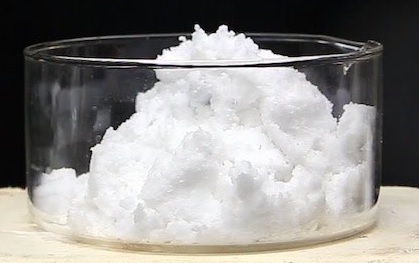
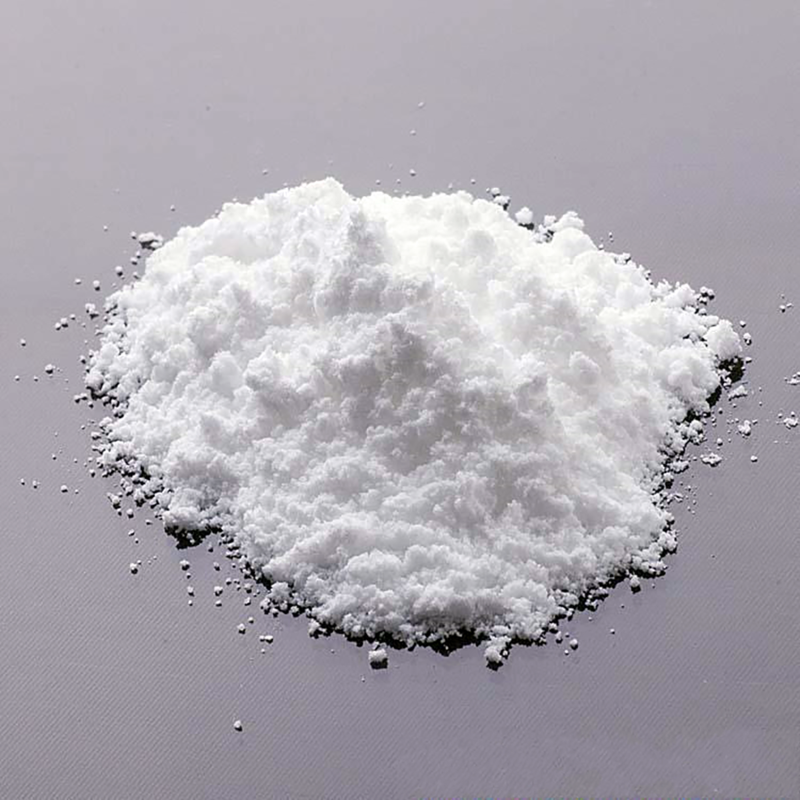
    White crystal or pill

    Density:

    1.43

    Melting Point:

    470 °C (dec.) (lit.)

    Boiling Point:

    925°C

    Water Solubility:

    113 g/L (20 ºC)

    Storage Conditions:

    Storage Room low temperature ventilation drying ,Separate storage with acids

    Vapor Pressure:

    Vapour pressure, Pa at 20°C: (negligible)

    Toxicity:

    LD50 orally in Rabbit: 210 mg/kg

    Odor:

    odorless

    PH:

    12 (50g/l, H2O, 50℃)

    PKA:

    14[at 20 ℃]

    Air and Water Reactions:

    Dilution with water may generate enough heat to cause steaming or spattering.

    Reactivity Profile:

    LITHIUM HYDROXIDE SOLUTION neutralizes acids exothermically to form salts plus water. Reacts with certain metals (such as aluminum and zinc) to form oxides or hydroxides of the metal and generate gaseous hydrogen. May initiate polymerization reactions in polymerizable organic compounds, especially epoxides. May generate flammable and/or toxic gases with ammonium salts, nitrides, halogenated organics, various metals, peroxides, and hydroperoxides. May serve as a catalyst. Reacts when heated above about 84°C with aqueous solutions of reducing sugars other than sucrose, to evolve toxic levels of carbon monoxide [Bretherick, 5th Ed., 1995].

    Critical Temperature & Pressure:

    Store below +30°C.

    Hazard Identification

    Classification of the substance or mixture

    Acute toxicity - Category 4, Oral

    Skin corrosion, Sub-category 1B

    Serious eye damage, Category 1

    GHS label elements, including precautionary statements

    Pictogram(s)

    Signal word

    Danger

    Hazard statement(s)

    H302 Harmful if swallowed

    H314 Causes severe skin burns and eye damage

    Precautionary statement(s)
    Prevention

    P264 Wash ... thoroughly after handling.

    P270 Do not eat, drink or smoke when using this product.

    P260 Do not breathe dust/fume/gas/mist/vapours/spray.

    P280 Wear protective gloves/protective clothing/eye protection/face protection/hearing protection/...

    Response

    P301+P317 IF SWALLOWED: Get medical help.

    P330 Rinse mouth.

    P301+P330+P331 IF SWALLOWED: Rinse mouth. Do NOT induce vomiting.

    P363 Wash contaminated clothing before reuse.

    P304+P340 IF INHALED: Remove person to fresh air and keep comfortable for breathing.

    P316 Get emergency medical help immediately.

    P321 Specific treatment (see ... on this label).

    P305+P351+P338 IF IN EYES: Rinse cautiously with water for several minutes. Remove contact lenses, if present and easy to do. Continue rinsing.

    P305+P354+P338 IF IN EYES: Immediately rinse with water for several minutes. Remove contact lenses, if present and easy to do. Continue rinsing.

    P317 Get medical help.

    Storage

    P405 Store locked up.

    Disposal

    P501 Dispose of contents/container to an appropriate treatment and disposal facility in accordance with applicable laws and regulations, and product characteristics at time of disposal.

    Other hazards which do not result in classification

    no data available

    Handling and Storage

    Precautions for safe handling

    Handling in a well ventilated place. Wear suitable protective clothing. Avoid contact with skin and eyes. Avoid formation of dust and aerosols. Use non-sparking tools. Prevent fire caused by electrostatic discharge steam.

    Conditions for safe storage, including any incompatibilities

    Separated from food and feedstuffs, strong oxidants and strong acids. Store only in original container. Dry. Well closed. Store in an area without drain or sewer access.

  • Seller Information
    Business Type:

    Trader

    Main Products:

    pharmaceutical intermediates,peptides,electronic chemicals

    Location:

    Room 102, 1st Floor, East Office Building, No. 45 Pengwan Road, Qianwan Bonded Port Area, Qingdao Zone, China (Shandong) Pilot Free Trade Zone

    Payment Terms:

    100% TT in advance

    Average lead Time:

    10

    Total Annual Revenue:

    $10 million-$25 million

    Total Employees:

    51-100

    Year of Establishment:

    2024

    A reliable supplier is like insurance.

    We are mainly specilized in supply of pharmaceutical intermediates, electronic chemicals,food additives, and other fine chemical products.
    Integrity is the foundation, quality is life. We would like to work together with you to build a greener and brighter future.

    Website: orientchem.cc
    Email: scarlett@orientchem.cc
    WhatsApp: +86 17753254221

  • Inquiry History
    3 Inquiries
    Country Product Purchase Quantity Date Posted
    Malaysia

    Lithium Hydroxide

    20.00 KG Mar 4, 2024
    India

    Lithium Hydroxide anhydrous

    1.00 20' Fcl Oct 12, 2023
    India

    Lithium Hydroxide

    500 KG Jun 28, 2023
    Post an enquiry for this product
pic ×

Scan the QR Code to Share

All products displayed on this website are only for non-medical purposes such as industrial applications or scientific research, and cannot be used for clinical diagnosis or treatment of humans or animals. They are not medicinal or edible.

According to relevant laws and regulations and the regulations of this website, units or individuals who purchase hazardous materials should obtain valid qualifications and qualification conditions.

The information shown above is provided by the enterprise itself, and the authenticity, accuracy and legitimacy of the content are the responsibility of the publishing company. ECHEMI does not bear any guarantee responsibility for this. Please be aware that risks in internet transactions objectively exist.

Feedback & Suggestions
Send Message

Thank you for your feedback. If you require further assistance, please contact us by email at info@echemi.com or call us at +86-532-55729510.