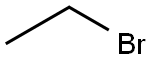
| Description | Ethyl bromide is a colorless to yellow liquid that becomes a gas at temperatures above 101 °F (38 ℃). Ethyl bromide has an etherlike odor and a burning taste. Ethyl bromide is miscible with alcohols, ether, chloroform, and organic solvents; its water solubility is 9000 mg l-1 at 25 ℃. Ethyl bromide’s vapor density relative to air is 3.76. |
| Chemical Properties | Bromoethane is a colorless, volatile, flammable liquid. When exposed to air and light, it turns yellow. It has an ethereal odor and somewhat burning taste. Bromoethane has a specific gravity of 1.4505 between 4° and 25°C, a boiling point of 38.4°C, a melting point of -119°C, and a vapor pressure of 475 mm mercury at 25°C. It is 0.91% (w/w) soluble in water at 20°C and is miscible with ethanol, ethyl ether, chloroform, and other organic solvents. It has a flash point of -20°C (closed cup). The autoignition temperature is 511°C. The flammable limits in air are between 6.7570 and 11.25%. Although bromoethane is relatively stable, when heated to decomposition it emits highly toxic fumes of bromine and hydrobromide; it can react with oxidizing materials (ITII, 1979; Sittig, 1979; Torkelson and Rowe, 1981; Merck, 1983; Sax, 1984). |
| Chemical Properties | Ethyl bromide is a colorless liquid (turns yellow on contact with air) with an ethereal odor and a burning taste. A gas above the boiling point. |
| Physical properties | Clear, colorless to yellow, volatile liquid with an ether-like odor. Odor threshold concentration is 3.1 ppm (quoted, Amoore and Hautala, 1983). |
| Uses | Ethyl bromide is used as a refrigerant and asan ethylating agent. It was formerly used asa . |
| Uses | Bromoethane is an alkylating agent primarily used as a chemical intermediate in organic synthesis, in the manufacture of pharmaceuticals, and for the To a lesser extent, it has been used as a, refrigerant, and solvent. Although proposed occasionally as a in the earlier part of this century, it has not been used to any extent for this purpose (Sayers et al., 1929; Abreu et al., 1939; ITII, 1979; Sittig, 1979; Torkelson and Rowe, 1981;Merck, 1983). |
| Definition | ChEBI: Bromoethane is a bromoalkane that is ethane carrying a bromo substituent. It is an alkylating agent used as a chemical intermediate in various organic syntheses. It has a role as a carcinogenic agent, a solvent, a refrigerant, a and an alkylating agent. It is a bromoalkane, a bromohydrocarbon and a volatile organic compound. |
| Preparation | Bromoethane is produced by the reaction of either hydrogen or potassium bromide with cold ethanol or with ethylene and sulfuric acid (Hawley, 1977; Sittig, 1979; Merck, 1983). It is commercially available at greater than 99% purity. Production from two U.S. manufacturers was estimated at 163.5 million pounds in 1986 (CSITC, 1987); no recent import and export information was available in the literature. |
| General Description | A colorless volatile liquid. Slightly soluble in water and denser than water. Flash point below 0°F. Vapors are heavier than air. Toxic by inhalation. Irritates skin and eyes. Used to make pharmaceuticals and as a solvent. |
| Air & Water Reactions | Highly flammable. Slightly soluble in water and denser than water. Turns yellow on exposure to air and light. |
| Reactivity Profile | Bromoethane will react with steam to produce toxic and corrosive fumes. Bromoethane can react vigorously with oxidizers. Bromoethane reacts with strong bases. Bromoethane also reacts with chemically active metals such as sodium, potassium, calcium, powdered aluminum, zinc and magnesium. Bromoethane will attack some forms of plastics, rubber and coatings. |
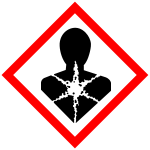
| Hazard | Toxic by ingestion, inhalation, and skin absorption; strong irritant. Questionable carcinogen. Flammable, dangerous fire hazard, explosion limits in air 6–11%. |
| Health Hazard | Ethyl bromide is a depressant of the centralnervous system, causing narcosis. The healthhazard is greater than with ethyl chloride.In addition to the effects that occurat exposure to high concentrations, othertoxic symptoms include irritation of the eyesand respiratory tract, pulmonary edema, fattydegeneration of the liver and renal tissue, anddamage to the liver, kidney, and intestine. A15-minute exposure to a 15% concentrationof vapor in air was lethal to rats. The oralLD50 value in rats is 1350 mg (NIOSH 1986). |
| Fire Hazard | HIGHLY FLAMMABLE: Will be easily ignited by heat, sparks or flames. Vapors may form explosive mixtures with air. Vapors may travel to source of ignition and flash back. Most vapors are heavier than air. They will spread along ground and collect in low or confined areas (sewers, basements, tanks). Vapor explosion and poison hazard indoors, outdoors or in sewers. Runoff to sewer may create fire or explosion hazard. Containers may explode when heated. Many liquids are lighter than water. |
| Safety Profile | Confirmed carcinogen. Moderately toxic by ingestion and intraperitoneal routes. Mddly toxic by inhalation. An eye and skin irritant. Physiologically, it is an anesthetic and . Its vapors are markedly irritating to the lungs on inhalation for even short periods. It can produce acute congestion and edema. Liver and ludney damage in humans has been reported. It is much less toxic than methyl bromide, but more toxic than ethyl chloride. It is a preparative hazard. Dangerously flammable by heat, open flame (sparks), oxidizers. Moderately explosive when exposed to flame. Reacts with water or steam to produce toxic and corrosive fumes. Vigorous reaction with oxidizing materials. To fight fire, use CO2, dry chemical. Ready decomposes when heated to emit toxic fumes of Br-. See also BROMIDES. |
| Potential Exposure | This chemical is used as an industrial chemical, pharmaceutical, and veterinary drug; as an ethylating agent in organic synthesis and gasoline; as a refrigerant; and as an extraction solvent. It has limited use as a local anesthetic |
| First aid | If this chemical gets into the eyes, remove anycontact lenses at once and irrigate immediately for at least15 min, occasionally lifting upper and lower lids. Seek medical attention immediately. If this chemical contactsthe skin, remove contaminated clothing and wash immediately with soap and water. Seek medical attention immediately. If this chemical has been inhaled, remove fromexposure, begin rescue breathing (using universal precautions, including resuscitation mask) if breathing hasstopped and CPR if heart action has stopped. Transferpromptly to a medical facility. When this chemical hasbeen swallowed, get medical attention. Give large quantities of water and induce vomiting. Do not make an unconscious person vomit |
| Carcinogenicity | This chemical is considered to be an animal carcinogen with unknown relevance to humans. There is no EPA (IRIS) file.
In the lifetime carcinogenic/toxicology study, groups of rats and mice were exposed 6 h/day, 5 days/week for 104 weeks to 0, 100, 200, or 400 ppm by inhalation. Survival of rats was unaffected or in the case of the 100 ppm female rats was significantly above the control group. Body weights were also unaffected.
Likewise survival of mice was little affected by exposure except for a decrease in survival at 400 ppm in female mice, which also had body weights 6–16% lower than controls after 29 weeks. No clinical signs were apparent in any group, but at autopsy there was evidence of respiratory irritation at 400 ppm. It was concluded that there was clear evidence of an increase in neoplasms (endometrial adenomas,adenocarcinomas, and squamous cell carcinomas) in the uteri of female mice. The tumors contributed to the decreased survival of the female mice exposed to 400 ppm. The terminal rats of uterine tumors were 0, 3, 14, and 61% in the 0, 100, 200, and 400 ppm groups.
There was equivocal evidence of carcinogenic activity in the lungs of male mice, and a marginally increased incidence of neoplasms in the brain and lungs of female rats. Male rats were considered to have some evidence of a slightly increased incidence of tumors in the adrenals, brain, and lungs. Although there was a clear dose–response relationship in female mice, the dose response in male mice and rats of both sexes was not as clear. |
| storage | Color Code—Blue: Health Hazard/Poison: Storein a secure poison location. Prior to working with thischemical you should be trained on its proper handling andstorage. Before entering confined space where this chemicalmay be present, check to make sure that an explosive concentration does not exist. Store in an explosion-proof refrigerator under an inert atmosphere and protect from light.Keep away from incompatible materials listed above.Where possible, automatically pump liquid from drums orother storage containers to process containers |
| Shipping | UN1891 Ethyl bromide, Hazard Class: 6.1; Labels: 6.1-Poisonous materials. |
| Purification Methods | The main impurities are usually EtOH and water, both of which form azeotropes with it. Ethanol and unsaturated compounds can be removed by washing with conc H2SO4 until no further coloration is produced. The ethyl bromide is then washed with water, aqueous Na2CO3, and water again, then dried with CaCl2, MgSO4 or CaH2, and distilled from P2O5. Olefinic impurities can also be removed by storing the ethyl bromide in daylight with elemental bromine, later removing the free bromine by extraction with dilute aqueous Na2SO3, drying the ethyl bromide with CaCl2 and fractionally distilling it. Alternatively, unsaturated compounds can be removed by bubbling oxygen containing ca 5% ozone through the liquid for an hour, then washing with aqueous Na2SO3 to hydrolyse ozonides and remove hydrolysis products, followed by drying and distillation. [Beilstein 1 IV 150.] |
| Toxicity evaluation | Ethyl bromide is an irritant to mucous membranes, is a central nervous system depressant, and causes histopathological changes in the liver, renal tissue, and heart. |
| Incompatibilities | May form explosive mixture with air. Hydrolyzes in water, forming hydrogen bromide (HBr). Oxidizers may cause fire or explosions. Fire and explosions may be caused by contact with chemically active metals: aluminum, magnesium or zinc powders; lithium, potassium, sodium. Attacks some plastic, rubber and coatings. Note: Chlorinating agents destroy nitrogen mustards. Dry chlorinated lime and chloramines with a high content of active chlorine, vigorously chlorinate nitrogen mustards to the carbon chain, giving low toxicity products. In the presence of water this interaction proceeds less actively. They are rapidly oxidized by peracids in aqueous solution at weakly alkaline pH. In acid solution the oxidation is much slower |
| Waste Disposal | Controlled incineration with adequate scrubbing and ash disposal facilities. |








 India
India