




Biochemical Engineering
- • Amino Acids and Proteins (230)
- • Nucleic Acid Drugs (18)
- • Enzymes and Coenzymes Drugs (115)
- • Inhibitors (1090)
- • Biological Response Modifiers (15)
- • Fat Medicines (8)
- • Amino Acids and Derivatives (4166)
- • Saccharides (2372)
- • Biochemical Reagents (344)
- • Nucleoside Drugs (346)
- • Condensing Agent (40)
- • Polypeptide (768)
- • Biosynthetic Natural Products (107)
- • Plant Extracts (826)
- • Chinese Herbs (354)
- • Microbiology Reagents (11)
- • Protein Research (34)
- • Lipids (281)
- • Inflammation Mediators (128)
Related News


Biological Inhibitors
Sort Inhibitors Alphabetically
Inhibitors
Siponimod
(1230487-00-9)-

- / 99.00%
-

Chemical Grade / 99%
$5.15-6.18/G FOB
-

Pharmaceutical Grade / 99%
-
 1230487-00-9 Factory Supply Raw Materials High Qulity Wholesale price")
USP / EP / BP / JP Grade / 99.9%



Request for quotation , get quotes from more suppliers.
Semagacestat
(425386-60-3)-
")
- / 99%
-

-

-


Request for quotation , get quotes from more suppliers.
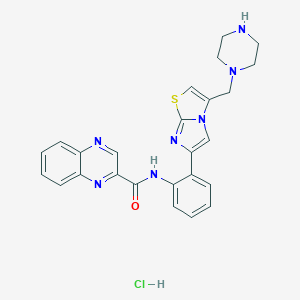
SRT1720
(1001645-58-4)-

- / 99.00%
-
 SRT1720 HCl CAS 1001645-58-4")
Pharmaceutical Grade / 98%
$280-300/G FOB
-

industrial Grade / 98%
-

Industrial Grade / 99%
Request for quotation , get quotes from more suppliers.
Sonidegib
(956697-53-3)-

- / 99.00%
-

Industrial Grade / 99%
-

Industrial Grade / 99%
-



Request for quotation , get quotes from more suppliers.
Selinexor
(1393477-72-9)-

- / 99.00%
-

Pharmaceutical grade / 99%
$50/MT EXW
-

Pharmaceutical grade / 99%
-

Industrial Grade / 99%


Request for quotation , get quotes from more suppliers.
SU 11274
(658084-23-2)-

Industrial Grade / 99%
-
![buy (3Z)-N-(3-chlorophenyl)-3-[[3,5-dimethyl-4-(4-methylpiperazine-1-carbonyl)-1H-pyrrol-2-yl]methylidene]-N-methyl-2-oxo-1H-indole-5-sulfonamide]( "(3Z)-N-(3-chlorophenyl)-3-[[3,5-dimethyl-4-(4-methylpiperazine-1-carbonyl)-1H-pyrrol-2-yl]methylidene]-N-methyl-2-oxo-1H-indole-5-sulfonamide")
-

-

Industrial Grade / 99%


Request for quotation , get quotes from more suppliers.
Sepantronium bromide
(781661-94-7)-

Industrial Grade / 99%
-

Industrial Grade / 99%
-

-
")
Industrial Grade,Pharma Grade / 99%


Request for quotation , get quotes from more suppliers.
Sapitinib
(848942-61-0)-

- / 99%
-

Industrial Grade / 99.00%
-
![buy 2-[4-[4-(3-chloro-2-fluoroanilino)-7-methoxyquinazolin-6-yl]oxypiperidin-1-yl]-N-methylacetamide]( "2-[4-[4-(3-chloro-2-fluoroanilino)-7-methoxyquinazolin-6-yl]oxypiperidin-1-yl]-N-methylacetamide")
-


Request for quotation , get quotes from more suppliers.
SGI-1776
(1025065-69-3)-

- / 99%
-

Industrial Grade / 99%
-

-


Request for quotation , get quotes from more suppliers.
-

- / 0.98%
-

Industrial Grade / 99%
-

-


Request for quotation , get quotes from more suppliers.
Source Inhibitors Raw Materials by Region

Frequently Asked Questions
Inhibitors are molecules that bind to enzymes or other biological targets to decrease or block their activity. In pharmaceutical research, enzyme inhibitors are widely used to modulate disease-related pathways, making them essential in drug discovery for conditions such as cancer, viral infections, and metabolic disorders. Common types include competitive, non-competitive, and irreversible inhibitors, each with distinct mechanisms of action.
Enzyme inhibitors play a critical role in drug development by selectively targeting disease-causing enzymes, thereby halting pathological processes. For example, protease inhibitors are used in HIV treatment, while kinase inhibitors are key in oncology therapies. Their specificity, potency, and pharmacokinetic properties make them valuable candidates in therapeutic pipelines, often serving as lead compounds during preclinical and clinical stages.
Inhibitors are extensively used in life science research for:1. Elucidating signaling pathways by selectively blocking key enzymes.2. Validating drug targets through functional studies.3. Serving as positive controls in high-throughput screening assays.4. Studying disease mechanisms in cellular and animal models.5. Developing diagnostic tools and companion biomarkers.Their versatility makes them indispensable in both academic and industrial R&D settings.
To verify the authenticity and quality of Inhibitors, request a Certificate of Analysis (CoA) from the supplier, which should include HPLC or NMR data confirming identity and purity. Cross-reference the compound’s CAS number and structure with authoritative databases like PubChem or ChEMBL. Additionally, check if the supplier adheres to international quality standards (e.g., ISO 9001) and provides lot-specific testing data. Reputable vendors often offer sample testing or third-party validation reports upon request.