Singapore updates microbiological standards and import requirements for the import of specific ready-to-eat foods
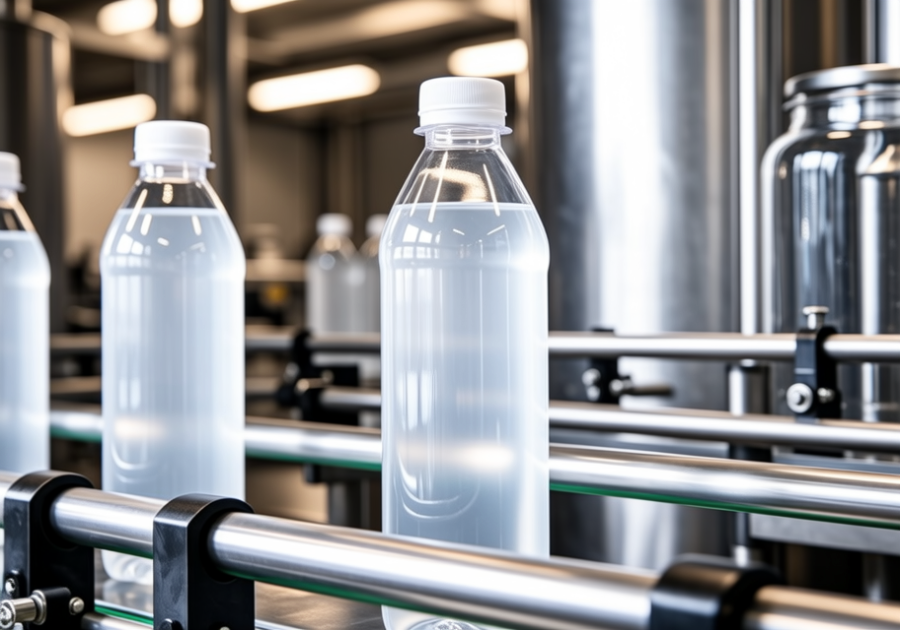
On 21 November 2022, the Singapore Food Authority (SFA) issued a notice to update the microbiological standards in the import requirements for specific ready-to-eat foods (RTEs), updating and testing the following microbiological standards required for imported ready-to-eat foods : Infant formula; traditional cake &nasilemak; Coconut products – coconut milk, ground coconut, coconut jelly, hulled coconut; Minimal processing of cut/peeled fruits and vegetables; mooncakes; packaging mineral water and drinking water; Ice; grated civet coffee (kopiluwak); Other imported food products. The Circular amends the import conditions for the import of the following products, mainly including: (1) dairy products affected by foot-and-mouth disease (FMD). Countries affected by foot-and-mouth disease have the following import requirements for dairy products (pasteurized liquid milk, cheese, butter, ice cream, yogurt, milk powder): submit a written certificate (one-time submission) that the dairy product was produced in a premises regulated by the competent authority (e.g., manufacturer license); Submit a health certificate (per shipment) stating that the dairy ingredients have been "sterilized at a minimum temperature of 132°C for at least one second (ultra-high temperature [UHT])", or "if the pH of the milk is below 7.0, the sterilization process is carried out at a minimum temperature of 72°C for at least 15 seconds (high-temperature-short-time pasteurization [HTST])", or "if the pH of the milk is 7.0 or above, the HTST process is applied twice." ”; Information that should be included in the health certificate; Raw liquid milk is not allowed to be imported into Singapore. (2) The import requirements for mooncakes are as follows: submit documentary proof (one-time submission) proving that the imported product was manufactured in a premises supervised and inspected by the competent authority (e.g. a certified true copy of the manufacturer's license); Submit microbiological and chemical test reports for each mooncake (per batch). (3) Soy sauce and oyster sauce. The content of 3-monochloropropane-1,2-diol (3-MCPD) in soy sauce, oyster sauce and sauces containing soy sauce or oyster sauce as ingredients shall not exceed 0.02mg/kg. First-time importers of these products must submit a test report (only one copy) to the SFA for consideration prior to importation. 3-MCPD laboratories and analysis reports are as follows: a) Laboratories. 3-MCPD laboratories engaged in product analysis and testing must be accredited independent laboratories. The analytical method of 3-MCPD is GC/MS. The detection limit must be 0.01mg/kg. b) Analysis report. The report must indicate the following: brand name; the type and grade of sauce; Country of origin; Lot number/expiry date; Laboratory name and country; Date of laboratory test; % dry matter; Detected 3-MCPD level (fresh weight) & detection limit: 0.01 mg/kg & 10 μg/kg. c) The permissible level of 3-MCPD is based on 40% dry matter in the product. The level of 3-MCPD (fresh weight) and the percentage of dry matter will allow the level of 3-MCPD to be calculated based on 40% dry matter. 3-MCPD (based on 40% dry matter) = 3-MCPD (fresh by weight)/% dry matter X 40% dry matter.

You May Interested In


High Quality β-Nicotinamide adenine dinucleotide CAS 53-84-9 NADwith ready stock and best price
$3E+1/UNIT FOB


2026-10-24
Trade Alert
Delivering the latest product trends and industry news straight to your inbox.
(We'll never share your email address with a third-party.)

Related News
-
Aster Opens Singapore’s Storage and Marine Network to Third Parties
-
India Launches Anti-Dumping Probe into PET Film from China, Singapore, Thailand and the UAE
-
Chevron Phillips Chemical Sells Singapore Petrochemical Complex
-
Rianlon Invests $300 Million in Malaysia: A Strategic Leap Forward in Polymer Additives and Global Expansion
-
MÜNZING Establishes First Operational Base in Singapore
-
Singapore suspended imports of poultry products from Hungary affected by the outbreak of highly pathogenic avian influenza
-
Singapore has imposed temporary import restrictions on poultry products from areas affected by the US avian influenza outbreak
-
Another Acquisition Completed! LANXESS Becomes One of the Largest Suppliers of Microbiological Control Products
-
Singapore June petrochemical exports, NODX fall 17%
-
SK Chemicals Partners with China’s Kelinle to Build Its Own Waste-Plastic Supply Network
Recommend Reading
-
![Synthomer Sells Its Last Upstream Chemical Business]()
Synthomer Sells Its Last Upstream Chemical Business
-
![Wuxi Yinda Nylon Acquires German Century-Old Chemical Giant Perlon]()
Wuxi Yinda Nylon Acquires German Century-Old Chemical Giant Perlon
-
![Xampla and DIC to Introduce PFAS-Free Morro Coating to Asia]()
Xampla and DIC to Introduce PFAS-Free Morro Coating to Asia
-
![Brazil Slams Chinese Butyl Acrylate with Anti-Dumping Probe—Trade Tensions Heat Up in Specialty Chemicals]()
Brazil Slams Chinese Butyl Acrylate with Anti-Dumping Probe—Trade Tensions Heat Up in Specialty Chemicals
-
![U.S. 10% Temporary Tariff Expires, New Section 301 Tariffs Not Yet Implemented]()
U.S. 10% Temporary Tariff Expires, New Section 301 Tariffs Not Yet Implemented
-
![EU Set to Seek Import Quotas on PET, Epoxy Resins and Fibreglass as Trade Curbs Reach Chemicals]()
EU Set to Seek Import Quotas on PET, Epoxy Resins and Fibreglass as Trade Curbs Reach Chemicals
-
![Polyester Bottle Flakes Show Intraday Volatility and Strength on the 23rd, Closing Higher at Late Trading Hours]()
Polyester Bottle Flakes Show Intraday Volatility and Strength on the 23rd, Closing Higher at Late Trading Hours
-
![Costs Strongly Support, China's Gasoline and Diesel Prices Surge]()
Costs Strongly Support, China's Gasoline and Diesel Prices Surge
-
![Insufficient Demand, Cyclohexane Market Maintains Stable Operation Overall in China]()
Insufficient Demand, Cyclohexane Market Maintains Stable Operation Overall in China
-
![Supply Side Tightens, Melamine Market Stabilizes in China]()
Supply Side Tightens, Melamine Market Stabilizes in China