What is melting point of silver nitrate and factors affecting it?
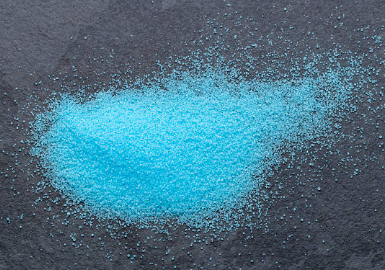
What is melting point of silver nitrate? Silver nitrate is a chemical compound that is a salt of silver nitrate, with the chemical formula AgNO3. It's often used in preparation for making metallic prints, solarization in black and white photography, and as an oxidizing agent to test for the presence of iron. Silver nitrate has a melting point that ranges from 158-159 degrees Celsius (320-321 degrees Fahrenheit).
Factors that affects the melting point of silver nitrate
Below are the factors that affected the melting point of silver nitrate
1. Pressure
Pressure is the exerted force over a surface area. The higher the pressure, the greater amount of force. The more force, the more heat that is generated and thus the temperature increases. If a temperature of silver nitrate exceeds its melting point, it would be known as an explosion. This is because silver nitrate is considered explosive due to the fact that it has higher weight density than air
2. Temperature
Temperature affects how easily a substance melts at room temperature and below but has no significant effect above room temperature and above (for example, hot ice). Temperature also affects how much energy substances absorb or lose when evaporating into gas form or being decomposed into compounds by chemical reactions.
3. Additives
Additives are substances added to substances to change their properties. They also influence the actual melting point of the substance. For example, if silver nitrate is mixed with an additive such as potassium nitrate or ammonium chloride, then the melting point of silver nitrate would be affected by these additives as well. For example, mixing silver nitrate with potassium nitrate would increase its melting point while mixing it with ammonium chloride would decrease its melting point.
4. pH
pH is the measure of hydrogen ions in a solution or a neutral compound or substance, used in determining its acidity (i.e., higher pH=less acidic). The acidity of a substance is dependent on the concentration of hydrogen ions, which is determined by the pH value. The lower the pH, the more acidic it will be. As with most acids, silver nitrate tends to have a decreasing pH until it reaches a point where all of its hydrogen ions are lost and it becomes non-acidic and turns into silver hydroxide (Ag(OH)2).
5. Concentration
The higher concentration of a substance or materials, the more melting points there will be. This is because if substances or substances are placed in an environment that is hotter than its boiling point, then they tend to evaporate faster and may thus also evaporate at higher rates towards lower temperatures.
Uses of silver nitrate
1. Photographic chemicals
Silver nitrate was once used in photography, but it has since been largely replaced by other chemicals. For example, silver bromide (AgBr) is used in most black-and-white film, and silver chloride (AgCl) is used in color film. However, the process of developing prints made with silver salts remains a popular photographic process.
2. Antifoulants
Antifouling paint is frequently prepared with silver nitrate to prevent the growth of algae on boat hulls, for example. Silver nitrate is used by lake fishermen as a natural bug killer due to its ability to kill insects without harmful side effects such as destroying aquatic life.
3. Irrigation and reclamation of land
In the case of irrigation, silver nitrate is used in water systems to reduce leaching of metals, particularly lead into the water supply, which can occur through the pH neutralization process. It is also used as a soil fertilizer, although less so than many other metals due to its relatively high cost.
4. Dope for fireworks and pyrotechnics
Dope also known as pyrotechnic mixtures are explosive compositions used for fireworks and similar events. It is used to accelerate the burning of pyrotechnic compositions, and is also used for safety, to control the burning rate and/or ensure that a dispersion does not occur. Dope which contains silver nitrate has been used for more than 1,000 years as a firework ingredient.
5. Oxygen
Silver nitrate can sometimes be found in oxygen bottles for diving purposes. In such cases it is found in high concentrations due to the nature of high-pressure compressed air systems that are typically employed when specifically oxygenating air within these bottles.
Conclusion
Silver nitrate is considered to be a strong oxidizing agent. It has been used in a wide variety of applications ranging from photographic chemicals and antifouling paint to herbal medicine and chemical reclamation. The appearance of the solution directly reflects its purity, since solutions with higher concentrations of silver ions are darker in color.
Looking for chemical products? Let suppliers reach out to you!
You May Interested In


Glow70/KLOW80 99% China Peptides Warehouse Direct Delivery Lyophilized Powder in Stock
$169/UNIT FOB


2026-10-21
Trade Alert
Delivering the latest product trends and industry news straight to your inbox.
(We'll never share your email address with a third-party.)

Related News
-
EPA Pressures Minnesota to Tackle Nitrate Threat in Drinking Water
-
EU Food Industry Granted Two Years to Align with Stricter Nitrite and Nitrate Limits
-
Mongolia intends to develop standards for the physical and chemical analysis of drinking water
-
Chemical Raw Materials: How to Source Quality Suppliers & Understand Grades
-
Calcium Sulfate: Properties, Uses, and Applications
-
Sodium Chloride (NaCl): Food Grade vs Industrial Grade Uses & Safety Data
-
Isoascorbic Acid: Uses and Safety
-
Understanding PCl5: Compound Name and Uses
-
Barium Sulfide: Properties, Uses, and Safety
-
Sodium Nitrate: Fertilizer, Food Curing, and Explosive History
Recommend Reading
-
![Aluminum Oxide (Al2O3): Abrasive Uses, Ceramic Applications, and Safety]()
Aluminum Oxide (Al2O3): Abrasive Uses, Ceramic Applications, and Safety
-
![Uses and Properties of Copper Acetate]()
Uses and Properties of Copper Acetate
-
![Methanol Methyl Alcohol vs Ethanol: Toxicity, Fuel Uses, and Industrial Solvent Safety]()
Methanol Methyl Alcohol vs Ethanol: Toxicity, Fuel Uses, and Industrial Solvent Safety
-
![Understanding Titanium Oxide: Properties and Uses]()
Understanding Titanium Oxide: Properties and Uses
-
![Glycopyrronium: Pharmaceutical Applications, Mechanism, and Chemical Specs]()
Glycopyrronium: Pharmaceutical Applications, Mechanism, and Chemical Specs
-
![BDO market conditions show a noticeable price increase]()
BDO market conditions show a noticeable price increase
-
![Weak Balance Under Cost Support—Melamine Market Struggles to Stay Firm]()
Weak Balance Under Cost Support—Melamine Market Struggles to Stay Firm
-
![Ethanol Market Prices Fluctuate and Consolidate]()
Ethanol Market Prices Fluctuate and Consolidate
-
![Import Supply Tight, Ethylene Glycol Spot Price Hits a 4-Year High in China]()
Import Supply Tight, Ethylene Glycol Spot Price Hits a 4-Year High in China
-
![Business Society’s September 4, 2026 Melamine Market Outlook: Fluctuating Trend]()
Business Society’s September 4, 2026 Melamine Market Outlook: Fluctuating Trend