Influencers on TikTok Are Being Paid to Spread Misinformation About Aspartame
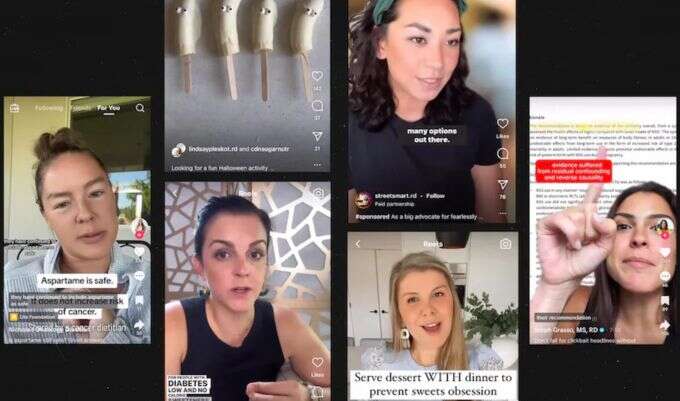
A recent investigation by The Washington Post has revealed that many influencer dietitians on platforms like TikTok and Instagram were paid by the food and beverage industry to spread misinformation about the safety of the artificial sweetener aspartame. The goal of this campaign was to counter warnings from the World Health Organization (WHO) that suggested aspartame is ineffective for weight loss and possibly carcinogenic.

A recent investigation has found that food and beverage companies are paying influencers on Tiktok and Instagram to spread misinformation and downplay health risks associated with the artificial sweetener aspartame
Aspartame is a low-calorie artificial sweetener found in various foods and drinks, including sugar-free soda and diet foods. While experts generally agree that aspartame is safe to consume in moderation, the WHO recommends a daily limit of 40 mg/kg body weight to limit potential cancer-causing effects.
The Washington Post investigation found that influencer dietitians claimed that the WHO warnings were clickbait and based on low-quality science, potentially causing confusion about the health risks associated with aspartame. The investigation revealed that the campaign reached over 11 million followers and counting.
While aspartame is unlikely to cause harm in small quantities, it can lead to headaches, gastrointestinal disturbances, and allergic reactions in high doses. Some studies have also suggested that artificial sweeteners like aspartame may disrupt the body's natural appetite regulation mechanisms, potentially leading to overeating and weight gain.
Experts generally consider aspartame safe for consumption within recommended daily intake levels, with specific sensitivities or allergies to aspartame causing adverse reactions in some individuals.
To enjoy foods and drinks containing aspartame while maintaining a balanced diet, experts recommend moderation and diversifying your food choices. The WHO states that an adult weighing 70kg would need to consume over 9-14 cans of diet soda a day to exceed the acceptable daily intake of aspartame.
While some consider aspartame safe in moderation, others prefer to avoid artificial sweeteners altogether and opt for natural alternatives.

You May Interested In


High Quality β-Nicotinamide adenine dinucleotide CAS 53-84-9 NADwith ready stock and best price
$3E+1/UNIT FOB


2026-10-25
Trade Alert
Delivering the latest product trends and industry news straight to your inbox.
(We'll never share your email address with a third-party.)

Related News
-
ECHEMI High Quality Inquiries (29 July-2 Aug)
-
ECHEMI High Quality Inquiries (22-26 June)
-
Controversy Surrounding Aspartame: Is It Safe or a Possible Cause of Cancer?
-
Aspartame vs High Fructose Corn Syrup: What You Should Know
-
CONSUMERS & MARKETS: TikTok Shop Beauty Sales: Insights and Trends
-
In the First Quarter of 2022, the Export Volume and Price of Aspartame Raw Materials Will Rise
-
Slow demand start March asphalt output up
-
Characteristics and market status of several synthetic sweeteners
-
Sweetener supply in epidemic situation: HSWT air transport aspartame
-
The Development of New Sweetener
Recommend Reading
-
![Global Chemical Inventories Hit Critical Lows as Over 200 Chinese Companies Suspend Quotations]()
Global Chemical Inventories Hit Critical Lows as Over 200 Chinese Companies Suspend Quotations
-
![Trump’s Steel, Aluminum and Copper Tariff Changes Pull Chemical Manufacturing Into the Impact Zone]()
Trump’s Steel, Aluminum and Copper Tariff Changes Pull Chemical Manufacturing Into the Impact Zone
-
![$530 Million Lawsuit Unheard, $76 Million Counterclaim Filed: Is Qicai Chemical’s ‘Reputation Defense’ a Desperate Last Stand or a Calculated PR Gambit?]()
$530 Million Lawsuit Unheard, $76 Million Counterclaim Filed: Is Qicai Chemical’s ‘Reputation Defense’ a Desperate Last Stand or a Calculated PR Gambit?
-
![EU Plans Broader Quotas and Tariffs on China, With Chemicals Clearly Named]()
EU Plans Broader Quotas and Tariffs on China, With Chemicals Clearly Named
-
![Rising Naphtha Prices in Japan Drive Up Costs for Diapers, Sanitary Products, and Cosmetics]()
Rising Naphtha Prices in Japan Drive Up Costs for Diapers, Sanitary Products, and Cosmetics
-
![Ethyl Acetate Prices Continue to Decline]()
Ethyl Acetate Prices Continue to Decline
-
![Mid-January Acetic Acid Market Trends Show a Strong Uptrend]()
Mid-January Acetic Acid Market Trends Show a Strong Uptrend
-
![Business Society’s Palm Oil Market Outlook on September 4, 2026: Bullish]()
Business Society’s Palm Oil Market Outlook on September 4, 2026: Bullish
-
![Insufficient Support, May Butanol Prices in China Decrease by Nearly 10%]()
Insufficient Support, May Butanol Prices in China Decrease by Nearly 10%
-
![2025 PVC Prices Decline Due to Capacity Expansion & Supply-Demand Imbalance, 2026 May See a Recovery]()
2025 PVC Prices Decline Due to Capacity Expansion & Supply-Demand Imbalance, 2026 May See a Recovery