




The Development of New Sweetener
Sweetener replacement, new sweeteners are expected to replace traditional sweeteners
The chemical name of sodium saccharin is o-benzoylsulfonimide. Invented by Americans in 1879, the United States began industrial production of saccharin sodium in 1910. For sodium saccharin, its disadvantages are mainly as follows: when its concentration exceeds 0.03%, it has a bitter taste. Under acidic conditions, when the sodium saccharin is heated, its sweet taste will gradually disappear and it will turn into a bitter taste of o-aminosulfonyl benzoic acid.
Due to the safety and high pollution of the production of sodium saccharin and its abuse in the end market, China has controlled the production and application of sodium saccharin. Safety: For the human body, if long-term intake of high concentrations of saccharin sodium from the diet can to some extent promote other cancer-promoting substances known to cause bladder cancer to induce tumors at low doses, so saccharin sodium is used in Internationally restricted. High pollution: Saccharin belongs to the high-polluting industry. According to China HowNet, saccharin production consumes 14 types of chemical raw and auxiliary materials such as strong acid and strong alkali. Each ton of finished product consumes 13.2 tons of raw materials and 24 tons of water. Emissions reached 26.2 tons (excluding coal). Terminal market abuse: According to the Chinese Consumers Association, in 2018, about 61.2% of beverages containing various sweeteners were nationwide, of which about 55.1% of beverages contained sodium saccharin, and about 23.5% of Different levels of saccharin sodium were used in the production of the beverage, but it was not explicitly stated on the label. In addition, in urban and rural markets, 90.9% of beverages contain sodium saccharin.
At present, there are three designated enterprises producing saccharin in the country. According to statistics from the National Saccharin Cooperative Group, in 2018, three enterprises in the country produced a total of 24,000 tons of saccharin. Saccharin itself has many deficiencies in terms of safety and stability, and will gradually lose competitiveness in the sweetener market.
Cyclamate: overall demand is stable
Cyclamate, scientific name cyclohexyl sodium glutamate. Cyclamate was discovered by Michael Sveda, a graduate student at the University of Illinois in the United States in 1937. It was approved by the FDA in 1949 and officially launched on the market. Industrial production began in 1960. In 1986, the Chinese Ministry of Health approved cyclamate as a food additive. In the 1970s, some scientists questioned that cyclamate is related to the formation of bladder cancer. Although this result has not been verified, it has changed the development track of cyclamate. Since then, cyclamate is no longer allowed as a food additive in the US market. The EU has limited the amount of cyclamate, and the allowable daily intake is 7mg / kg. Chinese national standard GB2760-2014 regulates the addition of cyclamate to various foods.
At present, the number of production enterprises is limited, and the overall output is stable. China is the world's largest producer and consumer of cyclamate. In the past 10 years, the production capacity of cyclamate in China has basically maintained 75,000-80,000 tons / year, and the actual output is 50,000--60,000 tons / year. The global output accounts for about 80% and the export accounts for about 50%. In recent years, with the market competition and elimination, fewer than ten companies remain in normal production, mainly distributed in the Yangtze River Delta and the Pearl River Delta. The most influential companies are Jintian Enterprise (Nanjing) Co., Ltd. and Fangda Additives. (Yangquan) Co., Ltd., these two companies' capacity and output account for more than 80% of the domestic total.
ASPARTAME: slowly exiting the sweetener market in the future
Aspartame, chemically named aspartame, is chemically or enzymatically catalyzed by L-phenylalanine (or L-methylphenylalanine) and L-aspartic acid be made of. Aspartame began industrial production in the late 1980s.
According to public information, the current global output of aspartame is about 25,500 tons, and China's annual output of aspartame is about 19,200 tons, making it the world's largest producer of aspartame. About 70% of China's aspartame exports. In addition to China, the United States and Japan are also major producers of aspartame.
Stability and security limit its use. Aspartame hydrolyzes under high temperature or high pH conditions, so it is not suitable for foods that need to be baked at high temperatures. In addition, aspartame contains phenylalanine, so patients with phenylketonuria are not suitable for use. In 2015, Pepsi Cola's Diet Soda series discarded aspartame and switched to sucralose and potassium acesulfame. Mixed sugar substitute. It is expected that in the future, as consumers' health awareness increases, aspartame will slowly withdraw from the sweetener market.
Ansaimi: After the industry shuffles, it presents an oligopoly pattern
Ansaimi, also known as AK sugar, was chemically named potassium acetosulfonate. It was first synthesized in 1967, and its use was approved by the United Kingdom and the United States in 1983 and 1988, respectively. It was also recognized in China in 1992. Acemi is widely used in food, beverage, oral hygiene / cosmetics (can be used for lipstick, lipstick, toothpaste and mouthwash, etc.) and pharmaceuticals (for syrup preparation, sugar-coated tablets, bitter masking agents, etc.).
The production steps of acetic acid are as follows: sulfamic acid is condensed with diketene in the presence of triethylamine to produce acetaminosulfonic acid, desulfurized with sulfur trioxide, and neutralized with potassium hydroxide to produce acetic acid. After concentration, decolorization, crystallization and drying, the finished product package is obtained. Among them, diketene is an important raw material for the production of acetic acid.
The industry experienced shuffling, and Jinhe Industrial stood out. In 2005, Germany's Nutrinova Acemi patent expired, and domestic companies have invested in the construction of Acemi capacity, resulting in a rapid increase in Acemi capacity and increasing market competition. The price of Acemi products fell from 74,100 CNY/ton in 2008. By 2013, RMB 36,900 / ton, in this process, most small and medium-sized enterprises suffered losses and withdrew from industry competition due to high production costs and weak anti-risk capabilities. In 2016, due to the Jiangsu Tiancheng and Ningbo Wanglong accidents, the supply of diketene tightened, and the price rose from 8,400 CNY/ton to 15,000 CNY/ton. Due to the increase in the price of raw material diketene, the price of acetic acid increased from 36,700 CNY/ton in 2015. The average price per ton rose to an average price of 41,000 CNY/ton in 2016. In 2017, due to operating problems, the operating rate of Jiangsu Haobo was less than 30%, and the output fell sharply. Due to the contraction of the supply side, the price of Ansaimi continued to rise to 45,800 CNY/ton in 2017. With the shrinking of diketene production capacity and the stabilization of the demand side, in 2019, the price of Ansaimi has recovered to 63,000 CNY/ton.
Sucralose: The market space is improving, and it is expected to replace sucrose in the C-term in the future
Sucralose is also known as sucralose and sucralose. Chemical name The chemical name is 4,1 ', 6'-trichloro4,1', 6'-trideoxygalactose. Sweetness is about 600-650 times that of sucrose. Sucralose was first synthesized in 1976, and its food safety was recognized as "GRAS" by the World Health Organization (WHO) and the United Nations Food and Agriculture Organization (FAO) Joint Expert Committee on Food Additives (JECFA) in 1990. In 1991, Canada was the first to approve the use of sucralose, and the US Food and Drug Administration approved March 21, 1998 as a food additive. China began to allow its use as a food additive in 1997.
The synthesis of sucralose includes three key steps: (1) production of sucrose-6-ethyl ester; (2) chlorination of sucrose-6 ethyl ester; (3) deacylation of sucralose-6-ethyl ester to prepare three Sucralose.
(1) The methods for synthesizing sucrose-6-ethyl ester are divided into chemical method and enzymatic method. The chemical method is applied in the real large-scale industrialization. The chemical methods used by major domestic manufacturers include solid acid catalysis method, indirect electro-oxidation synthesis method, Trimethyl ACETATE catalysis and dibutyltin oxide catalysis. At present, many domestic sucralose plants use the trimethyl orthoacetate method to synthesize sucrose-6-ethyl ester, and some companies use the dibutyltin oxide synthesis method. The dibutyltin oxide synthesis method has the most advantages in terms of product yield, purity, and production cost.
(2) The process of sucrose-6-ethyl ester chlorination to sucralose-6-ethyl ester is relatively mature in China. The main production companies use the Vilsmeier reagent method. The Vilsmeier reagent method is a relatively mature and stable synthetic sucralose-6- Ethyl method.
(3) Sucralose-6-acetate is usually deacylated in CH3ONa / CH3OH system to form sucralose.
The development trend of the sucralose market is good, and demand is growing rapidly. According to data from the Food Additives and Ingredients Research Group of East China University of Science and Technology, the global demand for sucralose increased from 2,500 tons in 2009 to 10,000-11,000 tons in 2018, and the demand increased by more than four times in nine years. At present, the global demand for sucralose The growth rate is about 15-20%, and the market development trend is good. In 2011, China exported about 1,000 tons of sucralose. In 2017, China exported about 5,300 tons, which increased by more than five times. China's sucralose market began to develop in 2008. By 2018, the market demand is close to 3,000 tons, accounting for about 30% of the global total market demand, and it is the fastest growing market area in the world in recent years. China is a large country producing and exporting sucralose products. 80% of its products are exported and about 20% are sold domestically.
At present, sucralose has been approved by more than 120 countries for use in food, health products, medical and daily chemical products. The Joint FAO / WHO Expert Committee on Food Additives has identified sucralose as a Class A food additive “Recognized Safety Grade (GRAS)”. Internationally, sucralose has been recognized by many multinational companies, including Coca-Cola, Pepsi, Danone, MDL, Procter & Gamble, Unilever, Bayer, etc. In China, many companies use sucralose as an important raw material for product development or to replace existing sugar sources.
The dietary habits of contemporary people consume a large amount of refined carbohydrates. Excessive intake of sugars can easily cause diseases such as obesity and diabetes, and white sugar can increase the risk of dental caries and tooth decay. The development direction of the future industry is to use sucralose as the main source of sweetness and develop 0 sugar, 0 fat and low-calorie sugar substitute products. In an ideal scenario, in coffee, breakfast cereals, and cooking dishes, white sugar can be replaced by sugar substitutes such as sucralose instead of white granulated sugar and sucrose, becoming healthy sweeteners in people's lives. At present, the Philharmonic products launched by Jinhe Industry have been launched on application websites such as Taobao and Xiaohongshu, aiming to create a market consumption education platform that reduces sugar and calories.
Global sucralose production capacity is concentrated in China, and the concentration is expected to increase in the future. As of 2018, the global effective production capacity of sucralose is 130-10-1 million tons, of which Taylor's production capacity is about 4,500 tons, mainly for high-end markets. Although the sucralose industry in China started late, it has developed rapidly. The total production capacity of sucralose manufacturing enterprises is about 10,000 tons, and the effective capacity is about 7,000 tons. At present, there are many small enterprises with an annual production capacity of 300-500 tons in China. Due to strict production technology and environmental protection requirements, such enterprises are difficult to form economies of scale in the production process. Compared with large manufacturers, the production costs are higher. When the competition is fierce and the product price is low, it will face greater operating pressure.

Global Sweetener Innovation Trends
You May Interested In


High Quality β-Nicotinamide adenine dinucleotide CAS 53-84-9 NADwith ready stock and best price
$3/UNIT FOB


2026-10-13
Trade Alert
Delivering the latest product trends and industry news straight to your inbox.
(We'll never share your email address with a third-party.)

Related News
-
Food & Hospitality Asia 2026 Returns as the Biggest Event in a Decade
-
ECHEMI High Quality Inquiries (29 July-2 Aug)
-
ECHEMI High Quality Inquiries (22-26 June)
-
Controversy Surrounding Aspartame: Is It Safe or a Possible Cause of Cancer?
-
Can Consuming Nonsugar Sweeteners Impact Gut Microbes and Inflammatory Markers?
-
Aalst Chocolate's Strategic Investment in Innovation to Cater to Evolving Consumer Preferences
-
Aspartame vs High Fructose Corn Syrup: What You Should Know
-
Influencers on TikTok Are Being Paid to Spread Misinformation About Aspartame
-
Food tech company rebrands following $30 million capital raise
-
Food technology company Incredo completed a $30 million C-round financing
Recommend Reading
-
![Middle East Crude Exports Rebound Sharply in September as Saudi Arabia Returns to Market at 5.4 Million bpd]()
Middle East Crude Exports Rebound Sharply in September as Saudi Arabia Returns to Market at 5.4 Million bpd
-
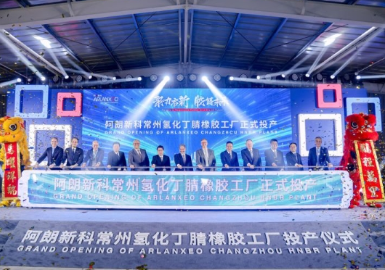
![ARLANXEO Launches State-of-the-Art HNBR Plant in Changzhou, Strengthening Asia-Pacific Supply]()
ARLANXEO Launches State-of-the-Art HNBR Plant in Changzhou, Strengthening Asia-Pacific Supply
-
![New York’s Additive Ban Signals a Tougher Era for Food Formulation]()
New York’s Additive Ban Signals a Tougher Era for Food Formulation
-
![EU Chemical Antidumping Complaints Hit a Record High: Trade Remedies Reshape Export Competition]()
EU Chemical Antidumping Complaints Hit a Record High: Trade Remedies Reshape Export Competition
-
![Asia’s Plastics Chain Faces a Shock: Tight Naphtha Supply Drives Up Polymer Costs]()
Asia’s Plastics Chain Faces a Shock: Tight Naphtha Supply Drives Up Polymer Costs
-
![Business Society’s Market Outlook for Acrylonitrile on September 4, 2026: Volatile]()
Business Society’s Market Outlook for Acrylonitrile on September 4, 2026: Volatile
-
![Butadiene rubber prices fall back to pre-Middle East conflict levels in China]()
Butadiene rubber prices fall back to pre-Middle East conflict levels in China
-
![Weekly Caustic Soda Price Consolidation Trend (6.22-6.26) in China]()
Weekly Caustic Soda Price Consolidation Trend (6.22-6.26) in China
-
![This week, the styrene market in China showed a weak decline (6.22-6.26)]()
This week, the styrene market in China showed a weak decline (6.22-6.26)
-
Sodium Metabisulfite: Properties, Uses, and Safety




- Hot Searches
- elite-chems
- etoroxib
- retatrutide glp-3 for sale
- 2cb sale
- foxo4 peptide for sale
- pp polypropylene resin price asia today english
- cafestol palmitate cat. no. hy-138164 purity
- retatrutide supplier china
- silver sulfate
- sds for sodium bicarbonate
- chemicals prices
- non ionic surfactant for herbicides