Breakthrough Research Reveals Anti-Inflammatory Potential and Phenolic Distribution in Chinese Wampi Fruits
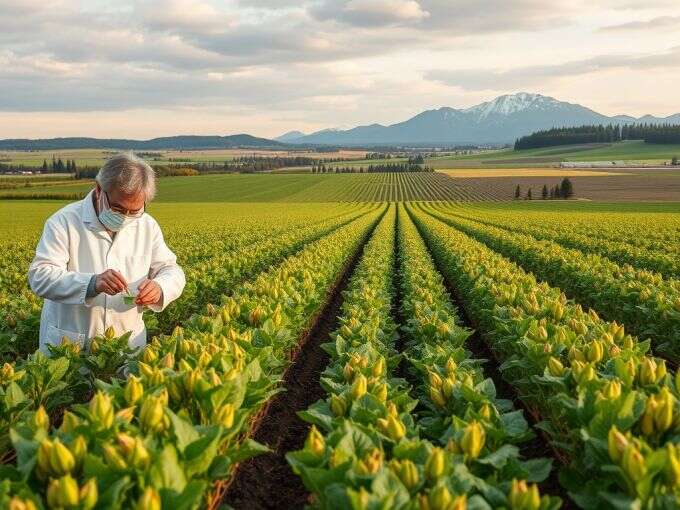
The Food Processing Research Laboratory at the Chinese Academy of Thermal Sciences' Processing Institute has achieved breakthroughs in understanding the distribution patterns of phenolic substances in different parts of Chinese Wampi and their anti-inflammatory properties. The study focused on Green Honey Yellow Peel, a distinctive variety from Lianjiang City known for its yellow peel. Researchers analyzed phenolic substances in the peel, core, and pulp, assessing their cellular-level distribution and anti-inflammatory activity. Molecular biology methods were employed to explore the anti-inflammatory pathway, identifying key phenolic components in Chinese Wampi.
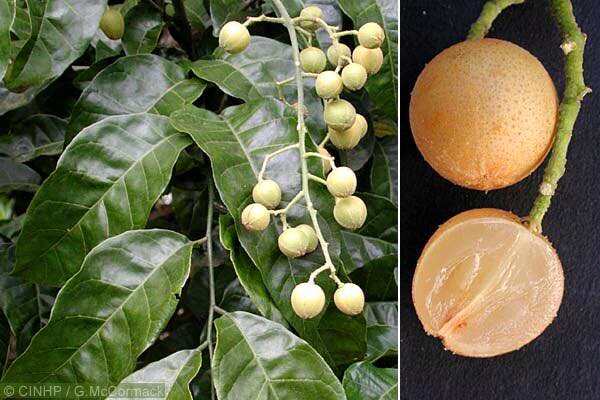
Chinese Wampi
Chinese Wampi, native to southern China, is both a medicinal and culinary fruit. Its popularity is rising due to nutritional benefits and appealing taste, contributing to rural revitalization. While the yellow-skinned pulp is commonly consumed fresh or processed, the peel and core are often discarded. Traditional medicine attributes anti-inflammatory properties to different parts of the fruit, addressing issues like coughs, asthma, and gastrointestinal discomfort. Despite previous reports of higher phenolic content in yellow-skinned fruits, details on the distribution of phenolic substances in the new variety Green Honey Huangpi remained unclear.
The study measured total phenolic content in Green Honey yellow peel, core, and pulp. Advanced techniques such as ultra-high performance liquid chromatography and tandem mass spectrometry were employed to analyze specific phenolic composition and relative content. In vitro inflammation models using mouse mononuclear macrophages assessed the anti-inflammatory activity of phenolic extracts. Real-time quantitative reverse transcription polymerase chain reaction (RT-qPCR) and Western Blot technology validated the anti-inflammatory activity and pathways of key phenolic components, including rutin, quercetin, and isorhamnetin 3-O-neohesperiglucoside.
Results revealed 86 identified phenolic components in Green Honey yellow-skinned fruits, with the highest phenolic content in the peel, followed by the pulp and the lowest in the core. Phenolic extracts from all three parts exhibited anti-inflammatory effects, inhibiting inflammatory mediators. Quercetin emerged as a crucial component for the anti-inflammatory effect. The findings contribute valuable insights into the phenolic nutritional profile of yellow-skinned fruits, guiding their high-value utilization.
The research outcomes were published in the "Journal of Ethnopharmacology" under the title "Distribution profiles of phenolic compounds in a cultivar of wampee (Clausena lansium (Lour.) Skeels) fruits and in vitro anti-inflammatory activity." Zeng Fanke, a research intern from the Institute of Processing, Chinese Academy of Thermal Sciences, served as the first author. Deputy researcher Li Ru and researcher Li Jihua from the Institute of Processing, Chinese Academy of Thermal Sciences were co-corresponding authors. The research received support from the Key Laboratory of Tropical Crop Processing of the Ministry of Agriculture and Rural Affairs, the Hainan Provincial Natural Science Foundation, the Chinese Academy of Tropical Agricultural Sciences’ “Unveiling and Leading” Project, the Zhanjiang City Innovation and Entrepreneurship Team Introduction “Pilot Plan,” and the Guangdong Province’s Premium and Rare Fruit Modern Agriculture Industry Funding.

You May Interested In


2026-10-13
Trade Alert
Delivering the latest product trends and industry news straight to your inbox.
(We'll never share your email address with a third-party.)

Related News
-
Cracking Europe: When the Chemical Empire Loses Its Heat
-
China’s TiO₂ Industry Launches Sixth Price Hike Wave as More Than 20 Producers Follow
-
Obesity Drugs Become Pharma’s Most Powerful Growth Engine
-
ARLANXEO Launches State-of-the-Art HNBR Plant in Changzhou, Strengthening Asia-Pacific Supply
-
Indian Immunologicals Pushes Back on “Fake Vaccine” Claims Amid Global Supply Chain Scrutiny
-
Minoxidil Safety Under Global Review as Infant Exposure Risks Surface
-
Substandard Drug Findings Expose Deep Structural Gaps in Medicine Quality Control
-
Small Pharma Firms Under Threat as Regulator Tightens Quality Norms
-
Sun Pharma’s Utreglutide Shows Promising Weight Loss and Liver Fat Reduction
-
EFSA Publishes Peer Review Conclusions on Phenmedipham Herbicide Assessment
Recommend Reading
-
![Spain Authorizes Emergency Use of Sulfoxaflor Formulation to Combat Cabbage Whitefly Outbreak]()
Spain Authorizes Emergency Use of Sulfoxaflor Formulation to Combat Cabbage Whitefly Outbreak
-
![APVMA Suspends Dimethoate Use on Select Berries Amid Updated Exposure Assessment]()
APVMA Suspends Dimethoate Use on Select Berries Amid Updated Exposure Assessment
-
![The GLP-1 Sweet Shot in India’s Diabetic Gut]()
The GLP-1 Sweet Shot in India’s Diabetic Gut
-
![Zimbabwe Blueberries Position for Growth Following China Market Access and Zero-Tariff Policy]()
Zimbabwe Blueberries Position for Growth Following China Market Access and Zero-Tariff Policy
-
![Canada Proposes Revised Maximum Residue Limits for Pyrethrins and Penthiopyrad]()
Canada Proposes Revised Maximum Residue Limits for Pyrethrins and Penthiopyrad
-
![Business Society September 22, 2026 Palm Oil Trend Analysis: Volatility]()
Business Society September 22, 2026 Palm Oil Trend Analysis: Volatility
-
![Both Costs and Supply-Demand Weaken, PTA Prices Edge Lower]()
Both Costs and Supply-Demand Weaken, PTA Prices Edge Lower
-
![Business Society September 22, 2026 PTA Trend Analysis: Clear Downtrend]()
Business Society September 22, 2026 PTA Trend Analysis: Clear Downtrend
-
![Business Society’s DOP Trend Analysis for September 17, 2026: Moderate Correction]()
Business Society’s DOP Trend Analysis for September 17, 2026: Moderate Correction
-
![Business Society’s Maleic Anhydride Trend Analysis for September 16, 2026: Fluctuating]()
Business Society’s Maleic Anhydride Trend Analysis for September 16, 2026: Fluctuating