Understanding Sodium Aluminosilicate Reaction with Silica Sand
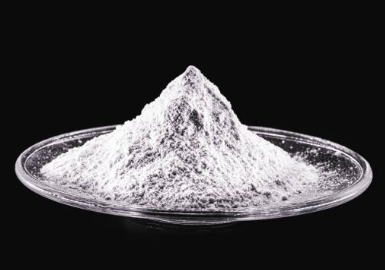
Sodium aluminosilicate is a material that plays an important role in several industrial processes: it is a component of the compounds used for cement, ceramics, and glass manufacturing because it is capable of forming complex silicate structures when subject to high temperatures and chemical reactions.
The modification of structural and physical properties of the material obtained from the sodium aluminosilicate reaction with silica sand plays an important role in industrial chemistry and material science.
Chemical Composition and Properties of Sodium Aluminosilicate
Naturally, it has approved sodium, aluminum, silicon, and oxygen atoms and is arranged in a crystalline or amorphous form according to the utilization and processing of the compound. This compound is thermally stable, chemically resistant, and forms stable silicate networks in reactive environments.
It is transformed in combination with silica sand into a material of greater strength, durability, and refractoriness than that used in construction, glassmaking, or ceramic manufacturing.
Role of Silica Sand in the Reaction Process
A primary reactant in high-temperature chemical processes in the presence of sodium aluminosilicate is silica sand, essentially silicon dioxide (SiO₂). This fine granular silica sand allows easy mixing and contact with sodium aluminosilicate and forms a stable silicate network.
Modified physical properties are obtained; enhanced viscosity in glass manufacturing and improved mechanical strength in cementitious materials are obtained through the sodium aluminosilicate reaction with silica sand.
Reaction Mechanism Between Sodium Aluminosilicate and Silica Sand
The thermal activation and ionic exchange play the prime role in the reaction mechanism between sodium aluminosilicate and silica sand at elevated temperatures. When this substance is heated to high temperatures, it allows sodium ions to diffuse into the silica matrix, causing the creation of complex aluminosilicate frameworks.
In ceramic sintering, it is a very important one, as controlled crystallization of aluminosilicates results in the formation of high-strength ceramic bodies. The viscosity and transparency of glass products are also influenced and thus are very important in the reaction when glassware of high quality is to be produced.
Industrial Applications of the Reaction
Sodium aluminosilicate reacts with silica sand, and applications include many industries, most notably in the production of glass, ceramics, refractory materials, and melilite spinel. This reaction is essential in the glass industry as a source of sodium silicate glass used as an adhesive, coating, and chemical barrier.
In addition, the controlled interaction of these compounds improves the thermal shock resistance and optical properties of specialty glass products. This reaction helps form pozzolanic material in cement and concrete production, which improves the strength and durability of construction materials.
Influence of Temperature and Pressure on the Reaction
The extent and efficiency of the reaction between sodium aluminosilicate and silica sand are mainly dependent upon temperature and pressure. In the case of higher temperatures, sodium ion diffusion is speeded up, stable silicate structures are promoted, and pressure changes affect the densification and crystallinity of the final material. In industrial processes, the optimization of these parameters is highly important to achieve consistent quality and performance of the products as a result.
Environmental and Sustainability Considerations
Since the sodium aluminosilicate reaction with silica sand has environmental implications, their use for the sustainable production of materials having little or no environmental impact is of great concern. Optimizing reaction conditions and the deployment of recycled silica sources reduce the energy consumed and the raw material waste industries.
Moreover, sodium aluminosilicate-based materials constitute the importance of this reaction in eco-friendly applications, including water purification, zeolite synthesis, and sustainable building materials.
Challenges and Future Research Directions
However, like any reaction, there are challenges in optimal parameterization to consistently generate the desired material properties. The efficiency and performance of the final product can be affected by issues of phase separation, incomplete reaction kinetics, and impurity interactions.
Future research efforts will include the application of advanced computational models and experimental techniques to further the understanding of the reaction mechanism and to improve industrial application.
Potential solutions to increase efficiency and performance in such sodium aluminosilicate-based materials are found in innovations in material science, such as nanostructured aluminosilicates and modified compositions of silica sand.
Conclusion
Sodium aluminosilicate reaction with silica sand is a basic chemical process with important applications in material science, industrial manufacturing, and sustainable development. Further enhancing the utility of this reaction in different industries will help in understanding the intricate reaction mechanisms, optimizing processing conditions, and exploring new applications. As the applications of this reaction are further researched and developed, this reaction will only become more useful for making more durable, more efficient, and more environmentally friendly materials.
Looking for chemical products? Let suppliers reach out to you!
You May Interested In


Glow70/KLOW80 99% China Peptides Warehouse Direct Delivery Lyophilized Powder in Stock
$169/UNIT FOB


2026-10-16
Trade Alert
Delivering the latest product trends and industry news straight to your inbox.
(We'll never share your email address with a third-party.)

Related News
-
Sulfur Hexafluoride (SF6): Applications and Safety
-
Sodium Alginate: Properties, Uses, and Benefits
-
Understanding Reactions Between Silver and Chloride
-
Key Properties and Applications of Para-Nitrophenol
-
Salinity Solution: Preparation and Uses
-
Rubber Cement: Applications and Safety Guidelines
-
Acetophenone: Properties, Uses, and Applications
-
Acetonitrile: Properties, Uses, and Safety
-
Sodium Percarbonate: Uses, Benefits, and Safety
-
TBHQ: Uses, Safety, and Health Effects
Recommend Reading
-
![Uses and Benefits of Sodium Selenite]()
Uses and Benefits of Sodium Selenite
-
![Applications and Safety of Sodium Dichromate]()
Applications and Safety of Sodium Dichromate
-
![Uses of Dithiothreitol in Laboratories]()
Uses of Dithiothreitol in Laboratories
-
![Chemical Reactions and Uses of Stilbene]()
Chemical Reactions and Uses of Stilbene
-
![Applications of Diphenyl Cyanide]()
Applications of Diphenyl Cyanide
-
![Under a Triple Game, Polyethylene Operates with a Weak and Fluctuating Trend]()
Under a Triple Game, Polyethylene Operates with a Weak and Fluctuating Trend
-
![Supply Increases in Stages, China’s Acrylonitrile Market Slips Narrowly]()
Supply Increases in Stages, China’s Acrylonitrile Market Slips Narrowly
-
![Polyester Bottle Flakes Hit a Weekly High Midweek Before Falling Back]()
Polyester Bottle Flakes Hit a Weekly High Midweek Before Falling Back
-
![Since May, the natural rubber market has shown a pattern of initial strength followed by weakness, with prices fluctuating at high levels.]()
Since May, the natural rubber market has shown a pattern of initial strength followed by weakness, with prices fluctuating at high levels.
-
![Supply-Demand Dynamics Drive Slight Rise in Toluene Market]()
Supply-Demand Dynamics Drive Slight Rise in Toluene Market