What is The Industrial Preparation of Acetic Acid Process?
Industrial preparation of acetic acid is the important data of preparation of acetic acid, the ingredients of its reaction with ethanol, and the synthesis process. The raw materials are ethanol and oxygen which is required under various conditions. The synthesis process of acetic acid is primarily divided into two stages, namely, the dehydration reaction and the oxidation-reduction reaction; each stage produces acetic acid itself. preparation of acetic acid steps includes;
1. Dehydration of Ethanol
This is the first step of the industrial preparation of acetic acid. Ethanol is metered into a reactor, and it is passed through a series of crystallizer, drum filter and granulating filter to remove the impurities. After being dried in dryer, ethanol is heated to various temperatures until this process is complete. The acetic ester of dehydrated ethanol is then precipitated from the solution by filtering and decanting. Now the dehydrated ethanol is transferred to the oxidation-reduction stage.
2. Oxidation-Reduction of Ethanol
This stage includes two reactions, that is, oxidation of ethanol and reduction of acetic ester. The oxidation reaction mainly uses air or oxygen as the oxidant. Air or oxygen is introduced into the reactor with a certain amount of ethanol, subsequently heated to a certain temperature, and then passed through a catalyst bed to achieve complete oxidation of ethanol. In this process, oxygen is consumed and acetic acid is produced as carbon dioxide gas by the reaction between acetic acid and carbon dioxide with heat discharge in a large quantity. Therefore, the process is an exothermic reaction and requires cooling. The dehydration of acetic ester is an endothermal reaction, that is, the production of acetic acid and carbon dioxide gas partially consumes oxygen and heat is produced in a large quantity. The amount of heat produced here should be discharged by water at a certain temperature to achieve the required temperature for the oxidation-reduction of acetic ester in a certain state.
The reduction reaction of acetic ester involves hydrogen as reducing reagent, which reacts with acetic ester simultaneously to form acetic acid. The hydrogen donor can be concentrated sulfuric acid or molecular hydrogen gas. The reaction products of ethanol oxidation and reduction of acetic ester are then combined, heated to a certain temperature, and then discharged into the liquid-liquid extractor for separation. The bottom product of this process is concentrated acetic acid (with less than 70% H3COOH), which is pumped into the vacuum evaporation stage.
3. Concentration of Acetic Acid by Vacuum Evaporation
Vacuum evaporation is one of the common methods in industrial preparation of acetic acid with strong corrosion resistance and high selectivity. Usually, acetic acid is concentrated under a vacuum of 0.8-1.5 MPa at a temperature of 120-160℃, and the endothermic process produced by the reaction is carried out with liquid nitrogen or oil cooling. It is an ideal way to concentrate acetic acid, which has good atom economy, high concentration factor and low energy consumption. The concentrated acetic acid obtained through this process should be stored in a sealed container with anti-corrosion measures to prevent it from being oxidized during storage.
4. Distribution of Acetic Acid
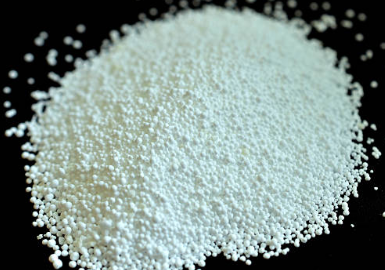
An important part of the preparation of acetic acid is that it should be stored in sealed containers and not oxidized, which can protect its quality. Preparation of acetic acid will be delivered to end users in the form of pellets, while they will be combined with other raw materials as required by the end users.
Some of the uses acetic acid
Acetic acid has been widely used in such manufacture as plastic, rubber, agricultural chemicals, medicine and so on. In the manufacture of plastic, from acetic acid derivative such as vinyl acetate or ethylene acetic acid is prepared. The reaction can make the ready-made plastics softer and more flexible, which is why its use in the manufacture of artificial leather was widespread. Vinyl acetate is mainly used to produce polyvinyl alcohol, polyvinyl chloride and so on. Acetylene terephthalic fiber is also known as "green fiber", because of its lower energy consumption and harmless to environment when compared with synthetic fiber; it has become one of the most widely used materials in clothing.
Acetic acid also plays a vital role in the protective and preserving of agricultural products. It is used to make anti-oxidants, anti-fungal, anti-bacterial, insecticide and so on. Acetic acid is a very useful product for chemical industry. Since it is an important raw material in the manufacture of chemicals such as acetic ester, acetone and so on, preparation of acetic acid has become an indispensable step in this industry. It is the most important raw material used in the manufacture of dyes and xylol based products.
Looking for chemical products? Let suppliers reach out to you!
You May Interested In


Glow70/KLOW80 99% China Peptides Warehouse Direct Delivery Lyophilized Powder in Stock
$169/UNIT FOB


2026-10-18
Trade Alert
Delivering the latest product trends and industry news straight to your inbox.
(We'll never share your email address with a third-party.)

Related News
-
Bovine Serum Albumin (BSA): Role in Cell Culture & Laboratory Applications
-
Cytosine: Structure, DNA Pairing, and Role in Genetics
-
Permanganate: Properties, Uses, and Safety
-
Isobutyl: Properties, Uses, and Industrial Applications
-
Iohexol: Properties, Uses, and Safety
-
Heptane: Properties, Uses, and Industrial Applications
-
HNO2 (Nitrous Acid): Properties, Uses, and Safety
-
Applications of Caesium Iodide
-
Acetophenone: Properties, Uses, and Applications
-
TBHQ: Uses, Safety, and Health Effects
Recommend Reading
-
![Sodium Percarbonate: Uses, Benefits, and Safety]()
Sodium Percarbonate: Uses, Benefits, and Safety
-
![Chemical Properties and Uses of Tetraetil]()
Chemical Properties and Uses of Tetraetil
-
![Acetonitrile: Properties, Uses, and Safety]()
Acetonitrile: Properties, Uses, and Safety
-
![Key Reactions of Cobalt Chloride]()
Key Reactions of Cobalt Chloride
-
![Key Reactions and Uses of Lithium Aluminum Hydride]()
Key Reactions and Uses of Lithium Aluminum Hydride
-
![Supply and Demand Loosening—Shandong Cyclohexanone Market Operates Weakly After the Holiday]()
Supply and Demand Loosening—Shandong Cyclohexanone Market Operates Weakly After the Holiday
-
![Crude oil prices fall, China's retail fuel prices are lowered again]()
Crude oil prices fall, China's retail fuel prices are lowered again
-
![Polyester Bottle Flakes Soared This Week, Then Fell Back from High Levels]()
Polyester Bottle Flakes Soared This Week, Then Fell Back from High Levels
-
![November Cost and Demand Game, Polyester Bottle Chip Prices Fluctuate]()
November Cost and Demand Game, Polyester Bottle Chip Prices Fluctuate
-
![Device Restart, Weak Consumption; PC Prices to Decline by Late June]()
Device Restart, Weak Consumption; PC Prices to Decline by Late June