Enterprises need to open Argentine market through high-quality cosmetic
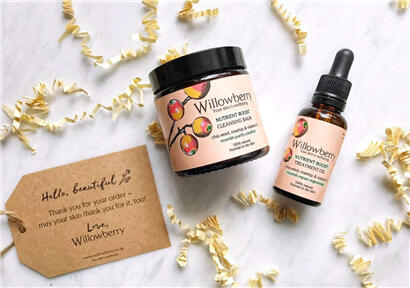
Through environmental protection and differentiated products, there are almost no 100% of the cosmetics produced in Argentina, most of the raw materials and other materials are imported, especially cosmetics containers. Due to the low quality of products, the import volume is increasing year by year Add. Therefore, it is suggested that cosmetic container companies should pay attention to the container market in Argentina. According to the Buenos Aires trade hall of Argentina, the Korean trade and investment promotion commune, most of Argentina's cosmetics containers are imported products, which are imported from low-cost China, or from Brazil, which has price competitiveness due to its geographical advantages, in order to save logistics, but buyers who attach great importance to product quality are interested in Korean products. The cosmetics market in Argentina has continued to grow under the condition of economic instability, and it is the country that the South American market continues to increase the use of cosmetics after Brazil and Chile. By 2017, the growth rate has been kept at 3-5%. In the second half of 2018, due to economic stagnation, there was a decreasing trend, but it was very small. After economic stability, the market grew rapidly again.
The main plastic and glass materials used to make cosmetics containers in Argentina are not much produced locally, so the price is relatively high. The market share of packaging materials in Argentina is 32% for glass, 28% for paperboard, 25% for plastic and 11% for wood. Although the low-cost plastic containers have a high import volume, with the emphasis on quality and the popularity of environmental protection products, the demand for high-quality products has increased, the consumer tendency has changed, and it is expected that the preferences of local buyers will also change. In 2018, Argentina's plastic container imports increased by 11% compared with the previous year, but this was mainly affected by the increase of nearly 40% in imports from Brazil and China. Brazil has the highest import share, accounting for about 30%, followed by China, accounting for 18%, Chile and Uruguay each accounting for 7%. The export growth of Brazil and Uruguay takes advantage of the favorable tariffs of the South American common market, with price competitiveness as the key point. Although Argentina's production volume is not large, the market share of countries with high price competitiveness, such as China and Brazil, is relatively high, especially Brazil, which is a member of the South American common market and does not collect tariffs and statistical taxes, so there is still a gap of about 30% with the import tax.
In addition, purchasers' understanding of China's export products is generally considered to be relatively cheap, so their loyalty to the country is relatively high. It is understood that the understanding of consumers is changing, and it is expected that products with high quality or with environmental protection and zero cruelty will be more competitive in the market. According to the analysis, it is more important to attract enterprises that attach importance to quality or product identity than ordinary buyers who like low price. In Argentina, the wholesale retailers of imported cosmetics raw materials and materials are mainly responsible for imported cosmetics containers. The advantage is that the customer groups using raw materials and containers are the same, and they can supply goods together. From the standpoint of exporters, they can achieve faster performance. In addition, although there is a more flexible tendency to trade with general traders, most of them rely on price import. Jorge Acevedo, President of the Instituto Argentino del enves IAE -, said in an interview with KOTRA, "local packaging companies have a strong interest in environmental protection products. Not only Argentina, but also the whole world are promoting environmental protection packaging materials." Diego de Leone, Argentina's head of natura, one of the major South American companies, also said in an interview that "natura mainly produces environmental friendly packaging materials. It is expected that 50% of the plastic packaging sold in Argentina will be recycled by 2050, reflecting the change of environmental protection trend." According to the analysis of Buenos Aires Trade Center, Argentina, a South Korean trade and investment promotion commune, "with the gradual increase of Argentina's intelligent consumption, the demand for environmental protection products and packaging will increase. At present, Argentina's price factors are more important. Compared with general products, differentiated products and high value-added products are easier to open the market."

You May Interested In


High Quality β-Nicotinamide adenine dinucleotide CAS 53-84-9 NADwith ready stock and best price
$3/UNIT FOB


2026-10-15
Trade Alert
Delivering the latest product trends and industry news straight to your inbox.
(We'll never share your email address with a third-party.)

Related News
-
First New UV Filter in Nearly 27 Years: BASF's Tinosorb® S Approved by FDA, Marking a Historic Shift for the U.S. Sunscreen Market
-
Philippine Department of Trade and Industry: Will focus more on developing the Philippine beauty industry
-
COSMOPROF Worldwide Bologna 2024
-
Sensitive Skin Naturally Boundless Blue Chamomile Treatment Oil
-
In-cosmetic Korea 2021 is coming with its K-beauty inspiration
-
ECHEMI Interviewed Focus Chem at 2020 PCHi Technology Summit
-
Australia bans cosmetic animal experiments from July
-
Raw material for sensory modification of cosmetics-pigment
-
Google data: more than 10 kinds of cosmetic raw materials search volume increase
-
These cosmetic categories are included in the key random inspection
Recommend Reading
-
![Qatar LNG Hit by Attack: 17% Export Capacity Lost, $20 Billion Wiped Out]()
Qatar LNG Hit by Attack: 17% Export Capacity Lost, $20 Billion Wiped Out
-
![USDA Puts Fresh Money Into Local Food Markets]()
USDA Puts Fresh Money Into Local Food Markets
-
![EU Eyes Rare Trade Tool as PET, Epoxy Resin and Glass Fibre Face Import Curbs]()
EU Eyes Rare Trade Tool as PET, Epoxy Resin and Glass Fibre Face Import Curbs
-
![Chemours Sells Its Former Titanium Dioxide Site in Taiwan: Turning a “White Powder” Factory into “Wind Power Real Estate” for $360 Million—Buying Not Cash, But Breathing Room]()
Chemours Sells Its Former Titanium Dioxide Site in Taiwan: Turning a “White Powder” Factory into “Wind Power Real Estate” for $360 Million—Buying Not Cash, But Breathing Room
-
![The “Counter-Wind Ledger” of CHF 11.2 Billion: Sika Barely Grew in 2025—Yet Kept Taking Market Share]()
The “Counter-Wind Ledger” of CHF 11.2 Billion: Sika Barely Grew in 2025—Yet Kept Taking Market Share
-
![Cytosine: Structure, DNA Pairing, and Role in Genetics]()
Cytosine: Structure, DNA Pairing, and Role in Genetics
-
![Business Society’s September 11, 2026 Caustic Soda Trend Analysis: Narrow-Range Fluctuations]()
Business Society’s September 11, 2026 Caustic Soda Trend Analysis: Narrow-Range Fluctuations
-
![Premium Global Chemical Sourcing Requests (11-15 Oct 2025)]()
Premium Global Chemical Sourcing Requests (11-15 Oct 2025)
-
![China's Urea Market Shows Weak Performance (3.13-3.19)]()
China's Urea Market Shows Weak Performance (3.13-3.19)
-
![Business Society September 11, 2026 MIBK Trend Analysis: Clearly Upward]()
Business Society September 11, 2026 MIBK Trend Analysis: Clearly Upward