




China National Natural Gas Pipeline Company, Ready to Go?
According to SCI sources, the establishment blue print of China National Natural Gas Pipeline Company (CNNGPC) will be released in early 2018 with high probability, and NDRC has launched the preparation progress with experts from Sinopec and CNPC.
Currently, China’s natural gas pipeline system faces untypical domination in the middle stream, while Beijing issues a bunch of policies to accelerate the natural gas marketization. Accordingly, the expected middle stream pipeline reform comes into reality step by step.
CNPC Economics & Technology Research Institute once before gave three directions on the blue print. First was to establish CNNGPC based on the current pipeline system which would be stripped from state-owned pipeline companies and provincial pipeline systems, and the share proportion would be determined by the respective positions. Second was to establish a series of regional pipeline companies via divestitures and restructuring, and CNNGPC would execute the unified management. Third was to establish the CNNGPC with assets from state-owned pipeline companies and provincial pipeline systems and capitals from private companies.
The concentration ratio of China’s pipeline ownership is ultra-high. CNPC has been dominating this area for years, and Sinopec and CNOOC take up most of the rest share. As for the long-distance natural gas pipeline system, the total length reaches 68,000km in China, however, all those assets belong to the three oil giants. CNPC occupies 88% of the share, Sinopec takes up 11%, and CNOOC takes up the rest 1%. From this, the monopolistic character appears obviously.
On the other hand, the intention to establish CNNGPC has been fermented for a long time since the last gas hunger between 2010 and 2013. At that stage, the natural gas supply was in great shortage, but at the same time, a huge amount of resources was blocked out of the pipeline system, such as the coalbed gas in Shanxi Province. Those suppliers tried to sell resources to hotspots like Beijing, but they failed in the end due to the divergences with the three oil giants, owners of the pipeline system.
Therefore, the pipeline middle stream ownership has seriously hinders the domestic natural gas resources redistribution, and breaking up the monopoly is the only route for the pipeline reform.
In the 2017 Energy & Chemical Industry Summit at Weihai City in the past September, many industry participants discussed this topic and they agreed on the four ticklish issues faced by the establishment of CNNGPC. First, the CNNGPC was still not capable to break up the monopoly, considering the size of the three oil giants; second, the divestitures would become complicated because of the investment relationship; third, the establishment of CNNGPC would hurt the investment enthusiasm of the current oil companies; fourth, the choice of the management method, unified management or decentralized management, would face massive benefit adjustments in either ways.
China’s natural gas infrastructure is imperfect, while the monopoly is hindering the development of this industry. Meanwhile, the monopoly in the middle stream pipeline system spreads its influence to the downstream fields due to the integrated operation of the three oil giants. Finally, it weakens the domestic natural gas competitive power and softens the domestic market.
From 2016, Beijing has implemented a series of natural gas reform policies, especially the recent pricing regulation on the trans-provincial natural gas delivery charge, indicating that the reform has entered the pipeline area. On one hand, the establishment and operation of CNNGPC will be a systematic complex, and there may be an unexpected long trip to go, but on the other hand, the reform will advance slowly but firmly under Beijing’s ambition and confidence, and the blue print will ultimately come true one day.
Looking for chemical products? Let suppliers reach out to you!

You May Interested In




2026-07-12
-

Fine Chemicals Industry Overview Dec.2025
Insight into Structural Shifts, Capturing Long-Term Value in Fine Chemicals. Available for Permanent Download.Published in: Jan. 2026
Trade Alert
Delivering the latest product trends and industry news straight to your inbox.
(We'll never share your email address with a third-party.)

Related News
-
ExxonMobil, Shell to Sell $1.5 Billion Natural Gas Joint Venture
-
Germany Imposes a Natural Gas Surcharge, and the Chemical Industry Loses More than 3 Billion Euros a Year!
-
Chemical Enterprises Collectively Stop Production! Supply 'Urgent'
-
ExxonMobil sells natural gas assets to BKV for $750 million
-
EIA: Natural Gas is the Most Common Energy Source for Electricity Generation in the U.S.
-
Petrochemicals Are Booming! Natural Gas Soared 45%!
-
Global Chemical Supply Chain Crisis! The Energy Dilemma Is Coming Back! Natural Gas Skyrocketed By 800%!
-
The Output Of Major Energy Products Increased Year-on-year in November
-
11 Industry Warnings Such As Chemical Fertilizers: The Price Is Too High To Bear! U.S. LNG Ship Leaves Asia
-
11 European Industry Associations Warn: Energy Prices Are Too High To Bear
Recommend Reading
-
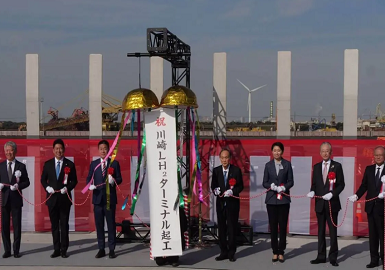
Japan Begins Construction of the World’s Largest Commercial Liquid Hydrogen Receiving Terminal
-
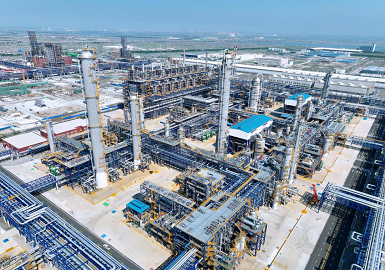
Sinopec Engineering Group Reports 10% Revenue Growth in H1 2025, with Overseas Business Surging 92%
-
Kemira Acquires AquaBlue
-

UAE Breaks Ground on World’s First Gigascale Round-the-Clock Renewable Energy Project, Setting a New Global Standard For Clean Energy
-
Arkema's New Singapore Plant Commences Operations, Tripling Polyamide Capacity
-
This Week, DMF Market Prices Remain Stable in China (8.8-8.15)
-

In the Fourth Quarter, China's Phenol Market Declined Significantly, Reaching a Five-Year Low
-

Raw Materials Strengthen; PC Prices Show Volatility with a Rise at Late January
-
Ammonium Sulfate Market Prices Weakly Decline (8.11-8.15) in China
-

Adnoc L&S Surges 40 Percent in Revenue and Unveils $3 Billion Expansion Plan for 2029