Product
Supplier
Encyclopedia
Inquiry
Home > Food Additives > Sweeteners > Sorbitol for Sale > Sorbitol Chemical Raw Material
Sorbitol Chemical Raw Material buy - large image1
Sorbitol Chemical Raw Material buy - image1

Sorbitol Chemical Raw Material

60 Inquiries

Unit Price: Get Latest Price
CAS No.:

50-70-4

Port:

CHINA

Packaging:

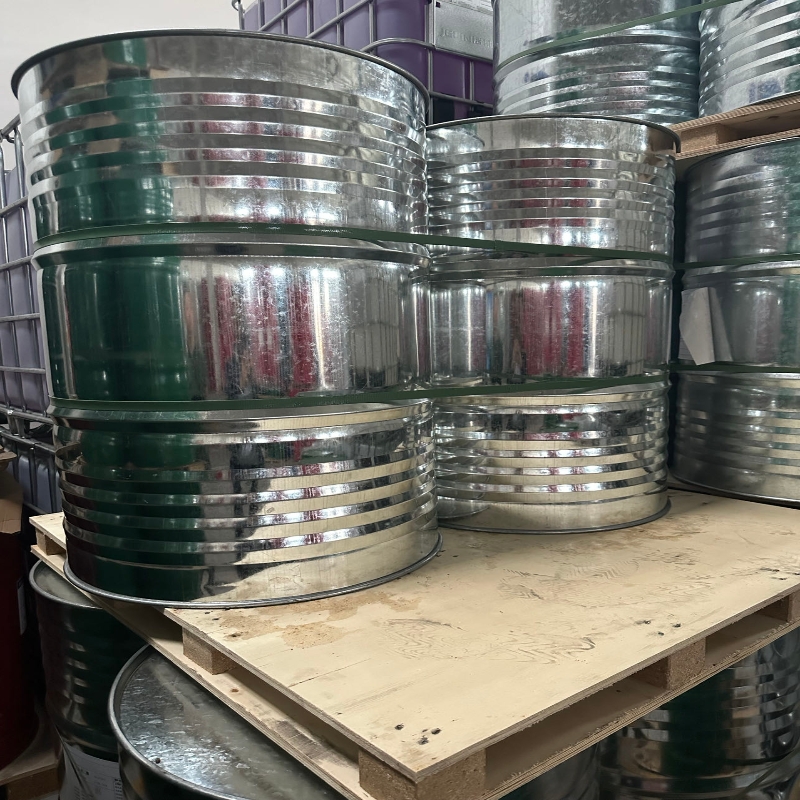
Drum/Customized packaging

Price valid (until):

2024-10-01

Company Type:
Trader
Location:
China
Qualification:
Main Products:

Heat Transfer Fluids

  • Product Description

  • Seller Information

  • Inquiry History

  • Description


      Product Detail  


    Sorbitol

    • CAS No:

    50-70-4

    • Formula:

    C6H14O6

    • Chemical Name:

    Sorbitol


    Description

    It is white and odorless crystalline powder with sweet taste and being hygroscopic. It can be dissolved in water (235g/100g water, 25 °C), glycerin, and propylene glycol; and is slightly soluble in methanol, ethanol, acetic acid, and phenol and acetamide solution but almost insoluble in most other organic solvents. d-Sorbitol has a sweet taste. In comparison to sucrose, the relative sweetness of sorbitol is approximately 50%. Sorbitol can exist in any of several crystalline forms with melting.

    Sorbitol is an odorless colorless solid. Sinks and mixes with water. (USCG, 1999)|DryPowder; DryPowder, Liquid; DryPowder, WetSolid; Liquid; OtherSolid|White hygroscopic powder, crystalline powder, flakes or granules.|Liquid|WHITE HYGROSCOPIC SOLID IN VARIOUS FORMS.

    Sorbitol is an odorless colorless solid. Sinks and mixes with water. (USCG, 1999)|D-glucitol is the D-enantiomer of glucitol (also known as D-sorbitol). It has a role as a sweetening agent, a laxative, a metabolite, a cathartic, a human metabolite, a food humectant, a Saccharomyces cerevisiae metabolite, an Escherichia coli metabolite and a mouse metabolite. It is an enantiomer of a L-glucitol.|A polyhydric alcohol with about half the sweetness of sucrose. Sorbitol occurs naturally and is also produced synthetically from glucose. It was formerly used as a diuretic and may still be used as a laxative and in irrigating solutions for some surgical procedures.|Sorbitol is a sugar alcohol found in fruits and plants with diuretic, laxative and cathartic property. Unabsorbed sorbitol retains water in the large intestine through osmotic pressure thereby stimulating peristalsis of the intestine and exerting its diuretic, laxative and cathartic effect. In addition, sorbitol has one-third fewer calories and 60 % the sweetening activity of sucrose and is used as a sugar replacement in diabetes.|A polyhydric alcohol with about half the sweetness of sucrose. Sorbitol occurs naturally and is also produced synthetically from glucose. It was formerly used as a diuretic and may still be used as a laxative and in irrigating solutions for some surgical procedures. It is also used in many manufacturing processes, as a pharmaceutical aid, and in several research applications.


    Sorbitol Basic Attributes

    Molecular Weight :182.17200

    Exact Mass :182.17

    EC Number :619-324-4


    Characteristics

    PSA :121.38000

    XLogP3 :-2.2

    Appearance :Transparent to light yellow syrup like liquid

    Density :1.489 g/cm3 @ Temp: 20 °C

    Melting Point :110-112 °C

    Boiling Point :295 °C @ Press: 3.5 Torr

    Flash Point :292.5ºC

    Refractive Index :1.597

    Water Solubility :Solubility in water, g/100ml at 20°C: 220

    Storage Conditions :Store in cool place. Keep container tightly closed in a dry and well-ventilated place.

    Vapor Pressure :<0.1 mm Hg ( 25 °C)

    Toxicity :LD50 orally in Rabbit: 15900 mg/kg

    Specific rotation :Specific optical rotation: -2.0 deg at 20 °C/D (water)

    Explosive limit :Finely dispersed particles form explosive mixtures

    Odor :Odorless

    Taste :Sweet taste, approx 60% as sweet as sugar (wt/wt)

    PH :pH: about 7.0

    PKA :13.6None

    Henrys Law Constant :Henry's Law constant = 7.3X10⁻¹³ atm-cu m/mol at 25 °C (est)

    Dissociation Constants :13.6|pKa: 13.6 at 17.5 °C|pKa = 13.57

    Collision Cross Section :142.5 Ų [M+Na]+ [CCS Type: DT, Method: single field calibrated with Agilent tune mix (Agilent)]|129.64 Ų [M-H]- [CCS Type: DT, Method: single field calibrated with Agilent tune mix (Agilent)]|142.9 Ų [M+Na]+ [CCS Type: DT, Method: single field calibrated with ESI Low Concentration Tuning Mix (Agilent)]|131.4 Ų [M-H]- [CCS Type: DT, Method: single field calibrated with ESI Low Concentration Tuning Mix (Agilent)]|147.2 Ų [M+H]+ [CCS Type: DT, Method: stepped-field]|139.4 Ų [M+Na]+ [CCS Type: DT, Method: stepped-field]|131.9 Ų [M-H]-

    Experimental Properties :Hydrated crystals melt somewhat below 100 °C; in healthy human organism 1 g of sorbitol yields 3.994 calories ...|Commercial 70% aq soln: Density: 1.2879 at 20 °C/20 °C; Index of refraction: 1.45831 at 25 °C/D; Specific optical rotation: -2.10 deg at 20 °C/D; BP: 105 °C at 760 mm Hg; pH: 6-7; Viscosity at 25 °C: 110 centipoises (cP)|HYGROSCOPICITY: MEDIUM-LOW; SOLVENCY (FOR OILS): POOR; HIGH TEMP RESISTANCE: STABLE|High % sorbitol solutions are much more viscous than corresponding glycerol solutions|Hydroxyl radical reaction rate constant = 5.0X10⁻¹¹ cu cm/molec-sec at 25 °C (est)

    Air and Water Reactions :Water soluble.

    Reactive Group :Alcohols and Polyols

    Reactivity Profile :SORBITOL is an alcohol. Flammable and/or toxic gases are generated by the combination of alcohols with alkali metals, nitrides, and strong reducing agents. They react with oxoacids and carboxylic acids to form esters plus water. Oxidizing agents convert them to aldehydes or ketones. Alcohols exhibit both weak acid and weak base behavior. They may initiate the polymerization of isocyanates and epoxides.

    Heat of Combustion :-3025.5 kJ.mol


    Sorbitol Use

    Sweetening agent and humectant It is used as food moisture regulator, flavor preservative, antioxidant, cosmetic raw material, cigarette, toothpaste moisturizer, vitamin C, adhesive raw material and diuretic and choleretic. It is used for the preparation of injections, large infusions and oral granules, and food grade for chewing gum and sugar-free candies. Used as biochemical reagents, thickeners and hardeners, and also used in resin and plastic synthesis.

    Shop Xanthan gum Chemical Raw Material-Detailed Image 1
    Shop Xanthan gum Chemical Raw Material-Detailed Image 2
    Shop Xanthan gum Chemical Raw Material-Detailed Image 3
    Shop Xanthan gum Chemical Raw Material-Detailed Image 4
    Shop Xanthan gum Chemical Raw Material-Detailed Image 5
    Shop Xanthan gum Chemical Raw Material-Detailed Image 6
    Shop Xanthan gum Chemical Raw Material-Detailed Image 7
    Shop Xanthan gum Chemical Raw Material-Detailed Image 8
    Shop Xanthan gum Chemical Raw Material-Detailed Image 9

    Basic Info
    Product Name:

    Sorbitol

    Other Name:

    D-Glucitol;Glucitol,D-;Sorbitol;Diakarmon;Sionon;Sorbit;Sorbol;D-Sorbol;D-Sorbitol;L-Gulitol;Neosorb;Sorbex M;Sorbex Rp;Sorbex R;Sorbex X;Sorbitol syrup C;Sorbex S;Sorbo;Sorbostyl;Cholaxine;Sionit;Sorbilande;Nivitin;D-(-)-Sorbitol;Sionite;Siosan;Esasorb;Karion;Neosorb 70/70;Karion (carbohydrate);Glucitol;Neosorb 20/60DC;Karion instant;Sorbit W 70;(-)-Sorbitol;Sorbit S;Neosorb P 60;Sionit K;Sorbit D 70;Sorbit L 70;Sorbit WP;Sorbite;Foodol D 70;Sorbitol FP;Sorbitol F;Glucarine (sorbitol syrup);Glucarine;Neosorb P 20/60;Sorbit W-Powder;Neosorb 70/02;C*Sorbidex;Sorbidex P 16616;Sorbit T 70;Sorbit Kyowa Powder 50M;Kyowa Powder 50M;Cystosol;Sorbitur;Resulax;Sorbilax;E 420;Neosorb P 60W;Sorbit D-Powder;Sorbogem 712;Sorbit DP 50;Sorbit W-Powder 50;NSC 25944;Sorbit DP;Sorbitol S;Sorbitol FK;C*Sorbidex P 16616;D-Sorbit 50M;7B5697N;Cerestar P 16616;P 60W;Sorbidex S 16601;Neosorb 70/20;LTS-P 20M;Sorbit LTSP;Sorbit D;C*Sorbidex 16100;CSorbidex 16100;Sorbitol Kao;Neosorb 70/02SB;Sorbitol SP;Sorbidex NC 16205;Parteck SI 150;Sorbitol 70W;Sorpart;Sorbierite;Sorbidex 200;Sorbidex S 16603;LTS P 50M;Neosorb 71/02SB;Neosorb 70/02B;Parteck SI 200;Parteck SI 400;Parteck SI 450;Meritol 121;Sorbitol FP 100M;FP 100M;Sorbit KK;Meritol 128;Merisorb 200;Sorbit KK Powder 50M;Foodol 70;Brix 70;LTS-P G 3;Sorbitol Ueno 20M;Sorbitol C;A 5178;D-SORB 88;Plastilys;98201-93-5;3959-53-3;8013-15-8;8014-89-9;8036-93-9;8042-39-5;8045-74-7;8046-05-7;15060-73-8;36134-87-9;63800-20-4;75398-79-7;952319-42-5

    CAS No.:

    50-70-4

    Molecular Formula:

    C6H14O6

    InChIKeys:

    InChIKey=FBPFZTCFMRRESA-JGWLITMVSA-N

    Molecular Weight:

    182.17200

    Exact Mass:

    182.17

    EC Number:

    619-324-4

    UNII:

    506T60A25R

    ICSC Number:

    0892

    NSC Number:

    759608

    DSSTox ID:

    DTXSID5023588

    NCI Thesaurus Code:

    C29462

    Color/Form:

    Needles from water|White powder, as granules, or as crystalline masses|White crystalline powder|WHITE POWDER, GRANULES, OR FLAKES

    ATC Code:

    A06AD18|A - Alimentary tract and metabolism|B - Blood and blood forming organs|V - Various

    HScode:

    2905440000

    Categories:

    Sweeteners

    Characteristics
    PSA:

    121.38000

    XLogP3:

    -2.2

    Appearance:

    Transparent to light yellow syrup like liquid

    Density:

    1.489 g/cm3 @ Temp: 20 °C

    Melting Point:

    110-112 °C

    Boiling Point:

    295 °C @ Press: 3.5 Torr

    Flash Point:

    292.5ºC

    Refractive Index:

    1.597

    Water Solubility:

    Solubility in water, g/100ml at 20°C: 220

    Storage Conditions:

    Store in cool place. Keep container tightly closed in a dry and well-ventilated place.

    Vapor Pressure:

    <0.1 mm Hg ( 25 °C)

    Toxicity:

    LD50 orally in Rabbit: 15900 mg/kg

    Specific rotation:

    Specific optical rotation: -2.0 deg at 20 °C/D (water)

    Explosive limit:

    Finely dispersed particles form explosive mixtures

    Odor:

    Odorless

    Taste:

    Sweet taste, approx 60% as sweet as sugar (wt/wt)

    PH:

    pH: about 7.0

    PKA:

    13.6None

    Henrys Law Constant:

    Henry's Law constant = 7.3X10⁻¹³ atm-cu m/mol at 25 °C (est)

    Dissociation Constants:

    13.6|pKa: 13.6 at 17.5 °C|pKa = 13.57

    Collision Cross Section:

    142.5 Ų [M+Na]+ [CCS Type: DT, Method: single field calibrated with Agilent tune mix (Agilent)]|129.64 Ų [M-H]- [CCS Type: DT, Method: single field calibrated with Agilent tune mix (Agilent)]|142.9 Ų [M+Na]+ [CCS Type: DT, Method: single field calibrated with ESI Low Concentration Tuning Mix (Agilent)]|131.4 Ų [M-H]- [CCS Type: DT, Method: single field calibrated with ESI Low Concentration Tuning Mix (Agilent)]|147.2 Ų [M+H]+ [CCS Type: DT, Method: stepped-field]|139.4 Ų [M+Na]+ [CCS Type: DT, Method: stepped-field]|131.9 Ų [M-H]-

    Experimental Properties:

    Hydrated crystals melt somewhat below 100 °C; in healthy human organism 1 g of sorbitol yields 3.994 calories ...|Commercial 70% aq soln: Density: 1.2879 at 20 °C/20 °C; Index of refraction: 1.45831 at 25 °C/D; Specific optical rotation: -2.10 deg at 20 °C/D; BP: 105 °C at 760 mm Hg; pH: 6-7; Viscosity at 25 °C: 110 centipoises (cP)|HYGROSCOPICITY: MEDIUM-LOW; SOLVENCY (FOR OILS): POOR; HIGH TEMP RESISTANCE: STABLE|High % sorbitol solutions are much more viscous than corresponding glycerol solutions|Hydroxyl radical reaction rate constant = 5.0X10⁻¹¹ cu cm/molec-sec at 25 °C (est)

    Air and Water Reactions:

    Water soluble.

    Reactive Group:

    Alcohols and Polyols

    Reactivity Profile:

    SORBITOL is an alcohol. Flammable and/or toxic gases are generated by the combination of alcohols with alkali metals, nitrides, and strong reducing agents. They react with oxoacids and carboxylic acids to form esters plus water. Oxidizing agents convert them to aldehydes or ketones. Alcohols exhibit both weak acid and weak base behavior. They may initiate the polymerization of isocyanates and epoxides.

    Heat of Combustion:

    -3025.5 kJ.mol

    Hazard Identification

    Classification of the substance or mixture

    Not classified.

    GHS label elements, including precautionary statements

    Pictogram(s) No symbol.
    Signal word

    No signal word

    Hazard statement(s)

    none

    Precautionary statement(s)
    Prevention

    none

    Response

    none

    Storage

    none

    Disposal

    none

    Other hazards which do not result in classification

    no data available

    Handling and Storage

    Precautions for safe handling

    NO open flames. Closed system, dust explosion-proof electrical equipment and lighting. Prevent deposition of dust. Handling in a well ventilated place. Wear suitable protective clothing. Avoid contact with skin and eyes. Avoid formation of dust and aerosols. Use non-sparking tools. Prevent fire caused by electrostatic discharge steam.

    Conditions for safe storage, including any incompatibilities

    The bulk material is hygroscopic and should be stored in an airtight container in a cool, dry place.

  • Seller Information
    Business Type:

    Trader

    Main Products:

    Heat Transfer Fluids

    Location:

    Room 6109, 6th Floor, No. 27 Xiaoyun Road, Chaoyang District, Beijing, China

    Payment Terms:

    100% TT in advance

    Average lead Time:

    7

    Total Annual Revenue:

    $10 million-$25 million

    Total Employees:

    101-200

    Year of Establishment:

    2019

    About Us

    Glacier Coolant’s history goes back to 1994, when the founder of Glacier Coolant, Mr Songquan Bai, first invented a fluid, that can solve the problem of most chemical factory facing at that time, that the glycol solution they use to cool their reaction in their process system, corroded the pipe and equipment seriously. This product won favorable comments immediately once putted on the market, and was widely spread in China. It improved the plant operation efficiency in fine chemical factory and API factory.

    Latterly, a series of anti-corrosion products were developed. By 2023, Glacier Coolant has more than 40 products covering a very wide temperature range from -110°C (-166°F) to 340°C (644°F), application industry expand to food and beverages, HVAC, cold storage, data center, fuel cell cooling etc. The product line includes silicon oil and thermal oil, and phase change materials (PCM) are also developed.

    Currently, the company’s manufacturing facility is in Chaoyang, Liaoning, China. We created our Laboratory Service Unit in Beijing to improve research capabilities. Laboratory Service division helps the customer to design the product that can meet their specific requirement and solve the technique problems they are encountering. The center can also provide sample analysis for the products the customer currently use.

  • Inquiry History
    60 Inquiries
    Country Product Purchase Quantity Date Posted
    India

    Sorbitol (E420)

    3 MT Sep 13, 2023
    India

    Sorbitol Liquid 70%

    1.00 MT Dec 21, 2023
    India

    Sorbitol Liquid 70%

    10.00 MT Jan 8, 2024
    India

    Sorbitol Liquid 70%

    10.00 MT Jan 4, 2024
    United Arab Emirates

    Sorbitol

    300 MT Mar 27, 2026
    Yemen

    Sorbitol

    2 20' Fcl Jun 8, 2026
    Brazil

    Sorbitol Liquid (70% solution)

    65 KG Jun 3, 2026
    Bangladesh

    Sorbitol

    100.00 MT Jun 1, 2026
    India

    Sorbitol

    1.00 MT May 13, 2026
    India

    Roquette

    1.00 KG May 7, 2026
    India

    Sorbitol 70% Solution

    2400.00 KG Apr 17, 2026
    United Arab Emirates

    Sorbitol

    1 20' Fcl Mar 27, 2026
    Pakistan

    Sorbitol

    1.00 KG Mar 11, 2026
    India

    Sorbitol

    1 MT Mar 4, 2026
    Sweden

    SORBITOL

    1 20' Fcl Feb 25, 2026
    Morocco

    sorbitol syrup, crystallizing

    5400 KG Jan 28, 2026
    Egypt

    Sorbitol Powder

    1.00 20' Fcl Jan 27, 2026
    Pakistan

    Sorbitol

    1.00 KG Dec 24, 2025
    Pakistan

    Sorbitol

    1 MT May 21, 2025
    United Arab Emirates

    sorbitol

    1000.00 KG Apr 21, 2025
    Post an enquiry for this product
pic ×

Scan the QR Code to Share

All products displayed on this website are only for non-medical purposes such as industrial applications or scientific research, and cannot be used for clinical diagnosis or treatment of humans or animals. They are not medicinal or edible.

According to relevant laws and regulations and the regulations of this website, units or individuals who purchase hazardous materials should obtain valid qualifications and qualification conditions.

The information shown above is provided by the enterprise itself, and the authenticity, accuracy and legitimacy of the content are the responsibility of the publishing company. ECHEMI does not bear any guarantee responsibility for this. Please be aware that risks in internet transactions objectively exist.

Feedback & Suggestions
Send Message

Thank you for your feedback. If you require further assistance, please contact us by email at info@echemi.com or call us at +86-532-55729510.