Product
Supplier
Encyclopedia
Inquiry
Home > Cosmetic Ingredient > Skin Conditioning > Allantoin for Sale > Allantoin,CAS 97-59-6
Allantoin,CAS 97-59-6 buy - large image1
Allantoin,CAS 97-59-6 buy - image1

Allantoin,CAS 97-59-6

4 Inquiries

Unit Price: Get Latest Price
CAS No.:

97-59-6

Port:

Shang hai

Packaging:

25kg/drum

Price valid (until):

2025-09-11

Company Type:
Manufactory
Location:
China
Qualification:
Main Products:

Agrochemicals,Daily Chemicals,Catalysts & Chemical Auxiliary Agents,Extract,Inorganic Chemicals,Organic Intermediate

  • Product Description

  • Seller Information

  • Inquiry History

  • Description


      Product Detail  


    Allantoin is a skin conditioning agent that promotes healthy skin, stimulates new and healthy tissue growth.
    DryPowder|Solid
    Allantoin is an imidazolidine-2,4-dione that is 5-aminohydantoin in which a carbamoyl group is attached to the exocyclic nitrogen. It has a role as a vulnerary, a human metabolite, a Saccharomyces cerevisiae metabolite and an Escherichia coli metabolite. It is a member of ureas and an imidazolidine-2,4-dione. It derives from a hydantoin. It is a tautomer of a 1-(5-hydroxy-2-oxo-2,3-dihydroimidazol-4-yl)urea.|Allantoin is a substance that is endogenous to the human body and also found as a normal component of human diets. In healthy human volunteers, the mean plasma concentration of allantoin is about 2-3 mg/l. During exercise, the plasma allantoin concentration rapidly increases about two fold and remains elevated. In human muscle, urate is oxidized to allantoin during such exercise. The concentration of allantoin in muscles increases from a resting value of about 5000 ug/kg to about 16000 ug/kg immediately after short-term exhaustive cycling exercise. More specifically, allantoin is a diureide of glyoxylic acid that is produced from uric acid. It is a major metabolic intermediate in most organisms. Allantoin is found in OTC cosmetic products and other commercial products such as oral hygiene products, in shampoos, lipsticks, anti-acne products, sun care products, and clarifying lotions. Allantoin has also demonstrated to ameliorate the wound healing process in some studies.|A urea hydantoin that is found in URINE and PLANTS and is used in dermatological preparations.

    Items Specifications
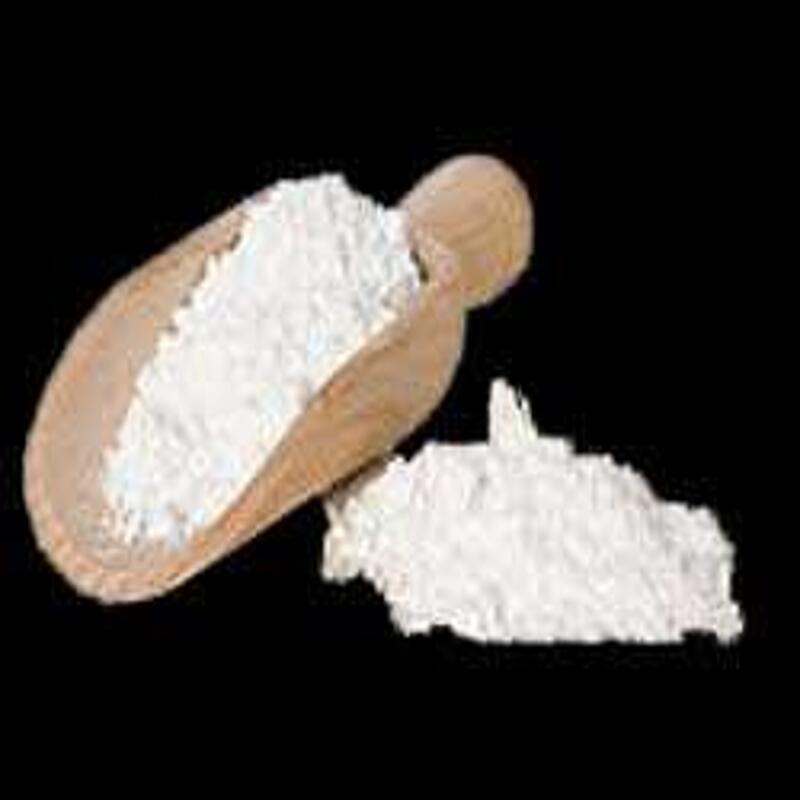
    Appearance White Powder
    Melting Point 239℃
    Water Solubility Slightly soluble in water, Freely soluble in alkalis

    Allantoin Use and Manufacturing
    Methods of Manufacturing
    Allantoin is present in sac fluid, fetal urine and some plants. But the cost of extracting cystin from these substances is too high. The current methods of synthesizing allantoin are: potassium permanganate oxidation of urea acid method: the synthesis of allantoin by the heating of dichloroacetic acid and urea; the direct condensation method of glyoxylic acid and urea. 1. The process of using dichloroacetic acid and urea as raw materials is as follows: put sodium methoxide solution and methanol in the reaction tank, heat to 40-50℃, slowly add dichloroacetic acid dropwise, and then reflux for 2h after the addition. Cool to room temperature, filter, wash with methanol, wash the combined filtrate, and run sodium dimethoxylate in methanol. The solution was reduced to dryness under reduced pressure, 2.8 parts of hydrochloric acid was added, heated on a water bath and stirred into a paste. Then raise the temperature to 90 ℃, then cool to about 10 ℃, filter, add 0.25 parts of hydrochloric acid and urea to the small liquid, heat to dissolve, and react at 80 ℃ for 2h. Cool and crystallize, and then maintain at 0 ℃ for more than 3h, centrifuge, wash with water, spin dry, and dry to get fine products. Allantoin was obtained after the crude product was recrystallized with 15 times water. The total yield of p-dichloroacetic acid is 30.3%. 2. Direct condensation of glyoxylic acid and urea (glyoxylic acid is obtained by oxidation of glyoxal) Operation example: (1) Oxidation in a 500ml four-necked bottle equipped with mechanical stirring, condenser, thermometer and dropping funnel, Add 193g (1mol) 30% glyoxal aqueous solution, add 135.5g (1mol) 45% nitric acid dropwise with stirring while controlling the internal temperature at 40±2℃, continue to stir the reaction at this temperature for 2-3h after the addition, until the red brown oxidation is no longer After escaping, the reaction solution is blue-green and disappears. Replaced with a simple distillation device, about 125g of water is distilled off at about 2.76kPa, and the external temperature does not exceed 60°C. The concentrated liquid is still at room temperature overnight, and the precipitated oxalic acid crystals (19g after drying, 0.21mol), the concentration is 39% ). Continue to stir the reaction at an internal temperature of 40±2°C for about 8 hours, and the oxidation reaction is completed. (2) Condensation In a 500ml three-necked flask equipped with a mechanical stirrer, condenser and thermometer, add the above 150g glyoxylic acid aqueous solution, then add 170g (2.83mol) urea and 23.3g concentrated hydrochloric acid, and heat to an internal temperature of 80 with stirring ℃. After about 15 minutes, the urea dissolves and the reactant is a transparent liquid. After about 30-45 minutes, the reactant becomes cloudy, and then the white precipitate gradually increases. Stir at the internal temperature of 80 ℃ for 1 hour, stop heating and cool the reactant to room temperature. Collect the white precipitate with a Buchner funnel and precipitate it in cold water several times to obtain crude allantoin. Recrystallize with 1000ml of distilled water. Obtained white fine crystal allantoin 60-63%, melting point 236 ℃ (decomposition). Based on glyoxal, the allantoin yield is theoretically 38-40% (weight yield 103-108%).
    Uses
    Used in skin care, oral products, anti-allergic, treatment of skin ulcers and promote wound healing; widely used in the treatment of various skin ulcers and wounds and additives in nutritional cosmetics; as an effective biomarker for oxidative stress; used in synthesis Mannich base as an antibacterial agent; used in the synthesis of sulfonamide analogs as an antitumor agent; used as a plant growth regulato

    Basic Info
    Product Name:

    Allantoin

    Other Name:

    Urea,N-(2,5-dioxo-4-imidazolidinyl)-;Allantoin;Urea,(2,5-dioxo-4-imidazolidinyl)-;N-(2,5-Dioxo-4-imidazolidinyl)urea;Cordianine;Glyoxyldiureide;5-Ureidohydantoin;Allantol;Sebical;Glyoxyldiureid;Glyoxylic diureide;(2,5-Dioxo-4-imidazolidinyl)urea;DL-Allantoin;(±)-Allantoin;Psoralon;Septalan;NSC 7606;Allantion;SD 101;1-(2,5-Dioxoimidazolidin-4-yl)urea;5377-33-3;37305-69-4;58308-55-7

    CAS No.:

    97-59-6

    Molecular Formula:

    C4H6N4O3

    InChIKeys:

    InChIKey=POJWUDADGALRAB-UHFFFAOYSA-N

    Molecular Weight:

    158.12

    Exact Mass:

    158.12

    BRN:

    102364

    EC Number:

    202-592-8

    NSC Number:

    757792|7606

    DSSTox ID:

    DTXSID3020043

    Color/Form:

    Crystals from aqueous methanol|White to colorless powder or crystals|Monoclinic plates

    HScode:

    29332100

    Categories:

    Skin Conditioning

    Characteristics
    PSA:

    113

    XLogP3:

    -2.2

    Appearance:

    White Powder

    Density:

    1.7±0.1 g/cm3

    Melting Point:

    239 °C

    Boiling Point:

    478ºC

    Flash Point:

    230-234°C

    Refractive Index:

    1.616

    Water Solubility:

    Slightly soluble in water. Freely soluble in alkalis

    Storage Conditions:

    Refrigerator

    Vapor Pressure:

    4.32X10⁻⁹ mm Hg at 25 deg C (est)

    Odor:

    Odorless

    Taste:

    Tasteless

    PH:

    pH = 4.5 - 6 (5% in water, 20 °C)

    Henrys Law Constant:

    Henry's Law constant = 3.41X10⁻¹⁸ atm-cu/mol at 25 °C (est)

    Collision Cross Section:

    145.61 Ų [M+Na]+ [CCS Type: DT, Method: stepped-field]|128.39 Ų [M-H]- [CCS Type: DT, Method: stepped-field]|142.2 Ų [M+Na]+ [CCS Type: DT, Method: single field calibrated with ESI Low Concentration Tuning Mix (Agilent)]|125.5 Ų [M-H]- [CCS Type: DT, Method: single field calibrated with ESI Low Concentration Tuning Mix (Agilent)]|126.7 Ų [M-H]-

    Experimental Properties:

    Stable at pH 4-9. Hydrolytic decomposition with strong acids and bases|Hydroxyl radical reaction rate constant = 1.97X10⁻¹¹ cu cm/molec-sec at 25 °C (est)

    Hazard Identification

    Classification of the substance or mixture

    Not classified.

    GHS label elements, including precautionary statements

    Pictogram(s) No symbol.
    Signal word

    No signal word

    Hazard statement(s)

    none

    Precautionary statement(s)
    Prevention

    none

    Response

    none

    Storage

    none

    Disposal

    none

    Other hazards which do not result in classification

    no data available

    Handling and Storage

    Precautions for safe handling

    Handling in a well ventilated place. Wear suitable protective clothing. Avoid contact with skin and eyes. Avoid formation of dust and aerosols. Use non-sparking tools. Prevent fire caused by electrostatic discharge steam.

    Conditions for safe storage, including any incompatibilities

    Store the container tightly closed in a dry, cool and well-ventilated place. Store apart from foodstuff containers or incompatible materials.

  • Seller Information
    Business Type:

    Manufactory

    Main Products:

    Agrochemicals,Daily Chemicals,Catalysts & Chemical Auxiliary Agents,Extract,Inorganic Chemicals,Organic Intermediate

    Location:

    9F/TOWER B DANING MUSIC PLAZA NO.777, WANRONG ROAD JINGAN, DISTRICT, SHANGHAI, R.P. CHINA

    Payment Terms:

    TT against copy of documents,D/P,L/C,TT against B/L draft before shipment,100% TT in advance

    Average lead Time:

    14

    Total Annual Revenue:

    $2.5 million-$5 million

    Total Employees:

    5-10

    Year of Establishment:

    2022

  • Inquiry History
    4 Inquiries
    Country Product Purchase Quantity Date Posted
    United Arab Emirates

    allantoin

    1 MT Feb 13, 2025
    Russia

    Allantoin

    400 KG Sep 16, 2024
    France

    Allantoin

    500 G Oct 10, 2025
    India

    allantoin

    10.00 KG May 20, 2025
    Post an enquiry for this product
pic ×

Scan the QR Code to Share

All products displayed on this website are only for non-medical purposes such as industrial applications or scientific research, and cannot be used for clinical diagnosis or treatment of humans or animals. They are not medicinal or edible.

According to relevant laws and regulations and the regulations of this website, units or individuals who purchase hazardous materials should obtain valid qualifications and qualification conditions.

The information shown above is provided by the enterprise itself, and the authenticity, accuracy and legitimacy of the content are the responsibility of the publishing company. ECHEMI does not bear any guarantee responsibility for this. Please be aware that risks in internet transactions objectively exist.

Feedback & Suggestions
Send Message

Thank you for your feedback. If you require further assistance, please contact us by email at info@echemi.com or call us at +86-532-55729510.