Product
Supplier
Encyclopedia
Inquiry
Home > Flavors and Fragrances
A frangrance is a substance that can be smelled by the sense of smell or tasted by the sense of taste, and is the raw material for the preparation of flavors. Fragrance is an important component of fine chemicals. It is composed of natural fragrance, synthetic fragrance and solitary fragrance. The process of blending several or even dozens of spices into a blended spice with a certain aroma or fragrance type and a certain use according to a certain ratio. This blended spice is called essence. Because human odor senses accept the scent of fragrance, the senses are closely related to the emotional part of the brain, so fragrance has a great influence on human emotions. "Flavors and Fragrances" on ECHEMI mainly supplies raw materials for Flavors and Fragrances.

Flavors and Fragrances Suppliers

Finding reliable flavors and fragrances suppliers can still be challenging. On ECHEMI, you can connect with 145 trusted manufacturers and 150 verified distributors offering high-quality flavor and fragrance ingredients for food, beverages, cosmetics, and personal care products. Explore our platform to source natural and synthetic flavors, essential oils, aroma compounds, and fragrance intermediates tailored to your specific requirements.
Explore flavors and fragrances for your needs now.
1747 Flavors and Fragrances items

Furaneol

CAS No: 3658-77-3

Formula: C6H8O3

Categories: Flavors and Fragrances > Fragrance Ingredient

Furaneol is mainly isolated from American grape (Vitis labrusca) and its hybrid grape. Furaneol is an important aroma compound in fruits and contribute to the strawberry-like note in some wines[1]. More

2-Acetylthiazole

CAS No: 24295-03-2

Formula: C5H5NOS

Categories: Flavors and Fragrances > Perfuming

white to light yellow crystal powde A colorless liquid with green onion, herbal, grassy odor. It is used as flavor enhancer and flavoring agentMore

δ-Decalactone

CAS No: 705-86-2

Formula: C10H18O2

Categories: Flavors and Fragrances > Perfuming

clear colorless to light yellow oily liquid 5-Decanolide is a flavor constituent of many types of fruit, cheese, and other dairy products. It is a colorless, viscous liquid with a creamy-coconut, peach-like aroma. δ-Decalactone has an oily, peach odor and taste.More

Undecan-4-olide

CAS No: 104-67-6

Formula: C11H20O2

Categories: Flavors and Fragrances > Perfuming

GAMMA-UNDECALACTONE is clear colourless liquid gamma-Undecalactone has a strong, fruity odor suggestive of peach (particularly on dilution). It has a pungent and sweet flavor also similar to peach.GAMMA-UNDECALACTONE  is a flavoring ingredient. It is industrially important flavor compounds that are widely distributed in foods, fruits, and beverages and are used in many fruity aromatic foods and cosmetics. It is often used in peach, apricot, pear, maple, coconut, tropical, butterscotch, grenaMore

gamma-Nonanolactone

CAS No: 104-61-0

Formula: C9H16O2

Categories: Flavors and Fragrances > Perfuming

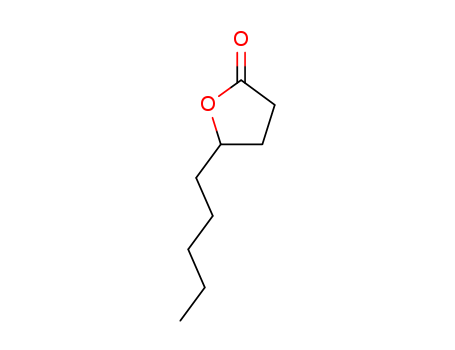
γ-Nonalactone has a strong odor reminiscent of coconut and a fatty, peculiar taste. gamma-Nonanolactone occurs in many foods and is a pale yellow liquidwith a coconut-like aroma. It has numerous applications, similarly to those of "-octalactone, in aroma compositions and perfumery.Gamma-Nonalactone (5-Pentyloxolan-2-one) is a colorless to pale yellow clear oily liquid. It is found in bourbon whiskey, black currant berries, melon, papaya, pineapple, fresh blackberry, etc.More

2-Pentanol

CAS No: 6032-29-7

Formula: C5H12O

Categories: Flavors and Fragrances > Perfuming

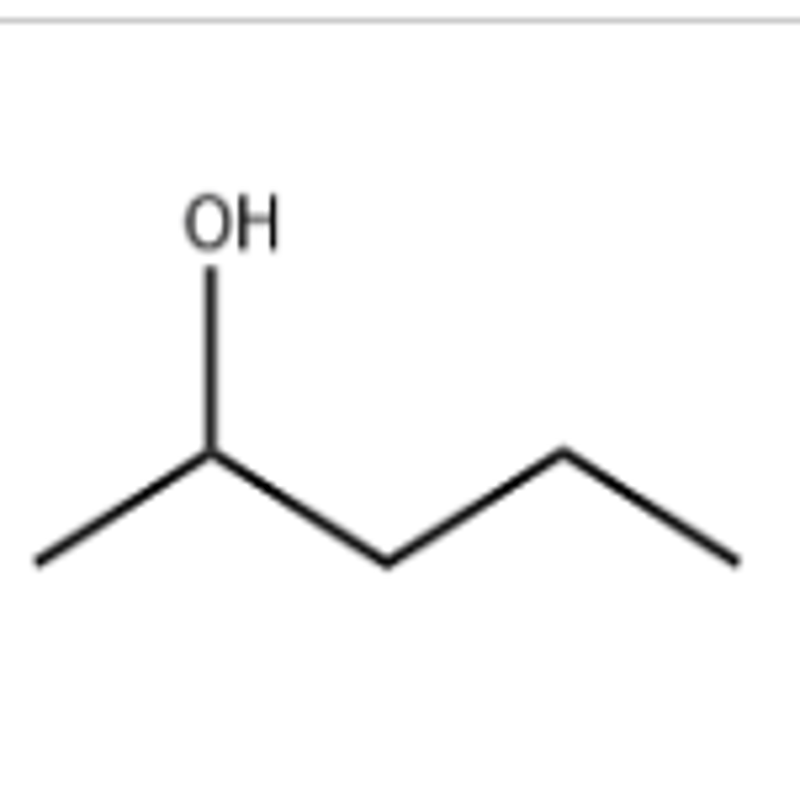
clear colourless liquid Amyl alcohols (pentanols) have eight isomers. All are flammable, colorless liquids, except the isomer 2,2- dimethyl-1-propanol, which is a crystalline solid. 2-Pentanol has a mild green, fusel-oil odor. This compound is also reported as having a winy, ethereal odor.More

Isoamyl butyrate

CAS No: 106-27-4

Formula: C9H18O2

Categories: Flavors and Fragrances > Perfuming

Isoamyl butyrate has a fruity, apricot, pineapple, banana, strong, characteristic odor and a sweet, corresponding taste Isoamyl Butyrate is a liquid with strongly fruity odor that occurs, for example, in banana. It is used mainly in fruit flavors. CLEAR COLOURLESS LIQUIDChEBI: The butanoate ester of isoamylol.Isoamyl Butyrate is a chemical ester of butyrate. It is a kind of flavoring agent that widely used in the preparation of a variety of fruit juice flavor, such as apricots, bananaMore

2-Methoxynaphthalene

CAS No: 93-04-9

Formula: C11H10O

Categories: Flavors and Fragrances > Perfuming

β-Naphthyl methyl ether has an intensely sweet, floral odor suggestive of orange blossoms; free from naphthol by-odor. It has a sweet, strawberry taste white powder Methyl 2-Naphthyl Ether forms white crystals (mp 73–74°C) with an intense orange blossom odor.More

295 Flavors and Fragrances Suppliers

Short on time? Let Flavors and Fragrances sellers contact you.

2-Heptanol

CAS No: 543-49-7

Formula: C7H16O

Categories: Flavors and Fragrances > Perfuming

2-Heptanol has a brassy, herbaceous odor reminiscent of lemon and a fruity, green, somewhat bitter taste. colourless liquidMore

Citronellal

CAS No: 106-23-0

Formula: C10H18O

Categories: Flavors and Fragrances > Fragrance Ingredient

clear light yellow liquid Ceylon citronella (C. nardus) and Java citronella (C. winterianus) are both perennial grasses growing more than 1 m high. The herb is harvested two to three times a year in Ceylon. The freshly cut or partially dried herb is steam distilled. The plant yields the largest amount of essential oil at about its third year of growth. Citronella is also cultivated and distilled in Java, Guatemala, Taiwan, Hainan, Argentina and New Guinea. The Java-type essential oil is consMore

p-Coumaric acid

CAS No: 7400-08-0

Formula: C9H8O3

Categories: Flavors and Fragrances > Skin Conditioning

p-Hydroxycinnamic acid, a common dietary phenol, could inhibit platelet activity, with IC50s of 371 μM, 126 μM for thromboxane B2 production and lipopolysaccharide-induced prostaglandin E2 generation, respectively. More

Essential oils, cedarwood

CAS No: 8000-27-9

Formula:

Categories: Flavors and Fragrances > Perfuming

colourless or pale yellow viscous liquid Texas cedarwood oil is produced by steam distillation of chopped wood of the Texas cedar, Juniperus mexicana Schiede (Cupressaceae). It is a brown to reddish-brown, viscous liquid that may partially solidify at room temperature. It has a characteristic cedarwood odor. d
20
20
0.950–0.966; n
20
D
1.5020–1.5100; α
20
D
?52° to ?30°; total alcohol content (calculated as cedrol): 35–48%; solubility: 1 vol in notmore thaMore

δ-Dodecalactone

CAS No: 713-95-1

Formula: C12H22O2

Categories: Flavors and Fragrances > Perfuming

Liquid delta-Dodecalactone is a colorless to slightly yellowish liquid with a powerful fruity, peach-like, and oily odor. It may be produced in the same way asδ-decalactone. Similarly to δ-decalactone, it is mainly used in cream and butter flavors. δ-Dodecalactone has a powerful, fresh, coconut-fruity, oily odor. On dilution the odor is butter-like. At low levels, it has a peach-, pear-, plum-like flavor.More

Methanethiol

CAS No: 74-93-1

Formula: CH4S

Categories: Flavors and Fragrances > Synthetic Fragrances

colourless gas with a garlic-like or rotten cabbage-like smell Methyl mercaptan is a colorless gas or white liquid with a disagreeable odor like garlic or rotten cabbage. Shipped as a liquefied compressed gas. The odor threshold is 0.002 ppm. Methyl mercaptan has an objectionable odor of decomposing cabbage. May be prepared by heating an aqueous solution of potassium methyl sulfate and KHS; from sodium methyl sulfate and potassium sulfhydrate; also from methanol and hydrogen sulfide in the prMore

Essential oils, lavender

CAS No: 8000-28-0

Formula:

Categories: Flavors and Fragrances > Fragrance Ingredient
Wild or cultivated shrub having erect, branched stems with a woody lower portion; opposite, whitish-green, narrow leaves; lilac-purple flowers in glomerulate spikes placed at the tip of branches. The plant grows in Mediterranean areas (French-Italian Alps), England, North America, North Africa, and several Euro pean countries. The parts used are the flowering tops and stalks. Lavender has a sweet, herbaceous, slightly floral odor.
The essential oil is obtained by steam distillation ofMore

4-Ethylphenol

CAS No: 123-07-9

Formula: C8H10O

Categories: Flavors and Fragrances > Perfuming

off-white solid p-Ethylphenol has a powerful woody-phenolic, medicinal, yet somewhat sweet odor.4-Ethylphenol, often abbreviated to 4-EP, is a phenolic compound with the formula C8H10O. It is colorless or white needles with a powerful woody-phenolic and yet somewhat sweet odor and  tends to be yellow on exposure to light. It is slightly solouble in water, solouble in alcohol, ether and benzene and carbon disulfide. It is found in arabica coffee and can be produced in wine and beer by the spoilaMore

Frequently Asked Questions

Are flavors and fragrances natural or synthetic?

They can be both. Natural flavors and fragrances are extracted from plant or animal sources using methods such as distillation or pressing. Synthetic flavors and fragrances are created in laboratories to replicate natural aromas or to produce entirely new scent profiles. Synthetic versions are often more stable, cost-effective, and consistent in quality, making them widely used in large-scale production.

Where are flavors and fragrances commonly used?

Flavors are widely used in industries such as beverages, confectionery, baked goods, dairy products, and pharmaceuticals (for example, in syrups or chewable tablets). Fragrances are used in perfumes, skincare, hair care, fabric care, cleaning products, and even industrial products like paints and plastics to mask unwanted odors or add signature scents.

What is the difference between flavors and fragrances?

The main difference lies in how they are perceived and applied. Flavors are designed to be tasted and are therefore used in food, beverages, and oral products. Fragrances are designed to be smelled and are commonly used in perfumes, cosmetics, soaps, detergents, and air fresheners. In general, flavors must meet stricter food safety standards, while fragrances focus more on scent stability and intensity.

What are flavors and fragrances?

Flavors and fragrances are chemical compounds or natural extracts used to create specific tastes and smells in products. Flavors are mainly used in food and beverage products to improve or modify taste, while fragrances are used in personal care, household, and industrial products to provide pleasant or functional scents. They can be obtained from natural sources such as plants, fruits, spices, or produced by chemical synthesis.

Feedback & Suggestions
Send Message

Thank you for your feedback. If you require further assistance, please contact us by email at info@echemi.com or call us at +86-532-55729510.