Unlocking the Versatility of C10 30 Alkyl Acrylate Crosspolymer
A compound like C10 30 alkyl acrylate crosspolymer has been considered an effective component for youth and beauty. Humans have long desired to look nice and beautiful, although people's definitions of beauty have changed over time, the pursuit of perfection continues to be people’s dream because good looks increase one’s self-esteem and others’ attraction to one.
In the cosmetics and personal care industries, where creativity brews with the idea of beauty, this ingredient C10 30 alkyl acrylate crosspolymer is most notable for its excellent capacity to blend science with nature. Though this name might sound complicated, it carries a strong potential of attributes that make it useful in many products enhancing its texture, stability, and functionality. It would also be a useful idea to discuss the topic of this interesting ingredient in more detail and determine how it can work in simple scenarios, thus, using real-life examples would suffice our task.
Understanding C10 30 Alkyl Acrylate Crosspolymer
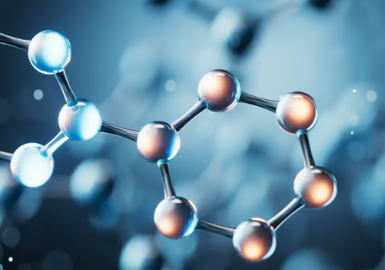
The rationale of an alkyl acrylate crosslinked polymer is that it is a compound that results from crosslinking in reactions of acrylic or methacrylic acid with selected alkyl acrylates derived from longer chains.
These polymers have especially synthesized molecular structures and their physical and chemical attributes are unique, which is why they are adaptable and valuable to several fields and used in certain industries.
When discussing the “alkyl acrylate” component in these crosslinked polymers, it refers to alcreyate monomer with long-chain types of the alkyl group, which normally are of C10-C30.
This copolymerisation process occurring here concerns monomers with these alkyl groups including but not limited to acrylic acid or methacrylic acid. In this process, reactions occur and a three-dimensional structure is built up, which we call a network of structures.
This structure that is crosslinked gives the polymer various unusual qualities, including:
l Some level of transparency.
l Moderate viscosity.
l Good capability for suspending materials.
l Easy to disperse in certain conditions.
l Resistance to ions at high levels.
l good shear resistance.
The Key of Smoothness
Imagine applying a lotion or cream to your skin, whereby it rubs on the skin seamlessly and leaves it feeling softer with no oil residue. The polymer C10 30 alkyl acrylate crosspolymer is significant at this point as an organizer.
It works on a small scale thus allowing the oil and water parts to be in equal proportions without forming two different entities but a proper blend. It is almost like putting oil and water together, though the two do not mix like in a salad, their combination is creamy and good for you.
The Stabilizing Element Behind Makeup That Lasts
Have you ever tried to ask yourself why your foundation lasts the entire day without fading especially when the environment is humid? C10 30 alkyl acrylate crosspolymer is the name of it which prevents makeup from shifting.
It acts as a fixative, preventing the pigments or other components from settling or even creating lumps. As a shield to the face makeup, it keeps the face in its original state from the first coffee time in the morning until late evening activities.
The Texture Shifter
In the serums that are lighter than air or in the denser moisturizers, the C10 30 alkyl acrylate crosspolymer flexes itself to conform to most of them. It helps in setting the thickness of the products so that they can be made thicker or thinner as the case may be.
You could imagine the sauce that a cook thins down or with this ingredient, a fluid as thin as water becomes a cream or a thick gel becomes as light as lotion.
The Emulsion Controller
In the realm of oil and water interacting to form a certain blend, C10 30 alkyl acrylate crosspolymer serves as a key ingredient. It balances these two forces which are ordinarily not reconcilable, to create a blend that can bring about hydration with nourishment.
This is like a map that shows how oil and water molecules move in intricate dance and end up with a mixture that may be good for the skin but not always.
Environmentally-Friendly and Sustainable
One more important thing that can be mentioned regarding C10 30 alkyl acrylate crosspolymer is that it is an environmentally friendly material. As people become more aware of the decisions they make, this ingredient can be marked as following sustainable practices rather than destructive.
It is sometimes taken from sources that can be replenished again, so it is an environmentally friendly solution in the beauty market. This can be told in the preference for reusable bottles instead of single-use plastic bottles– a small action that may bring great benefits.
Conclusion
In summary, C10 30 alkyl acrylate crosspolymer is a substance with multifunctional application in the formulation of cosmetics and personal care products, improving the texture of lotions and ensuring the long-lasting properties of cosmetics. Although it may not be noticeable, the contribution to ordinary beauty products is relatively large.
Hence, if you use a face cream or apply foundation, you should know that, though not very prominent, this component can enhance the beauty products you use.
Looking for chemical products? Let suppliers reach out to you!
You May Interested In


SS-31 Cosmetic peptides, discounted price improving cognitive impairment factory supply
$8E+1/UNIT FOB


2026-09-22
Trade Alert
Delivering the latest product trends and industry news straight to your inbox.
(We'll never share your email address with a third-party.)

Related News
-
EFSA Reviews Clodinafop Risk
-
ADAMA Targets Sucking Pests with Ateka
-
Tert Butylate: Properties and Applications
-
Paraffin Wax vs. Beeswax: Candles, Cosmetics, and Industrial Applications
-
Lanolin: Benefits for Skin, Cosmetic Uses, and Allergy Risks
-
Sodium Hydroxide (Caustic Soda): Soap Making, Cleaning, and pH Control Guide
-
Hexane in Food and Industry: Safety and Applications
-
Dodecyl Acid: Industrial Uses and Chemical Characteristics
-
Sulfuric Acid (H2SO4): Properties, Battery Uses, and Extreme Safety Hazards
-
What is Trametenolic Acid? (Structure, Sources & Research)
Recommend Reading
-
![Phosphoric Acid: Uses in Cola, Rust Removal, and Fertilizers Explained]()
Phosphoric Acid: Uses in Cola, Rust Removal, and Fertilizers Explained
-
![Silver Nitrate: Medical Uses, Photography History, and Staining Properties]()
Silver Nitrate: Medical Uses, Photography History, and Staining Properties
-
![Uses of Dithiothreitol in Laboratories]()
Uses of Dithiothreitol in Laboratories
-
![Chemical Reactions and Uses of Stilbene]()
Chemical Reactions and Uses of Stilbene
-
![Applications of Diphenyl Cyanide]()
Applications of Diphenyl Cyanide
-
![Ethylene Oxide Prices Drop Sharply in Early June]()
Ethylene Oxide Prices Drop Sharply in Early June
-
![Business Society’s PTA Trend Analysis for September 14, 2026: Volatile]()
Business Society’s PTA Trend Analysis for September 14, 2026: Volatile
-
![BDO Market Trends Show Slowing Down]()
BDO Market Trends Show Slowing Down
-
![Methanol Market Trends Remain Strong]()
Methanol Market Trends Remain Strong
-
![Business Society PVC Trend Analysis for September 14, 2026: High-Range Fluctuations]()
Business Society PVC Trend Analysis for September 14, 2026: High-Range Fluctuations