End-To-End Services Of Shipping Companies
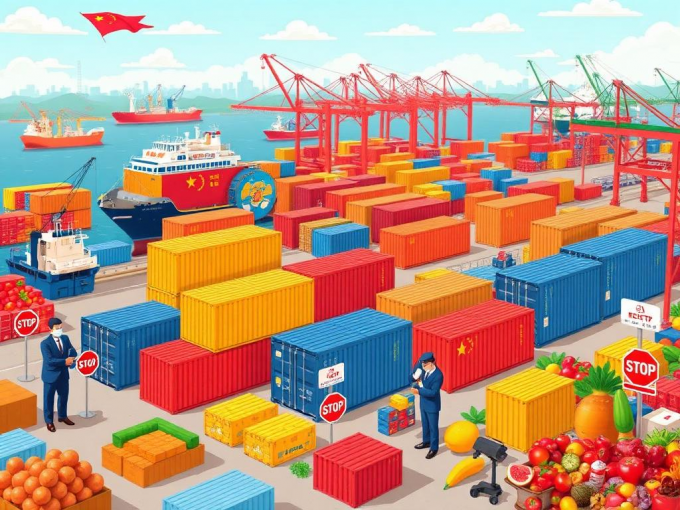
At present, companies providing end-to-end services mainly fall into two types: one is an asset-light logistics service provider (mainly freight forwarding companies) transformed by traditional freight forwarding companies, and the other is a capacity service provider (mainly shipping companies) gradually shifting to end-to-end business.
The represent two different business models, the main difference lies in whether they directly own or control the port-to-port trunk transportation network and the end-to-end logistics network. Historically, the asset-light business model represented by DSV has been successful, while the asset-heavy business model represented by Maersk is still in the process of development and exploration. The global end-to-end service network established by DSV outsources the mainline transportation from port to port. By selecting different ocean and air freight service providers to obtain the most complete mainline network and the most favorable price, coupled with excellent on-site distribution and warehousing service capabilities, DSV provides customers with a full range of high-quality, cost-effective logistics services.
The end-to-end service is the future development trend of the shipping industry, which is supported by the actual market demand and is not a fantasy for shipping companies. The current boom of the shipping market brings abundant cash flow to shipping companies, and shipping companies will certainly consider the future development transformation direction of enterprises, or will invest more funds for end-to-end business layout, and the cyclicality and volatility of shipping industry is expected to be accelerated by the extension and value-added services. The rapid expansion of end-to-end business is bound to reshape the valuation of shipping companies, and the valuation of head companies will gradually change from the valuation system of shipping stocks to the valuation system of logistics stocks.
At present, companies providing end-to-end services mainly fall into two types: one is an asset-light logistics service provider (mainly freight forwarding companies) transformed by traditional freight forwarding companies, and the other is a capacity service provider (mainly shipping companies) gradually shifting to end-to-end business.
They represent two different business models, the main difference lies in whether they directly own or control the port-to-port trunk transportation network and the end-to-end logistics network. Historically, the asset-light business model represented by DSV has been successful, while the asset-heavy business model represented by Maersk is still in the process of development and exploration. The global end-to-end service network established by DSV outsources the mainline transportation from port to port. By selecting different ocean and air freight service providers to obtain the most complete mainline network and the most favorable price, coupled with excellent on-site distribution and warehousing service capabilities, DSV provides customers with a full range of high-quality, cost-effective logistics services.
The end-to-end service is the future development trend of the shipping industry, which is supported by the actual market demand and is not a fantasy for shipping companies. The current boom of the shipping market brings abundant cash flow to shipping companies, and shipping companies will certainly consider the future development transformation direction of enterprises, or will invest more funds for end-to-end business layout, and the cyclicality and volatility of shipping industry is expected to be accelerated by the extension and value-added services. The rapid expansion of end-to-end business is bound to reshape the valuation of shipping companies, and the valuation of head companies will gradually change from the valuation system of shipping stocks to the valuation system of logistics stocks.

You May Interested In


High Quality β-Nicotinamide adenine dinucleotide CAS 53-84-9 NADwith ready stock and best price
$3/UNIT FOB


2026-10-11
Trade Alert
Delivering the latest product trends and industry news straight to your inbox.
(We'll never share your email address with a third-party.)

Related News
-
Blockade And Control Aggravate Port Congestion! Shipping Company Announces Port Jump And Adjustment of Shipping Schedule
-
When Will The Sea Freight Price Peak?
-
44 Voyages Cancelled in Four Weeks, The Multi-ship Company Announced to Jump to The Port
-
The Competition Pattern Is Greatly Optimized, And The Main Routes Are Cleared
-
Demand: Global Trade Volume Growth Rate Of 6.7% In 2022 With Strong Customer Shipment Demand
-
New Alliance boost for strategic port equipment procurement
-
A.P.Moller - Maersk announces changes in Ocean & Logistics
-
IRClass commends Kanagawa Dockyard on successful delivery of Tug to Adani Vizhin
-
Corn’s Surprise Surge: Export Fireworks Ignite Bullish Sentiment
-
France’s Wheat Rebounds—But Only Briefly Against a Tsunami of Cheap Grain
Recommend Reading
-
![Wheat Drowns in a Sea of Plenty: Global Glut Crushes Price Hopes]()
Wheat Drowns in a Sea of Plenty: Global Glut Crushes Price Hopes
-
![EFSA Eyes Higher Dodine Limits in Grapes—Safety Assured, Critics Wary]()
EFSA Eyes Higher Dodine Limits in Grapes—Safety Assured, Critics Wary
-
![Brazil Redefines “Milk”: New Rules Force Honesty on Dairy Labels]()
Brazil Redefines “Milk”: New Rules Force Honesty on Dairy Labels
-
![Canada’s Infant Formula Gets a Risk-Based Makeover]()
Canada’s Infant Formula Gets a Risk-Based Makeover
-
![Canada Caffeinates Candy—With Warnings Attached]()
Canada Caffeinates Candy—With Warnings Attached
-
![Multiple Factors Combine to Drive a Sharp Correction in Ethylene Oxide Prices in May]()
Multiple Factors Combine to Drive a Sharp Correction in Ethylene Oxide Prices in May
-
![In-depth Analysis of the Reasons for the Decrease in Ethylene Glycol Prices on May 22, 2026 in China]()
In-depth Analysis of the Reasons for the Decrease in Ethylene Glycol Prices on May 22, 2026 in China
-
![FDA Slams Door on Chinese Food Exports: Inspection Refusals Trigger Automatic Detentions]()
FDA Slams Door on Chinese Food Exports: Inspection Refusals Trigger Automatic Detentions
-
![Supply Increases in Stages, China’s Acrylonitrile Market Slips Narrowly]()
Supply Increases in Stages, China’s Acrylonitrile Market Slips Narrowly
-
![Under a Triple Game, Polyethylene Operates with a Weak and Fluctuating Trend]()
Under a Triple Game, Polyethylene Operates with a Weak and Fluctuating Trend