Natural Dye Garden Promotes a Greener Fashion Supply Chain
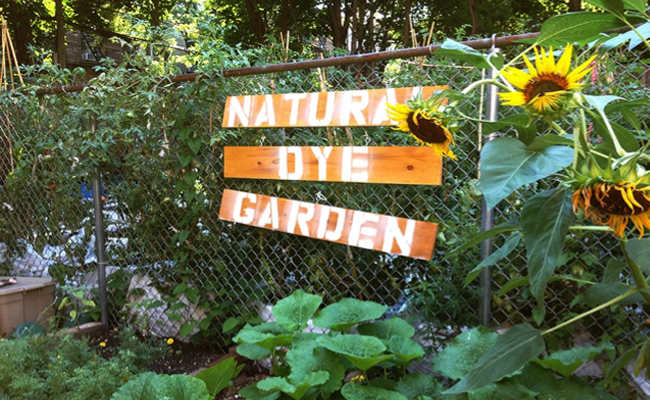
College of Human Ecology faculty and student efforts to advance sustainable approaches to textile and fashion design has led to the development of the Cornell Natural Dye Garden after a successful crowdfunding campaign that ended in fall 2016.
The project raised $10,365 for the development and cultivation of a dye garden, which will produce a variety of colours that come from the natural world and have a lower environmental impact.
“We know that synthetic dyes cause incredible environmental harm and pollute waterways. Human health is also impacted, particularly for labourers in the textile dyeing industries,” said Denise Green, assistant professor of fibre science and apparel design.
According to organisers, up to 200,000 tonnes of synthetic dyes are discharged into waterways around the globe every year, making textile dye plants the second-largest polluter of water after agriculture.
In many developing nations where textiles are produced, workers may not be properly protected from the toxic chemicals used to dye fibre and fabrics, making synthetic dyes hazardous to environmental and human health, Green said.
In contrast, natural dyes, some of which come from weeds, are nontoxic. Some of these dye plants have the ability to grow aggressively without herbicides or fungicides.
“We believe natural dyes are an opportunity to make a sustainable intervention in the apparel supply chain,” Green said.
In May 2015, Green, in collaboration with fellow fibre science and apparel design faculty and students, as well as Human Ecology Facilities Services and Cornell Botanic Gardens staff, planted a test garden of natural dye plants at the northeast corner of the Human Ecology Building overlooking Beebe Lake.
“That success led us to the idea to put the garden in a place that’s more accessible for students and more visible in terms of our college life,” Green said.
In spring 2016, Green and her students moved the garden to a plot located in the courtyard between Martha Van Rensselaer Hall and the Human Ecology Building. The relocation of the garden, according to Green, allows students and faculty to grow a wider array of dye plants to be used in teaching and research.
“The garden won’t just be beautiful to look at, and valuable as a natural dye resource, but it will also be an opportunity to educate students, staff and the public about the plants we are growing and the range of colours they yield,” she said.
Beyond working on projects, Green hopes the garden will have deep and long-lasting impacts on fibre science and apparel design students who begin careers in the manufacturing and fashion industries.

You May Interested In


High Quality β-Nicotinamide adenine dinucleotide CAS 53-84-9 NADwith ready stock and best price
$3/UNIT FOB


2026-10-12
Trade Alert
Delivering the latest product trends and industry news straight to your inbox.
(We'll never share your email address with a third-party.)

Related News
-
Two Major Dye Giants Hike Prices Consecutively: Longsheng Raises Prices by Up to RMB 10,000/Ton, Yabang Increases Some Products by RMB 60,000/Ton
-
Huntsman to Sell Textile Dyeing Unit for $718 Million
-
Prices of dyes and chemicals are soaring. Industry can't stand idly by.
-
Global Chemical Exports Are Freezing in 2026
-
Brazil Expands Chemical Tax Breaks as India’s Crop Protection Industry Warns of a 25% Cost Increase
-
Canada Scraps PV Module Tariffs! Market Reopens, Demand for Supporting Chinese Chemical New Materials Set to Take Off
-
25 Companies Raise Prices Three Times Within a Month: China’s Titanium Dioxide Industry Shifts from “Price Wars” to a “Pricing Alliance”
-
High Crude Prices Are Passing Through the Coatings Chain as More Than 20 Companies Launch Price Increases
-
Behind the Three Consecutive Titanium Dioxide Price Hikes, Sulfur and Sulfuric Acid Costs Are Rewriting the Pricing Floor
-
When SWIFT Goes On-Chain: A New 24/7 Order for Cross-Border Payments
Recommend Reading
-
![European Petrochemical Weakness Leaves Naphtha Oversupplied as Cracker Demand Struggles]()
European Petrochemical Weakness Leaves Naphtha Oversupplied as Cracker Demand Struggles
-
![Polyvantis Opens Shanghai Technical Center]()
Polyvantis Opens Shanghai Technical Center
-
![EU mulls expanding tariff scope on Chinese chemicals, sector-wide measures in the pipeline]()
EU mulls expanding tariff scope on Chinese chemicals, sector-wide measures in the pipeline
-
![Amazon Turns Lilly’s Weight-Loss Pill Into a Retail Logistics Play]()
Amazon Turns Lilly’s Weight-Loss Pill Into a Retail Logistics Play
-
![U.S. 10% Temporary Tariff Expires, New Section 301 Tariffs Not Yet Implemented]()
U.S. 10% Temporary Tariff Expires, New Section 301 Tariffs Not Yet Implemented
-
![Methylamine: Chemical Properties, Synthesis, and Industrial Applications]()
Methylamine: Chemical Properties, Synthesis, and Industrial Applications
-
![Melamine: Toxicity, Industrial Resin Uses, and Food Safety Scandals]()
Melamine: Toxicity, Industrial Resin Uses, and Food Safety Scandals
-
![Palm Oil Market Strengthens in March]()
Palm Oil Market Strengthens in March
-
![DMF Market Primarily Operates Strongly]()
DMF Market Primarily Operates Strongly
-
![Sulfuric Acid Reactions: With Sugar (Dehydration), Water, and Metals]()
Sulfuric Acid Reactions: With Sugar (Dehydration), Water, and Metals