Isovaleraldehyde Pharmacy grade
2 Inquiries
590-86-3
Pharmaceutical Grade
QINGDAO
200kg/9kg Blue HDPE Drum (Used For PG)
2019-12-31

-
Product Description
-
Seller Information
-
Inquiry History
-
Description
Molecular weight: 86.13
CAS number: 590-86-3
RTECS number: ES3400000
HS Code: UN number: 2058
Dangerous goods number: 32069
IMDG rules page: physicochemical properties
Appearance and properties: colorless liquid, with apple odor.
Main uses: used in rubber accelerators, organic synthesis and artificial flavors. Isovaleraldehyde is manufacturing isovaleric acid raw materials, intermediates for the synthesis of spices, food industry and pharmaceutical industry raw materials. Especially for the synthesis of vitamin E raw materials, the amount of great. Isovaleraldehyde occurs naturally in citrus and lemon. When highly diluted with apple aroma, the concentration of less than 10ppm when the peach flavor. China's GB2760-86 regulations to allow the use of edible spices, mainly used for the preparation of a variety of fruit flavors. The product is a medicine intermediate antispasmodic octamylamine the.
Melting point: -51
Boiling point: 90 ~ 92
Relative density (water =1):0.80
Relative density (air =1): 3
Saturated vapor pressure (kPa):6.7 (25 C)
Solubility: insoluble in water, soluble in alcohol, ether.
Critical temperature (C):
Critical pressure (MPa):
Combustion heat (kj/mol):
Conditions for avoiding contact with combustion explosion hazards: exposure to air.
Combustion: flammable
Planning: a fire rating
Flash point (c):4
Self ignition temperature (c): no data
Lower explosion limit (V%): no data
Upper limit of explosion (V%): no data
Dangerous characteristic: its vapor and air form explosive mixture, in case of fire, high heat can cause combustion explosion. Strong reaction with oxidant. The vapor is heavier than air, can arrive at a far place lower spread, met the fire will burn the back.
Combustion (decomposition) products: carbon monoxide, carbon dioxide.
Stability: stability
Aggregation hazard: can occur
Contraindications: oxidant, alkali, strong reducing agent, air.
Fire fighting methods: sand, foam, dry powder, carbon dioxide.
Packing and storage: the 3.2 kinds of risk categories in the flash point of flammable liquids
Dangerous goods packaging logo: 7
Packaging category: II
Storage and transportation matters needing attention: usually the product adds the inhibitor. Store in a cool, ventilated room. Away from the fire, heat source. Warehouse temperature should not exceed 30. Keep out of direct sunlight. Packaging requirements are sealed and can not be contacted with air. Should be stored separately with the oxidant. Storage room lighting, ventilation and other facilities should be explosion-proof type. Fire and explosion proof technical measures should be used in the tank, and it is prohibited to use the equipment and tools that are easy to produce sparks. When moving to light light unloading, prevent damage to packaging and containers.
Toxic hazard exposure limit: China MAC: no standard former Soviet Union MAC: no standard American TWA - TLV: no standard American STEL - TLV: no standard
Invasive pathway: percutaneous absorption
Toxicity: belong to the micro poison LD50:6400mg/kg (rat); 5730mg/kg (rabbit skin) LC50:14000ppm, 4 hours (inhalation)
Health hazards: This product has a stimulating effect on the eyes, mucous membranes and the upper respiratory tract. Reported that the patient has a sense of chest oppression, headache, loss of appetite, nausea, vomiting, weakness, etc..
first aid
Skin contact: remove contaminated clothing, rinse with soapy water and flowing water.
Eye contact: immediately open the upper and lower eyelids, rinse with flowing water for 15 minutes. Medical treatment.
Inhalation: from the scene to the fresh air. Medical treatment.
Ingestion: coverage to drink enough water, vomit, medical treatment.
Protection measures
Engineering control: closed operation. Provide good natural ventilation conditions.
Respiratory protection: in a high concentration environment, it is recommended to wear an air supply.
Eye protection: wear safety glasses when necessary.
Protective clothing: wear anti-static work clothes.
Hand protection: wear anti chemical gloves.
Other: after work, shower and change. Maintain good hygiene practices.
Leak disposal: cut off the fire source. Wear self-contained breathing apparatus, wear general fire protective clothing. In ensuring the safety of plugging. Spray mist can reduce evaporation. Rinse with plenty of water and put in a waste water system. Such as a large number of leaks, the dike shelter, then collect, transfer, or harmless treatment of waste recycling.
The cleaning of isovaleraldehyde:
Isovaleraldehyde has a strong pungent odor, cleaning the container has been a problem. It is said that the Qingdao Department of Yicheng chemical company developed a special cleaning agent for 3-methyl-butanal, isobutyraldehyde. Specific technical issues unknown.
Basic Info-
Product Name:
3-Methylbutanal
Other Name:Butanal,3-methyl-;Isovaleraldehyde;Butyraldehyde,3-methyl-;3-Methylbutanal;Isopentanal;Isovaleral;Isovaleric aldehyde;β-Methylbutanal;3-Methylbutyraldehyde;Isoamylaldehyde;iso-Valeraldehyde;3-Methyl-1-butanal;NSC 404119
CAS No.:590-86-3
Molecular Formula:C5H10O
InChIKeys:InChIKey=YGHRJJRRZDOVPD-UHFFFAOYSA-N
Molecular Weight:86.13230
Exact Mass:86.13
EC Number:209-691-5
UNII:69931RWI96
ICSC Number:1748
NSC Number:404119
UN Number:1989|2058|1988
DSSTox ID:DTXSID1021619
Color/Form:Colorless liquid
HScode:29121900
Categories:
Characteristics-
PSA:
17.07000
XLogP3:1.23140
Appearance:Isovaleraldehyde is a colorless liquid with a weak suffocating odor. Floats on water. Produces an irritating vapor. (USCG, 1999)
Density:0.7977 g/cm3 @ Temp: 20 °C
Melting Point:-51 °C
Boiling Point:92.5 °C @ Press: 760 Torr
Flash Point:-5ºC
Refractive Index:1.387-1.389
Water Solubility:H2O: 15 g/L (20 ºC)
Storage Conditions:Refrigerator (+4ºC) + Flammables area
Vapor Pressure:30 mm Hg ( 20 °C)
Vapor Density:2.96 (vs air)
Flammability characteristics:Lower flammable limit: 1.7% by volume; Upper flammable limit: 6.8% by volume
Explosive limit:vol% in air: 1.0.8
Odor:Apple-like odor
Taste:AT VERY LOW LEVELS THE FLAVOR IS WARM, HERBACEOUS, SLIGHTLY FRUIT, AND NUT-LIKE
OH:2.74e-11 cm3/molecule*sec
Henrys Law Constant:Henry's Law constant = 4.05X10⁻⁴ atm-cu m/mol at 25 °C (est)
Experimental Properties:Conversion factors: 1 mg/L = 284 ppm; 3.5 mg/cu m = 1 ppm|Hydroxyl radical reaction rate constant = 2.74X10⁻¹¹ cu-cm/molc sec at 25 °C
Air and Water Reactions:Highly flammable.
Reactive Group:Aldehydes
Reactivity Alerts:Highly Flammable
Reactivity Profile:ISOVALERALDEHYDE is an aldehyde. Aldehydes are frequently involved in self-condensation or polymerization reactions. These reactions are exothermic; they are often catalyzed by acid. Aldehydes are readily oxidized to give carboxylic acids. Flammable and/or toxic gases are generated by the combination of aldehydes with azo, diazo compounds, dithiocarbamates, nitrides, and strong reducing agents. Aldehydes can react with air to give first peroxo acids, and ultimately carboxylic acids. These autoxidation reactions are activated by light, catalyzed by salts of transition metals, and are autocatalytic (catalyzed by the products of the reaction). The addition of stabilizers (antioxidants) to shipments of aldehydes retards autoxidation.
Peroxide Forming Chemical:Isovaleraldehyde|D*: Other compounds that may form peroxides|Bretherick's
Autoignition Temperature:464 °F (240 °C)|175 °C
Flammable Limits:Lower flammable limit: 1.7% by volume; Upper flammable limit: 6.8% by volume
Physical Dangers:The vapour is heavier than air and may travel along the ground; distant ignition possible. The vapour mixes well with air, explosive mixtures are easily formed.
Hazard IdentificationClassification of the substance or mixture
Flammable liquids, Category 2
Skin sensitization, Category 1
Eye irritation, Category 2
Specific target organ toxicity â single exposure, Category 3
Hazardous to the aquatic environment, long-term (Chronic) - Category Chronic 2
GHS label elements, including precautionary statements
Pictogram(s) 

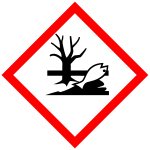
Signal word Danger
Hazard statement(s) H225 Highly flammable liquid and vapour
H317 May cause an allergic skin reaction
H319 Causes serious eye irritation
H335 May cause respiratory irritation
H411 Toxic to aquatic life with long lasting effects
Precautionary statement(s) Prevention P210 Keep away from heat, hot surfaces, sparks, open flames and other ignition sources. No smoking.
P233 Keep container tightly closed.
P240 Ground and bond container and receiving equipment.
P241 Use explosion-proof [electrical/ventilating/lighting/...] equipment.
P242 Use non-sparking tools.
P243 Take action to prevent static discharges.
P280 Wear protective gloves/protective clothing/eye protection/face protection/hearing protection/...
P261 Avoid breathing dust/fume/gas/mist/vapours/spray.
P272 Contaminated work clothing should not be allowed out of the workplace.
P264 Wash ... thoroughly after handling.
P271 Use only outdoors or in a well-ventilated area.
P273 Avoid release to the environment.
Response P303+P361+P353 IF ON SKIN (or hair): Take off immediately all contaminated clothing. Rinse affected areas with water [or shower].
P370+P378 In case of fire: Use ... to extinguish.
P302+P352 IF ON SKIN: Wash with plenty of water/...
P333+P317 If skin irritation or rash occurs: Get medical help.
P321 Specific treatment (see ... on this label).
P362+P364 Take off contaminated clothing and wash it before reuse.
P305+P351+P338 IF IN EYES: Rinse cautiously with water for several minutes. Remove contact lenses, if present and easy to do. Continue rinsing.
P304+P340 IF INHALED: Remove person to fresh air and keep comfortable for breathing.
P319 Get medical help if you feel unwell.
P391 Collect spillage.
Storage P403+P235 Store in a well-ventilated place. Keep cool.
P403+P233 Store in a well-ventilated place. Keep container tightly closed.
P405 Store locked up.
Disposal P501 Dispose of contents/container to an appropriate treatment and disposal facility in accordance with applicable laws and regulations, and product characteristics at time of disposal.
Other hazards which do not result in classification
no data available
Handling and StoragePrecautions for safe handling
NO open flames, NO sparks and NO smoking. Closed system, ventilation, explosion-proof electrical equipment and lighting. Do NOT use compressed air for filling, discharging, or handling. Handling in a well ventilated place. Wear suitable protective clothing. Avoid contact with skin and eyes. Avoid formation of dust and aerosols. Use non-sparking tools. Prevent fire caused by electrostatic discharge steam.
Conditions for safe storage, including any incompatibilities
Fireproof. Well closed. Store in an area without drain or sewer access. Provision to contain effluent from fire extinguishing.Materials which are toxic as stored or which can decompose into toxic components...should be stored in a cool, well ventilated place, out of the direct rays of the sun, away from areas of high fire hazard, and should be periodically inspected. Incompatible materials should be isolated...
-
-
Seller Information
-
Business Type:
Manufactory
-
Location:
No. 118 West Road, Nanjing Chemical Industrial Park
Nanjing Yabang Chemical Co., BDP is a professional production and processing company, has a complete and scientific quality management system. Formerly known as the world famous American Albemarle Corporation in 2005 in Nanjing, China, a wholly owned building a flame retardant factories and research and development center. In September 2012, Yabang chemical wholly acquired chemicals (Nanjing) Co., Ltd. all equity. Yabang company took over, using the original Albemarle production process and apparatus continue for domestic and foreign customers to provide agent phosphorus series flame retardant bpadp (formerly Albemarle ncendx P-30 grades) and tmcp-lo etc., for PC, ABS, PPO, hiips, pc/abs, ppo/hips and polyurethane foam, adhesive and PVC etc. resin material. Yabang Nanjing Chemical Co., Ltd, integrity, strength and product quality for the industry's approval, welcome friends from all walks of life come to visit, guidance and business negotiation.
-
-
Inquiry History2 Inquiries
Country Product Purchase Quantity Date Posted  India
India
ISOVERALDEHYDE
50 TON Nov 8, 2024
India
Isovaleraldehyde
12.8 MT May 28, 2024 Post an enquiry for this product
Hot Related Products
-
 503-74-2 Isovaleric Acid with Best Price
 -
 Lowest Price Isovaleric Acid/3-Methylbutanoic Acid CAS 503-74-2
 -
 Factory supply best price CAS 123-51-3 Natural Isoamyl Alcohol
 -
 High quality 503-74-2 Isovaleric Acid with Best Price
 -
 Low Price 3-Methyl-1-Butanol with High Quality CAS 123-51-3
 -
 Triphenylphosphine oxide 791-28-6