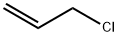
| Chemical Properties | colourless, light yellow or amber liquid with an unpleasant smell |
| Chemical Properties | Allyl chloride is a colorless liquid, insoluble in water but soluble in common organic solvents. Allyl chloride is prepared by the reaction of propylene with chlorine. It is a common alkylating agent relevant to the manufacture of pharmaceuticals and pesticides. It is also a component in some thermo-setting resins. Allyl chloride has been produced commercially since 1945 and is used almost exclusively as a chemical intermediate, principally in the production of epichlorohydrin or as a raw material for epichlorohydrin. It is also used as a chemical intermediate in the preparation of glycerin, glycerol chlorohydrins, glycidyl ethers, allylamines, and allyl ethers of trimethylpropane, sodium allyl sulfonate, a series of allyl amines and quaternary ammonium salts, allyl ethers, and a variety of alcohols, phenols, and polyols. It is also used in pharmaceuticals as a raw material for the production of allyl isothiocyanate (synthetic mustard oil), allyl substituted barbiturates (sedatives), and cyclopropane (anesthetic); in the manufacture of specialty resins for water treatment and to produce babiturate and hypnotic agents such as aprobarbital, butalbital, methohexital sodium, secobarbital, talbutal, and thiamyl sodium. |
| Chemical Properties | Allyl chloride is a highly reactive and flammable, colorless, brown or purple liquid, with an unpleasant, pungent odor. |
| Physical properties | Colorless to light brown to reddish-brown liquid with a pungent, unpleasant, garlic-like odor. An experimentally determined odor threshold concentration of 470 ppbv was reported by Leonardos et al. (1969). |
| History | Allyl chloride, the only chloropropene of industrial importance, was first produced in 1857 by A. CAHOURS and A. W. HOFMANN by reacting phosphorus chloride with allyl alcohol. The name allyl is derived from the latin allium, meaning garlic. Inhalation of even small amounts of allyl chloride produces, after a short time, the characteristic odor of garlic on the breath. At the end of the 1930s, IG Farbenindustrie and the Shell Development Co. developed the high-temperature chlorination of propene, permitting large-scale production of allyl chloride with good yields. A significant part of the development was done by the Shell Chemical Co. when erecting a commercial plant in 1945. Dow, Solvay, and Asahi-Kashima developed their own processes.
|
| Reactivity Profile | 1.Reactions of the Double Bond
The reaction of allyl chloride with oxygen in the liquid phase at ca. 120 ℃ and in the presence of metal acetates or hydrogen peroxide yields glycerol monochlorohydrin. Halogens add readily to the double bond yielding the corresponding trihalogeno compounds. The reaction with hypochlorous acid, yielding 2,3- and 1,3-glycerol dichlorohydrins (which are then dehydrochlorinated with alkali to give epichlorohydrin), is of great industrial importance. Allyl chloride reacts with hydrogen halides to form 1,2-dihalogeno compounds. In the presence of peroxides, the reaction with hydrobromic acid yields 1-bromo-3chloropropane (Kharasch effect), but in highly concentrated hydrogen peroxide solution, 1,2-dibromo- 3-chloropropane is formed. Addition reactions of silanes, boranes, carboranes, and phosphorus trichloride, as well as cycloadditions of allyl cations with alkenes, are known. Allyl chloride polymerizes with sulfur dioxide to form polysulfones.
2.Reactions of the Chlorine Atom
Recently, Allyl alcohol is produced increasingly by the isomerization of propene oxide. The chlorine atom is replaced easily by iodide, cyanide, isothiocyanate, sulfide, polysulfides (giving rubber-like condensation products), and alkyl thiols. The salts of carboxylic acids yield allyl esters (e.g., diallyl phthalate), which are easily polymerized to allyl resins or are copolymerized with other monomers. Sodium allyl sulfonate is obtained on reaction with sodium sulfite. The reaction of allyl chloride with ammonia yields a mixture of mono-, di-, and triallylamines, and the reaction with primary and secondary amines makes the corresponding alkylallylamines. Phase-transfer-catalyzed carbonylation (e.g., with Ni(CO)4 or (Me4N)2 [Ni6(CO)12]) in the presence of sodium hydroxide leads to the sodium salt of vinylacetic acid. In the presence of alkalis, allyl chloride reacts with polyols to form the corresponding allyl ethers. |
| Uses | Allyl chloride is used in the synthesis of glycerol, allyl alcohol and epichlorohydrin. |
| Uses | Manufacture of epichlorohydrin, epoxy resin, glycerin pesticides, and sodium allyl sulfonate |
| Uses | Allyl chloride (3-chloropropene; 1-chloro-2-propene) is a chemical intermediate used in the synthesis of allyl compounds found in varnish, resins, polymers, pesticides, and pharmaceuticals (O’Neil, 2001). |
| Production Methods | Allyl chloride can be synthesized by reaction of allyl alcohol with HCl or by treatment of allyl formate with HCl in the presence of a catalyst (ZnCl2). |
| Definition | ChEBI: Allyl chloride is an organochlorine compound. |
| General Description | A clear colorless liquid with an unpleasant pungent odor. Flash point -20°F. Boiling point 113°F. Less dense than water (7.8 lb / gal) and insoluble in water. Hence floats on water. Vapor irritates skin, eyes and mucous membranes. Vapors are heavier than air. Long exposure to low concentrations or short exposure to high concentrations may have adverse health effects from inhalation or skin absorption. |
| Air & Water Reactions | Highly flammable. Insoluble in water. |
| Reactivity Profile | Allyl chloride presents a serious fire and explosion hazard when exposed to heat, flame or oxidizing agents. Polymerizes violently and exothermically with Lewis acids (aluminum chloride, boron trifluoride, sulfuric acid) or metals (aluminum, magnesium, zinc, or galvanized metal) [MCA SD-99, 1973]. Incompatible with acids (nitric acid, chlorosulfonic acid, oleum), with strong bases (sodium hydroxide, potassium hydroxide), with ethyleneimine and ethylenediamine [Lewis, 3rd ed., 1993, p. 36]. Attempts to alkylate benzene or toluene using Allyl chloride in the presence of ethylaluminum chlorides have led to explosions. |
| Hazard | Skin and eye irritant. Upper respiratory tract irritant, liver and kidney damage. Question- able carcinogen. |
| Health Hazard | Causes marked irritation of skin and may burn. Burns the eyes; effect may be delayed. |
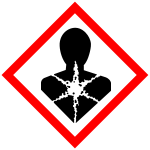
| Health Hazard | Allyl chloride is toxic and flammable. Exposures to allyl chloride cause a cough, sore throat, headache, dizziness, weakness, respiratory distress, abdominal pain, burning sensation, vomiting, and loss of consciousness. After acute inhalation exposures to high levels of allyl chloride, workers developed irritation of the eyes and respiratory passages, loss of consciousness, and fatal injury. Prolonged and intense exposure produced conjunctivitis, reddening of eyelids, and corneal burn, damage to the CNS, causing motor and sensory neurotoxic damage, and the heart and respiratory system, causing the onset of pulmonary edema in humans. Laboratory rabbits exposed to allyl chloride through inhalation developed degenerative changes that included dilation of sinusoids and vacuolar degeneration in the liver, congestion or cloudy swelling and fatty degeneration of the epithelium of the renal convoluted tubules, and thickening of the alveolar septa in the lungs. The exposed cat exhibited only muscle weakness and unsteady gait toward the end of the exposure period. |
| Fire Hazard | Special Hazards of Combustion Products: Releases irritating hydrogen chloride gas on combustion |
| Flammability and Explosibility | Highly flammable |
| Toxicology | Acute and Subacute Toxicity: LD50=460 mg/kg (rat, oral); LD50= 3.7 mg/kg (rabbit, percutaneous); LC50= 11 mg/L (rat, inhalation, 2 h). The inhalation of 3 ppm allyl chloride during 7 h/d on 5 days a week was tolerated by a group of rats, guinea pigs, and rabbits for 180 days without irreversible damage occurring. An analogous test using 8 ppm over a period of 35 days led to damage of the liver and kidneys. Further experiments demonstrate a neurotoxic effect of allyl chloride, in particular to the peripheral nerves of cats and rabbits.
|
| Safety Profile | Suspected carcinogen with experimental tumorigenic data. Poison by intraperitoneal and intravenous routes. Moderately toxic by ingestion, inhalation, and skin contact. Experimental teratogenic and reproductive effects. A skin and eye irritant. Human mutation data reported. Chronic exposure may cause liver and lildney damage. The vapors of allyl chloride are quite irritating to the eyes, nose, and throat. Contact of the liquid with the skin may lead, in addition to local vasoconstriction and numbness, to rapid absorption and distribution through the body. If remedial measures are not taken promptly, such contact may result in burns and internal injuries. Inhalation may cause headache, dizziness, and in htgh concentration, loss of consciousness; however, even in low concentration, its odor in most cases is irritating enough to give warning of its presence. Concentration of the vapors high enough to cause serious effects, includlng damage to the lungs, especially on repeated exposure, may not be intolerable. Consequently, the warning characteristics should never be disregarded. In general, precautions should be taken AT ALL TIMES to avoid splllage and accumulation of noticeable concentration of the vapors in the atmosphere. Acute exposure in experimental animals has resulted in marked inflammation of lungs, irritation of skin, and swelling of the hdneys. Chronically exposed animals have shown degenerative changes in the liver and kidneys. Reported human exposures have been principally cases of irritation of the eyes, skin, and respiratory tract, sometimes accompanied by aches and pains in the bones. Liver and hdney injury is possible. Dangerous fire and explosion hazard when exposed to heat, flame, or oxidlzers. Vigorous or explosive reaction above -7O℃ with alkyl aluminum chlorides (e.g., trichlorotriethyl dialuminum, ethyl aluminum dichloride, or diethyl aluminum chloride) + aromatic hydrocarbons (e.g., benzene or toluene). Violently exothermic polymerization reaction with Lewis acids (e.g., aluminum chloride, boron trifluoride, or sulfuric acid) and metals (e.g., aluminum, magnesium, zinc, or galvanized metals). Incompatible with HNO3, ethylene imine, ethylenedlamine, chlorosulfonic acid, oleum, NaOH. To fight fire, use CO2, alcohol foam, dry chemical. See also CHLORINATED HYDROCARBONS; ALIPHATIC; ALLYL COMPOUNDS; and CHLORIDES. Storage and Handling: Keep cool, away from heat sources. Maintain good vendation. Work in a fume hood or with closed system if possible; otherwise, use adequate vendation so that the odor of allyl chloride does not persist. If it should be necessary to enter an area in which the odor of allyl chloride is at all noticeable, use a gas mask equipped with an “organic vapor” canister. Do not dlsregard the warning odor or eye irritation of allyl chloride |
| Potential Exposure | Allyl chloride is used as a chemical intermediate and in making allyl compounds, epichlorohydrin, and glycerol. |
| Carcinogenicity | The IARC found that it could not classify AC as a human carcinogen on the basis of available data. In contrast, EPA considers AC to be a possible human carcinogen and has ranked it in EPA’s Group C. This classification was based on a low incidence of forestomach tumors in female mice and positive results in a variety of genetic toxicity tests. However, the forestomach tumor data were not used for quantitative cancer risk assessment. AC is a strong alkylating agent and is structurally similar to other forestomach carcinogens, such as propylene oxide and epichlorohydrin, which cause tumors at the site of exposure.
Olsen reported on a cohort of 1064 men employed at a Texas plant in epoxy resin, glycerin, andAC/epichlorohydrin production between 1957 and 1986 and followed up through 1989. There were 66 total deaths [standardized mortality ratio (SMR)=0.8; 95% CI 0.6–1.0] and 10 cancers (SMR=0.5; CI 0.2–0.9).However, the authors noted that the cohort was limited due to sample size, duration of follow-up, small numbers of deaths both expected and found, and the limited exposure potential. |
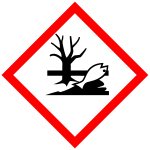
| Environmental fate | Biological. Bridié et al. (1979) reported BOD and COD values of 0.23 and 0.86 g/g using filtered effluent from a biological sanitary waste treatment plant. These values were determined using a standard dilution method at 20 °C and stirred for a period of 5 d. When a sewage seed was used in a separate screening test, a BOD value of 0.42 g/g was obtained. The ThOD for allyl chloride is 1.67 g/g.
Photolytic. Anticipated products from the reaction of allyl chloride with ozone or OH radicals in the atmosphere are formaldehyde, formic acid, chloroacetaldehyde, chloroacetic acid, and chlorinated hydroxy carbonyls (Cupitt, 1980).
Chemical/Physical. Hydrolysis under alkaline conditions will yield allyl alcohol (Hawley, 1981). The estimated hydrolysis half-life in water at 25 °C and pH 7 is 2.0 yr (Mabey and Mill, 1978). |
| storage | Pure, dry allyl chloride (water content2 200 mg/kg) does not corrode iron and can be stored in ferrous containers for months at ambient temperatures without significant changes in quality. Lined vessels should be used if traces of iron chlorides are objectionable. Unwanted coloration can be prevented by the addition of a suitable stabilizer (e.g., propene oxide).
|
| Shipping | UN1100 Allyl chloride, Hazard Class: 3; Labels: 3-Flammable liquid, 6.1-Poisonous materials |
| Purification Methods | Likely impurities include 2-chloropropene, propyl chloride, iso-propyl chloride, 3,3-dichloropropane, 1,2-dichloropropane and 1,3-dichloropropane. Purify it by washing with conc HCl, then with Na2CO3 solution, dry it with CaCl2, and distil it through an efficient column [Oae & Vanderwerf J Am Chem Soc 75 2724 1953]. [Beilstein 1 IV 738.] LACHRYMATORY, TOXIC. |
| Incompatibilities | Contact with water forms hydrochloric acid. Keep away from strong oxidizers, acids, aluminum, amines, peroxides, chlorides of iron and aluminum; magnesium, zinc. |
| Toxics Screening Level | The Initial Threshold Screening Level (ITSL) for Allyl Chloride is 1 μg/m3 (annual average). A Second ITSL for Allyl Chloride is 31 μg/m3 (8 hr average). |
| Waste Disposal | Consult with environmental regulatory agencies for guidance on acceptable disposal practices. Generators of waste containing this contaminant (≥100 kg/mo) must conform with EPA regulations governing storage, transportation, treatment, and waste disposal. Controlled incineration at a temperature of 982 C for 2 seconds minimum. |









 Russia
 India
India
 Chile
Chile