Opportunities, Challenges Abound for PET, Engineering Resins and PS
PET, engineering resins and polystyrene all have growth potential, but they also are facing challenges, according to market analysts at Global Plastics Summit 2017.
For PET, the carbonated soft drink end market has seen "a steady decline" for almost 12 years, according to IHS Markit analyst Tison Keel, and is set to lose another 2 percent in 2017.
"Some people call it the war on sugar," he said.
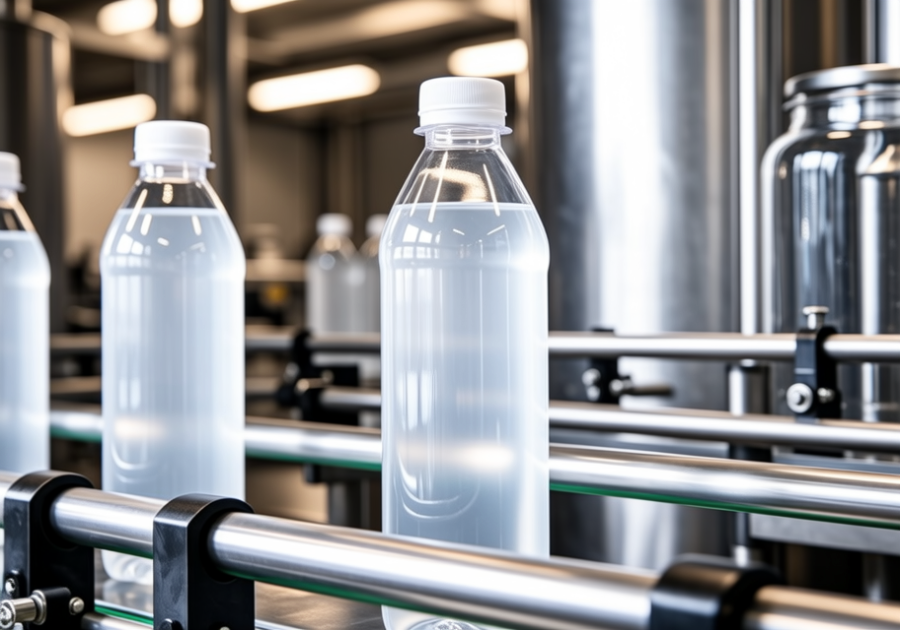
Another PET segment in decline is sports drinks, where PET use is down 3 percent this year. The bottled water market for PET, however, is growing at a 6 percent annual clip, and the flavored carbonated water sector is up 12 to 15 percent.
The bankruptcy and ensuing capacity shutdowns of PET maker M&G Polymers will impact the North American PET sector in 2018. It's now unclear when or how that firm will be able to complete a major planned addition of PET capacity in Corpus Christi, Texas, Keel said.
Antidumping tariff requests from the U.S. and Canada on PET imported from several foreign countries also will be a factor in 2018. But, in general, global PET capacity exceeds demand by about 25 percent.
"Every region has an oversupply of PET," Keel said. North American producers also are looking to improve their profitability by back-integrating into PET feedstocks, he added.
ABS, PC demand growing
In engineering resins, IHS Markit's Paul Blanchard said global demand is catching up to supply for the material, which generates almost 75 percent of total demand from Asia.
Global ABS demand is growing 4 percent annually, he added, with operating rates approaching 80 percent, up from 70 percent in 2014. Operating rates should hit 84 percent by 2020, according to Blanchard.
In North America, ABS maker Ineos is adding about 130 million pounds of capacity in Mexico, but Blanchard said the region remains dependent on imports of the material from Asia to meet its needs.
He added that high operating rates for ABS in North America and Western Europe — where capacity is limited — are expected to push producer profit margins above historic levels in those regions.
For polycarbonate, new global plants, including nine in Asia alone, are expected to add significant capacity to global markets in 2019 and beyond, according to Blanchard.
Global PC demand is growing at 3 percent annually, roughly matching global GDP growth. China accounts for about 60 percent of total demand and will continue to need imported material even with the new capacity additions. The U.S. exports about 40 percent of its own PC production.
Nylon in global oversupply
In nylon 6 resins, China has added large amounts of capacity, Blanchard said, which has contributed to global oversupply. Demand from the automotive and film markets appears to be flattening, he added, with global operating rates down to 60 percent.
For nylon 6/6, global supply and demand appears balanced, with annual growth of around 2 percent. China now accounts for half of global demand growth for the material, Blanchard said. Nylon 6/6 maker Invista recently opened a production site in Shanghai but stopped production in Tennessee and Argentina.
PS on a comeback
The PS market has made a bit of a comeback in 2017, according to Priya Ravnidranath of IHS Markit.
"There's been some margin improvement and debottlenecking of capacity in North America," she said.
North American demand — for solid and expanded PS combined — has improved in 2017 and should finish up 1.4 percent from 2016, according to Ravindranath. The market now accounts for just under 20 percent of global demand, trailing China at 30 percent. Global PS demand growth is pegged at 1.9 percent.
China is shifting from a PS exporter into a consumer, Ravindranath said, because of an increase there in durable goods that use PS. Negative perceptions of PS also may be changing, she added, as New York City recently overturned a ban on EPS.
Growth in home delivery options also helps EPS, according to Ravindranath, and some electronics production using PS is returning to the U.S. Use of PS in Mexican manufacturing also is picking up, she added.
Global operating rates for PS are around 70 percent but are improving.

You May Interested In


High Quality β-Nicotinamide adenine dinucleotide CAS 53-84-9 NADwith ready stock and best price
$3/UNIT FOB


2026-10-16
Trade Alert
Delivering the latest product trends and industry news straight to your inbox.
(We'll never share your email address with a third-party.)

Related News
-
EU Eyes Rare Trade Tool as PET, Epoxy Resin and Glass Fibre Face Import Curbs
-
Mitsubishi Chemical Exits PET Bottle Business
-
Malaysia Imposes Anti-Dumping Duties on Chinese PET Imports, with a Maximum Rate of 37.4%
-
ALPLA invests €60 million in PET recycling plant in Durban, South Africa
-
Origin Materials launches asset-light strategy to expand biomass conversion technology
-
Eco-Chic Beauty Packaging: Pure Trade Elevates Recycled PET for Givenchy and Lancôme Collections
-
What are the Differences Between PET vs PP polymers?
-
From 'Bottle' to 'Bottle' : The Recycling of beverage bottles, China awaits action
-
The Plastic Market has Completely Collapsed! POM/PVC/ABS/PET Plummeted by Up to 2000!
-
Go Up And Go Up! PET Rose by More Than 80%! With Many Favorable Promotions, Pure Benzene has Broken Through 10,000!
Recommend Reading
-
![European Gas Breaks €80 Intraday, Putting Chemical and Fertilizer Output Back Under Pressure]()
European Gas Breaks €80 Intraday, Putting Chemical and Fertilizer Output Back Under Pressure
-
![The “Counter-Wind Ledger” of CHF 11.2 Billion: Sika Barely Grew in 2025—Yet Kept Taking Market Share]()
The “Counter-Wind Ledger” of CHF 11.2 Billion: Sika Barely Grew in 2025—Yet Kept Taking Market Share
-
![Chemours Sells Its Former Titanium Dioxide Site in Taiwan: Turning a “White Powder” Factory into “Wind Power Real Estate” for $360 Million—Buying Not Cash, But Breathing Room]()
Chemours Sells Its Former Titanium Dioxide Site in Taiwan: Turning a “White Powder” Factory into “Wind Power Real Estate” for $360 Million—Buying Not Cash, But Breathing Room
-
![Sun-Kissed Insect Oil? EFSA Approves UV-Treated Mealworm Fat as Safe—and Vitamin D-Rich—Novel Food]()
Sun-Kissed Insect Oil? EFSA Approves UV-Treated Mealworm Fat as Safe—and Vitamin D-Rich—Novel Food
-
![From Fungus to Food: EFSA Greenlights Rhizomucor pusillus Biomass as Safe Novel Ingredient]()
From Fungus to Food: EFSA Greenlights Rhizomucor pusillus Biomass as Safe Novel Ingredient
-
![Will 2026 Bring a Turnaround After DMF Prices Hit Bottom in 2025 in China?]()
Will 2026 Bring a Turnaround After DMF Prices Hit Bottom in 2025 in China?
-
![Business Society September 23, 2026 Phthalic Anhydride Trend Analysis: Clear Decline]()
Business Society September 23, 2026 Phthalic Anhydride Trend Analysis: Clear Decline
-
![Polyester Bottle Flakes Prices on the 27th Show a Noticeable Weakening, with Price Declines Wider]()
Polyester Bottle Flakes Prices on the 27th Show a Noticeable Weakening, with Price Declines Wider
-
![Mid-November Phosphate Market Stabilizes Amidst Gains (11.10–11.20)]()
Mid-November Phosphate Market Stabilizes Amidst Gains (11.10–11.20)
-
![Fundamentals Weak, TDI Market in China Declines in October]()
Fundamentals Weak, TDI Market in China Declines in October