




Analysis on the Operation of Coal and Downstream Industry in the First Quarter

Loose expectations of coal supply have been delayed repeatedly, and the change of supply and demand game results in repeated price rises and falls.
The security inspection of the "two sessions" and the safety accidents in the main producing areas led to the slow progress of the national coal resumption, and the delay of the progress of coal supply from overcapacity to overcapacity. From January to February, China's coal output actually decreased by 1.5% compared with the same period last year, when the country's coal production capacity increased by 180 million tons in 2018. In January-February, the thermal power output increased by 1.7% year-on-year under the same high base and the increasing downward pressure of the national economy. The anticipated reversal of the power coal supply and demand, coupled with the support of heating demand in winter, reversed the trend of the national power coal price rising before and after falling out of the peak in the late winter. After the festival, with the end of heating demand and the delay of downstream industrial resumption, the coal consumption of power plants decreases. Supported by high inventory, the power plants purchase the long-term coals on demand and slowly deplete the inventory. Traders did not wait to replenish the storage demand of power plants after the "two sessions". With the acceleration of the resumption of production of mines in the main producing areas and the further guidance of the state to reduce electricity prices for Industry and commerce, the market bearish expectation gradually occupies the dominant position. The price of power coal in the market has changed from rising to falling. However, the safety inspection and strict acceptance of resumed production caused by several major safety accidents around the "two sessions" have made it difficult to fully resume coal production. Although the national coal production increased significantly in March, it was basically flat or slightly increased with the same period. In terms of power plant consumption, the unexpected rebound of manufacturing growth has led to the same year-on-year increase of coal consumption in power plants and the off-season demand for electricity and coal. Not bad: As of March 24, the daily consumption of key power plants in China was 3.71 million tons, an increase of 190,000 tons, an increase of 5.39%. With the gradual reduction of power plant inventory, power plants are no longer waiting for the loosening supply situation. Under the influence of the reduction of coal import in the port market caused by the overhaul of Daqin Line and the increase of the price of large coal enterprises, a small amount of coal in the reserve market of some power plants, traders take the opportunity to increase slightly, and the price of power coal in the market is rising again from a decline.
Overall, although the power coal market has been rising and falling repeatedly after the year, the range is limited, indicating that the unconventional factors blocking the re-production and increasing production progress of the mine have a limited impact on the power coal market. With the gradual weakening of the impact of mine safety inspection and production restriction, the economic fundamentals will be difficult to pull the power coal consumption to continue to grow at the same time, and the power coal supply will inevitably tend to be relaxed. Therefore, it is forecasted that the price of power coal will turn into a weak downward trend after a short rise in the latter period and fall rationally. Anthracite chemical coal demand is insufficient, and the price trend of chemical coal and chemical products deviates.
Chemical Coal: The 13th Five-Year Development Plan of Chemical Industry and the Action Plan of Coal Consumption Reduction of many provinces and municipalities all put forward the requirement of "Chemical Gas Deanthracitization". With the advancement of fixed-bed gasification technology transformation in Shandong and Henan chemical provinces, the market capacity of anthracite chemical coal has been narrowed year by year; while the action of "coal to gas" and "coal to electricity" for civil coal has been deepened, but it has been one by one. The year weakened the downward buffering effect of the demand for civil coal on the shrinkage of the chemical lump coal market. With the fall of the price of chemical products since the third quarter of 2018 and the restriction of environmental protection in the heating season of chemical enterprises, the start-up rate of fixed bed with high gas production cost gradually decreased. The long-term narrowing of market demand for anthracite chemical coal, especially anthracite lump coal, and the short-term weakness of market demand superimposed two favorable and negative factors, and the supply was comprehensive. The problem of excess began to emerge at the beginning of the year. Anthracite enterprises in Jincheng, Yangquan and Jiaozuo regions are facing greater pressure of unsalable sales of anthracite lump coal. After a year, the prices of anthracite lump coal in the above areas are declining. As the largest anthracite production base in China, the mainstream coal enterprises and local coal enterprises have equal voice and fiercer homogenization competition. Up to now, the price of anthracite lump coal in Jincheng has fallen continuously in March, with the overall decline of 130-180 CNY/ton, and the mainstream price of anthracite lump has fallen to the right below 990 CNY/ton. In the chemical industry market, the chemical plants strictly enforce the environmental protection and production restriction in the heating season, and the supply of methanol, urea and synthetic ammonia decreases in the same cycle ratio. After the two sessions, with the gradual start of industrial and agricultural demand, the supply of chemical industry market is gradually tightening, the price fluctuation of chemical products is becoming stronger and wider. As of April 1, the price of urea is 2062 CNY/ton and that of synthetic ammonia is 3416 CNY/ton, which are the high levels in recent years. At the same time, the price of methanol has rebounded at the bottom. At present, the price is 2418 CNY/ton, which is 224 CNY/ton higher than the lowest price at the beginning of the year.
Chemical coal and chemical products price trend deviates. Although with the end of the heating season, the start-up rate of chemical plants gradually rebounds and the demand for anthracite chemical coal has been restored, anthracite chemical lump coal is still in excess supply, and as time goes on, the demand for fixed bed lump coal will be further weakened. Therefore, it is expected that anthracite lump coal will continue to decline in the later period driven by insufficient demand unfavorable factors. At the same time, the downward pressure of anthracite lump coal price will also be transmitted to a certain extent to anthracite end coal.
Steel market shocks, steel mills began to suppress raw and fuel coal prices, injection coal prices pressure down.
In the heating season, steel enterprises no longer implement the "one-size-fits-all" policy of environmental protection and production restriction, and steel plant start-up rate increased year-on-year, and steel production increased significantly. After the festival, domestic steel demand release slowly, the total amount is insufficient, which led to social steel stocks to a year-on-year high level. Traders and downstream end users wait and see purchases, and steel prices shocked and tidied up. As of April 1, the average price of my steel products was 4097 CNY/ton, which was 541 CNY/ton lower than last year's highest price of 4638 CNY/ton. Under the influence of the soaring cost of iron ore raw materials, the profit of steel mills tended to be thin, along with coke and coke.
Looking for chemical products? Let suppliers reach out to you!

Prospect of Coking Coal Market in 2019
You May Interested In




2026-07-12
-


Fine Chemicals Industry Overview Dec.2025
Insight into Structural Shifts, Capturing Long-Term Value in Fine Chemicals. Available for Permanent Download.Published in: Jan. 2026
Trade Alert
Delivering the latest product trends and industry news straight to your inbox.
(We'll never share your email address with a third-party.)

Related News
-
Coal prices soared, South Africa's Thungela company doubled its annual profit
-
Chemical Enterprises Collectively Stop Production! Supply 'Urgent'
-
If Crude Oil Plummets, Which Chemical Products Will Be 'Unbearable' First?
-
Power coal price in Zhejiang Province decreased by 4.0% YoY
-
Oil And Coal Fell, With Collapse And Plasticization Market! PE, PP Fell Over 300
-
Development Proposals And Proposed Research Policies Under The New RCEP Regulations
-
The Output Of Major Energy Products Increased Year-on-year in November
-
Mitsubishi Chemical Announces: Withdrawal from Petrochemical And Coal Chemical Business
-
Pure benzene price rebound
-
[ethylene glycol] : Coal fell rapidly, ethylene glycol followed
Recommend Reading
-
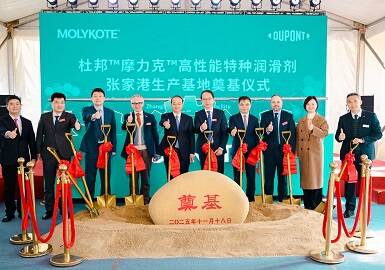
Another Strategic Move! DuPont Launches a New Specialty Lubricants Project in Zhangjiagang
-

Indonesia Forges a Green Future for Its Highly Dynamic Packaging & Automotive Industries
-

Huntsman Partners with Wobatek to Expand TPU Distribution
-
Sinopec Engineering Group Reports 10% Revenue Growth in H1 2025, with Overseas Business Surging 92%
-
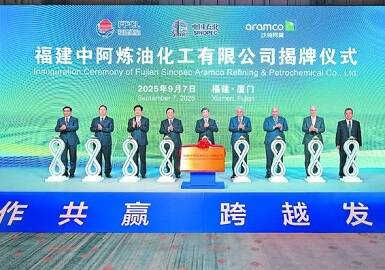
Sinopec and Saudi Aramco Launch $10 Billion Joint Venture, Accelerating Gulei Refining and Petrochemical Phase II Project
-

Benzoylecgonine: Detection and Testing Methods
-

German Chemical Industry Output Slumps to Lowest Utilization Rate Since 1991
-

Clariant and FUHUA Establish Joint Venture to Co-Develop Halogen-Free Flame Retardants
-

Borealis Commits Over €100 Million to New PP Compounds Line in Austria
-
Supply-Demand Contradiction Persists, Making Weak ABS Market Conditions Hard to Reverse