How to deal with 'artemisinin resistance'?
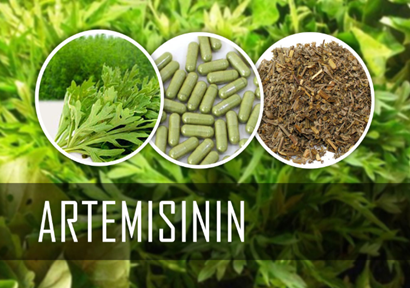
According to the World Health Organization, one person dies of malaria every two minutes. Malaria is still one of the leading causes of death in the world. April 25, 2019 is the 12th World Malaria Day. Scientists from the Artemisinin Research Center and Institute of Traditional Chinese Medicine of the Chinese Academy of Traditional Chinese Medical Sciences put forward a reasonable response plan for "Artemisinin resistance" in the international authoritative journal New England Journal of Medicine. Wang Jigang, a specialist of the Artemisinin Research Center of the Chinese Academy of Traditional Chinese Medicine and the Institute of Traditional Chinese Medicine, is the lead author. He works with Tu Youyou, director of the Artemisinin Research Center of the Chinese Academy of Traditional Chinese Medicine, and other five experts. Based on the mechanism of artemisinin, the existing treatment schemes, the special situation and causes of drug resistance and drug price, he puts forward some practical suggestions. Reasonable plan to deal with "artemisinin resistance" was put forward. Artemisia annua was first recorded in Shennong Herbal Medicine Classic, and its therapeutic effect on malaria was defined in Elbow Reserve Emergency Prescription. It has been used in the treatment of malaria by our ancestors since ancient times.
In the 1970s, Tu Youyou, a researcher at the Institute of Traditional Chinese Medicine of the Chinese Academy of Traditional Chinese Medicine, and his research team were inspired by the ancient book "Artemisia annua grasp with two liters of Water, extract juice, and take it as much as possible", and successfully discovered artemisinin. Since then, artemisinin as a first-line antimalarial drug has successfully cured countless malaria patients. This is the great contribution of Chinese traditional medicine and the older generation of scientific researchers to all mankind. However, there are worrying signs of artemisinin resistance in malaria endemic areas. The problem of artemisinin resistance is a public health problem facing the Greater Mekong Subregion and parts of Africa. Researcher Tu Youyou was particularly concerned about it. In his Nobel Prize-winning speech, he emphasized the importance and urgency of relevant research. It should be emphasized that in order to correctly understand the phenomenon of "artemisinin resistance", we must first understand the mechanism of artemisinin resistance. Unlike other drugs, artemisinin needs to be activated to function. Studies have shown that heme in red blood cells is an efficient and specific activator of artemisinin. When the parasite destroys red blood cells in large quantities, it releases very high concentrations of heme, which activates artemisinin at places where the parasite is metabolically active and binds to hundreds of proteins in the parasite, thus inactivating the parasite and killing it. Correspondingly, haemoglobin in normal red blood cells can not activate artemisinin because it is firmly bound to HEMOGLOBIN. Therefore, the toxic and side effects of artemisinin on normal cells are very small. That is to say, the blood-eating nature of Plasmodium makes it inevitably the target of artemisinin attack. Such a pattern makes it very difficult for malaria parasites to develop resistance by mutating individual target proteins, which is why artemisinin has not become fully resistant after many years of widespread use. However, it should be pointed out that the half-life of artemisinin in human body is short, only 1-2 hours, while the recommended course of artemisinin combination therapy is only 3 days, so the effective insecticidal window of artemisinin is limited to 4-8 hours. The existing drug-resistant strains take full advantage of the short half-life of artemisinin, which may reduce the drug pressure by reducing the activation of artemisinin. One is to change the life cycle and further shorten the sensitive insecticidal period (trophozoite period); the other is to temporarily enter a dormant state, slowing down the metabolic rate, hemoglobin degradation rate and the release of heme. Once drug-resistant strains enter the trophozoite stage, they can be quickly and efficiently killed by artemisinin. This explains why three days of artemisinin combination therapy is ineffective against drug-resistant strains, and malaria patients can be cured once the duration of treatment is extended. In addition, the existing "artemisinin resistance" phenomenon, in many cases, is actually artemisinin combination therapy in the adjuvant drug resistance. In response to this situation, the replacement of adjuvant drugs in combination therapy will achieve immediate results. Tu's team believes that the current problem of "artemisinin resistance" can be effectively solved by simply adjusting existing treatment regimens, such as specific replacement of adjuvant drugs in artemisinin combination therapy or appropriate prolongation of medication time.
The article also discussed a problem often overlooked by researchers, that is, the price of antimalarial drugs. Any good medicine will lose its value if it cannot be taken by the people who need it. Artemisinin is inexpensive and costs only a few dollars a course. Malaria endemic areas are mainly concentrated in developing countries and Africa. Therefore, the key to effectively curb the spread of malaria and eradicate malaria is to develop efficient and cheap drugs. Throughout the existing research and development of new antimalarial drugs, there is no potential drug as efficient and safe as artemisinin. Even if new drugs are developed successfully, the cost of drug development will inevitably be reflected in the price of drugs. Whether these drugs can really serve the people who need them, there are many difficulties to overcome. It can be seen that good use of artemisinin is still the necessary choice for curing malaria. Optimizing the medication scheme in clinic is hopeful to overcome the existing phenomenon of "artemisinin resistance".

You May Interested In


High Quality β-Nicotinamide adenine dinucleotide CAS 53-84-9 NADwith ready stock and best price
$3E+1/UNIT FOB


2026-10-25
Trade Alert
Delivering the latest product trends and industry news straight to your inbox.
(We'll never share your email address with a third-party.)

Related News
-
From Coffee Waste to Superfood Additive: EU Declares Pectin-Rich Arabica Extract Safe for Food Use
-
Australia Approves Lab-Grown “Milk Sugar” for Babies—A Breakthrough in Infant Nutrition
-
Behind Arkema’s ¥430 Million Claim: A Patent War Over Acrylic Acid Is Tearing Off the “Technical Fig Leaf” of China’s Chemical Giants
-
France’s Wheat Rebounds—But Only Briefly Against a Tsunami of Cheap Grain
-
Kemira Acquires AquaBlue
-
Corn’s Surprise Surge: Export Fireworks Ignite Bullish Sentiment
-
Brazil Redefines “Milk”: New Rules Force Honesty on Dairy Labels
-
Canada’s Infant Formula Gets a Risk-Based Makeover
-
Wheat Drowns in a Sea of Plenty: Global Glut Crushes Price Hopes
-
EFSA Eyes Higher Dodine Limits in Grapes—Safety Assured, Critics Wary
Recommend Reading
-
![Hormuz Closes, Paint Feels It First: How a Barrel of Oil Rewrites the Cost of Every Barrel of Coatings]()
Hormuz Closes, Paint Feels It First: How a Barrel of Oil Rewrites the Cost of Every Barrel of Coatings
-
![Canada Caffeinates Candy—With Warnings Attached]()
Canada Caffeinates Candy—With Warnings Attached
-
![Korea Unlocks Additive Flexibility: New Rules Broaden Food Ingredient Horizons]()
Korea Unlocks Additive Flexibility: New Rules Broaden Food Ingredient Horizons
-
![Japan Tightens Tap: Pesticide Limits in Drinking Water Get a Safety Overhaul]()
Japan Tightens Tap: Pesticide Limits in Drinking Water Get a Safety Overhaul
-
![Uganda Sets Sugar Standards: East African Drafts Define Sweetness and Safety]()
Uganda Sets Sugar Standards: East African Drafts Define Sweetness and Safety
-
![Ammonium Sulfate Market Prices Continue to Rise (9.14-9.20)]()
Ammonium Sulfate Market Prices Continue to Rise (9.14-9.20)
-
![Business Society September 20, 2026 Methanol Trend Analysis: Volatile Consolidation]()
Business Society September 20, 2026 Methanol Trend Analysis: Volatile Consolidation
-
![Business Society September 21, 2026 Melamine Trend Analysis: Weakness-Driven Rebound]()
Business Society September 21, 2026 Melamine Trend Analysis: Weakness-Driven Rebound
-
![Business Society September 20, 2026 Ammonium Sulfate Trend Analysis: Volatile with a Slight Bullish Bias]()
Business Society September 20, 2026 Ammonium Sulfate Trend Analysis: Volatile with a Slight Bullish Bias
-
![Business Society, September 20, 2026: Propylene Oxide Trend Analysis – Market Trends Remain Volatile]()
Business Society, September 20, 2026: Propylene Oxide Trend Analysis – Market Trends Remain Volatile