




China's energy and coal policy changes have a huge impact on the global market
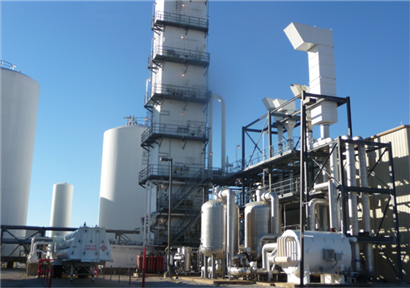
On October 31, Liu Xinhua, deputy general manager of Fenwei Energy Information Service Co., Ltd., said at the sixth international mining and resources Summit (imarc) held in Melbourne, Australia that as the world's largest energy consumer and the largest coal producer and consumer, China's energy and coal policy changes have a huge impact on domestic and global markets. The international mining and resources summit is the largest mining event in Australia, attracting business leaders and more than 7000 representatives from more than 100 countries and more than 300 mining companies from all over the world. Fenwei energy's China coal resources network is the only cooperative media of the summit in China. Liu Xinhua pointed out that the reason why we should pay attention to China's policies is that China's market is huge and 1-2% changes in domestic supply and demand will have a huge impact on domestic and international markets. She said that China's energy and coal markets are deeply affected by policies, which have a significant impact on market supply and demand, import and export, and prices.
In the speech, Liu Xinhua elaborated on China's energy policy, supply side reform, safety and environmental protection inspection and import restrictions. The Chinese government has been committed to the adjustment of energy structure, control of total energy consumption and consumption intensity, and vigorously develop clean energy. According to the 13th five year plan, by 2020, the proportion of coal in China's energy structure will fall below 58%, and the proportion of non fossil energy will increase to 15%. Liu Xinhua believes that these goals can be achieved as planned. In recent years, the proportion of coal in China's energy structure has decreased year by year, while the proportion of clean energy has increased significantly. By the end of 2018, coal, natural gas and clean energy accounted for 59%, 8% and 14% respectively. By the end of 2018, the proportion of coal power in China's total installed capacity has decreased from 68% in 2010 to 53%, the proportion of clean energy has increased from 27% in 2010 to 40%; the proportion of coal-fired power generation in China's total power generation has decreased from 76% in 2010 to 64%, and the proportion of clean energy power generation has increased from 19% in 2010 to 30%.
"[China] is reforming the power industry, requiring all coal-fired power plants that have the conditions for transformation to complete ultra-low emission transformation by 2020," Liu Xinhua said at the meeting. At the same time, China's steel industry is undergoing ultra-low emission transformation, she added. According to the Paris Agreement in 2015, China has committed to reduce carbon dioxide emissions per unit of GDP by 60-65% compared with 2005 level by 2030, and increase the proportion of non fossil energy consumption in total energy consumption to 20%. The supply side reform of China's coal industry launched in early 2016 is also a major policy worthy of attention. At present, the reform has been basically completed, Liu Xinhua said. According to the Fenwei energy coal mine database, China closed 700 million tons of backward coal production capacity in 2016-2018, and is expected to continue to close 140 million tons in 2019-2020. In this way, China will exceed the target of closing 800 million tons of coal production capacity between 2016 and 2020. Liu Xinhua pointed out that at present, the focus of supply side reform of the domestic coal industry is turning to the stage of "building and releasing advanced production capacity", and the domestic coal output is growing rapidly. Since this year, the Chinese government has accelerated the approval of new coal mine projects, 73% of which are power coal, 90% of which are from major coal producing areas such as Inner Mongolia, Shanxi, Shaanxi and Xinjiang, Liu Xinhua said.
"With the increase of effective capacity, domestic coal production is rising rapidly," Liu Xinhua said. "However, coal production is also affected to some extent by safety inspections, as illegal and non-conforming production still exists." From the perspective of demand, coal consumption in the downstream industry has been affected due to China's ongoing blue sky defense war, she pointed out. Pollution prevention and control is one of the three key battles for the Chinese government to build a moderately prosperous society in an all-round way. In order to control pollution, the Chinese government has formulated the three-year action plan to win the blue sky Defense War (2018-2020). The main measures include controlling coal consumption in key areas, reducing the use of bulk coal, controlling road transportation, and shifting peak production in high energy consumption industries in heating season. According to the action plan, by 2020, the total coal consumption of Beijing, Tianjin, Hebei, Shandong and Henan provinces (cities) will be 10% lower than that of 2015, the Yangtze River Delta will be 5% lower, and the Fenwei plain will achieve negative growth.
In addition, high energy consumption and resource intensive industries are forbidden to add new capacity. If there is a real need for increase, capacity replacement must be carried out. In terms of import, China's import restriction policy has a great impact on the domestic and international coal market. The Chinese government usually uses tariff, quality inspection, import quota, customs clearance restrictions and other measures to control coal import. China's coal import policy has gone through a process from "restriction" to "encouragement" and then "tightening" again Before 2005, the coal import was restrained by imposing import tariff (6% for power coal, 3% for coking coal and anthracite); from 2005, the import tariff policy was reduced until cancelled, encouraging coal import. After 2014, import tariffs were restored again, with 5-6% for power coal and 3% for coking coal and anthracite. China has signed free trade agreements with ASEAN countries and Australia respectively. At present, the import tariff of coal from Indonesia and Australia is zero. Since 2009, China has changed from a coal exporter to a net coal importer and become the largest coal importer in the world.
Looking for chemical products? Let suppliers reach out to you!

You May Interested In

Hot Selling Best Price and 99.9 High Purity Weight Loss Peptides Retatrutide 10mg 20mg/Vial Retatrutide CAS 2381089-83-2 30mg
$117.6/UNIT FOB


2026-05-22
-


Fine Chemicals Industry Overview Dec.2025
Insight into Structural Shifts, Capturing Long-Term Value in Fine Chemicals. Available for Permanent Download.Published in: Jan. 2026
Trade Alert
Delivering the latest product trends and industry news straight to your inbox.
(We'll never share your email address with a third-party.)

Related News
-
2026 Week 19 Commodity Weekly Report: Chemicals Lead Decline, Energy and Non-ferrous Metals Show Strength in Some Areas
-
Total energy consumption will increase by 2.9% in 2022
-
Qatar Energy CP Chemical Co-construction of Ras Lavan Petrochemical Plant
-
Uncertainty still has green transformation -2023 World Energy Situation Prospective
-
It is expected that the export volume of domestic paste resin is still difficult to improve greatly
-
Pesticide import and export situation in China in August 2022
-
The First Plant of BASF's Zhanjiang Integrated Base was Officially Put into Production!
-
Global LNG Investment to Peak at $42 Billion in 2024
-
IEA: Global Energy Investment to Reach $2.4 Trillion in 2022
-
Overcapacity and High Energy Costs Drive the Asian Olefins Market Under Heavy Load
Recommend Reading
-
Indorama Corporation Acquires 100% Stake in Anyang Zhongying Fertilizer
-

OIL and IREL Sign MoU to Collaborate on Rare Earths and Critical Minerals
-
Saint-Gobain Expands Its Construction Chemicals Operations in Indonesia
-

Covestro Acquires Adhesive Manufacturer Pontacol
-
Sika Impacted by Weaker Dollar in H1, Lowers Full-Year Sales Guidance
-
Ammonium Sulfate Market Optimistic in 2025, Exports Remain Core Growth Driver in 2026
-

Supply Benefits Fade, Melamine Market Stabilizes After the Holiday in China
-

The $6 Billion Gold Rush: Generic Semaglutide Set to Reshape Global Pharma After Patent Cliff
-

ANVISA Updates Additive Rules
-

DIC to Build New Epoxy Resin Production Facility at Chiba Plant