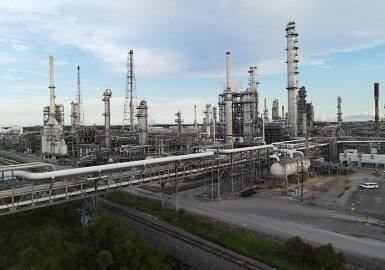
Professional Tunnel Fireproof Coating Construction Unit

Tunnel fire retardant coating: through mechanical spraying on the inner wall and vault surface of the tunnel, it can effectively prevent the strength of reinforced concrete in the tunnel from decreasing at high temperature, and prevent the concrete from bursting and the failure of the steel bar in the lining from losing its supporting capacity leading to the collapse of the tunnel.
Construction precautions:
1. Luoyang Baosheng Fire-proof Material Factory, which has many years of experience in fire-proof coatings during actual tunnel construction, suggests that the total thickness of tunnel fire-proof coatings should be selected according to the fire-proof limit of design requirements, and that the total thickness of tunnel fire-proof coatings should be painted several times in construction, and the thickness of each coatings should be controlled below 8 mm, the thickness of coatings should be uniform, and no pressing and polishing Keep rough surface.
The last coating thickness should not exceed 6 mm. The coating surface should be compacted, smooth and calendered. The interval between two coatings should be 12-24 hours (based on the dry hardening of the coating surface). If the interval is too long, the coating surface should be wetted by spraying water, the coating should be sticky between coatings, and there should be no empty coating on-line coatingol.com.
2. During the construction process, the constructors use probes to detect the thickness of tunnel fire retardant coatings at any time to meet the thickness requirements of construction and design. The coatings scattered during the coating process should be cleaned up before solidification. Fire-proof coatings should meet the design requirements of thickness, the negative deviation of the measured point thickness should not be greater than 2 mm. Fire-proof coatings should be firmly bonded with the base material, and should not be exposed, loose, delaminated and hollow.
When the coating is not fully encapsulated in the structure shape, the surrounding of the coating should be smeared densely. The appearance of fire-proof coating should be smooth and smooth. No leakage. The thickness deviation per meter should not be greater than (+2 mm) and cracks should not occur in coatings. If there are individual cracks, the crack width should not be greater than 1 mm.
3. When the coating of tunnel fire retardant coating reaches the designed thickness, it should be cured naturally for 28 days. During the curing period, if the weather is hot, dry, or directly irradiated by sunlight, the coating surface should be watered to prevent excessive evaporation of water, and should avoid impact and high-pressure water scouring.

You May Interested In


High Quality β-Nicotinamide adenine dinucleotide CAS 53-84-9 NADwith ready stock and best price
$3E+1/UNIT FOB


2026-10-26
Trade Alert
Delivering the latest product trends and industry news straight to your inbox.
(We'll never share your email address with a third-party.)

Related News
-
Fluorine-Free Superhydrophobic Coating Made from Cellulose Nanofibrils
-
Klil Expands Its Business: Builds An Advanced And Innovative Coating Plant
-
Vietnam Successfully Researched Nano-Heat-Insulating Reflective Coatings
-
BASF Expands and Upgrades Coating Defoamer Unit at Turkish Plant
-
Middle East Coatings Show 2024——The Largest Gathering for the Coatings Community in the Mena Region
-
PPG’s new paint for a new start initiative to decorate schools worldwide with colorful makeovers
-
The total investment is 8.8 million! The annual output of 30,000 tons of fireproof coating project is about to start!
-
Pacific coating show 2023
-
The total investment is 320 million yuan! The paint project with an annual output of 100,000 tons was put into operation in Nanyang
-
The global intumescent fireproof coatings market value is expected to reach USD 1.56 billion
Recommend Reading
-
![EU Greenlights Four GM Crops—But Only at the Border]()
EU Greenlights Four GM Crops—But Only at the Border
-
![Chevron Opens Oilfield Chemical Technology to Rivals]()
Chevron Opens Oilfield Chemical Technology to Rivals
-
![What Can $3.4 Billion Buy? Shin-Etsu Chemical’s Answer: Upstream Control of PVC]()
What Can $3.4 Billion Buy? Shin-Etsu Chemical’s Answer: Upstream Control of PVC
-
![Hormuz Reopening Signal: 155 Tankers Still Waiting]()
Hormuz Reopening Signal: 155 Tankers Still Waiting
-
![Glyphosate Faces New UK Pressure as EU Trade Alignment Returns to the Debate]()
Glyphosate Faces New UK Pressure as EU Trade Alignment Returns to the Debate
-
![March's rollercoaster ride of isooctanol prices surge and then plunge: What will the future market trend be in China?]()
March's rollercoaster ride of isooctanol prices surge and then plunge: What will the future market trend be in China?
-
![March 12 Pure Benzene Market Price Rises]()
March 12 Pure Benzene Market Price Rises
-
![A New Weapon Against Spider Mites: Canada Moves to Approve Novel Miticide for Greenhouse Growers]()
A New Weapon Against Spider Mites: Canada Moves to Approve Novel Miticide for Greenhouse Growers
-
![This week, the price of 180CST fuel oil in China saw a slight decline]()
This week, the price of 180CST fuel oil in China saw a slight decline
-
![Premium Global Chemical Sourcing Requests (3 - 11 Mar, 2026)]()
Premium Global Chemical Sourcing Requests (3 - 11 Mar, 2026)