




What is the impact of the out-of-control epidemic in India on the chemical industry?
According to news from the "Times of India" on the 28th, in the past 24 hours, India has added 3,286 covid-19 deaths. So far, India's new coronary pneumonia deaths have exceeded 200,000. According to the report, this is the first time since the outbreak of the epidemic in India that there have been more than 3,000 deaths in a single day.
01
India's second wave of epidemic intensifies, and the medical system is on the verge of collapse
Due to the deteriorating epidemic, the number of deaths from new coronary pneumonia has increased sharply, and many remains "queued for cremation." Some relatives of the deceased had to burn their loved ones' bodies on their own because they had to wait 12 hours in line. In parks, along the streets, and along the banks of the Ganges, there are fires and pits for corpses.
At present, public and private hospitals across the country are facing difficulties such as tight clinical positions and urgent medical oxygen. Many hospitals in the north and west, including the capital New Delhi, have issued warnings that the oxygen used to supply patients with the new crown is only sufficient for a few hours.
Indian health officials admitted that India’s medical equipment has been overwhelmed and hoped that the Indian government could increase the supply of medical oxygen in the next few days.
02
The production of the COVID-19 vaccine was blocked because of the urgent shortage of medical plastic bags
As the "world factory" of the vaccine industry, India produces 60% of the world's vaccines. The Serum Institute of India is the world's largest vaccine production organization. Currently, it is mainly responsible for the production of two new coronary pneumonia vaccines, AstraZeneca and Novavax. But now, the Serum Institute is suffering from the shortage of raw materials for vaccine production.
Novavax CEO Stan Erck said that the shortage of medical plastic bags with a capacity of 2,000 liters for vaccines poses a threat to the global vaccine supply.
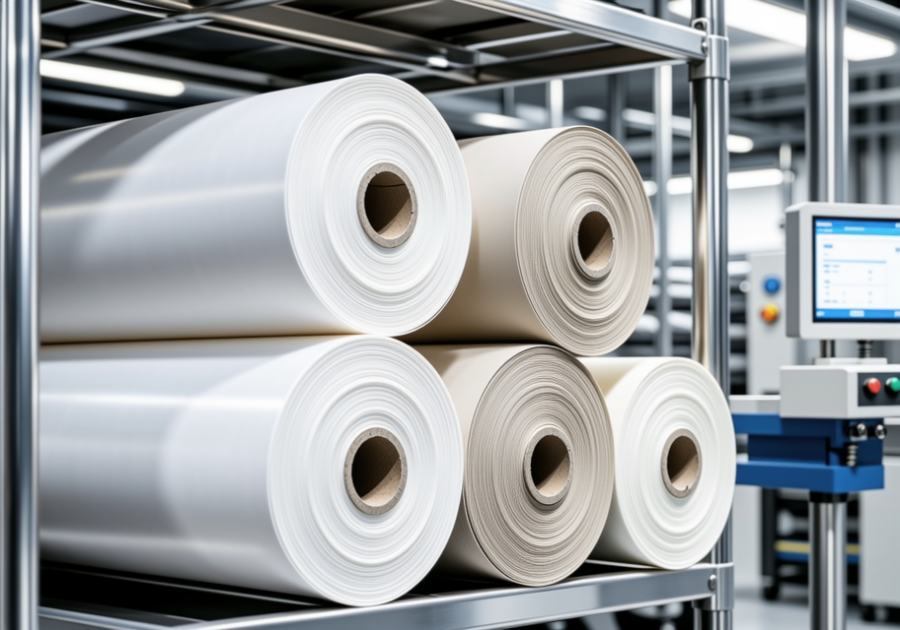
According to the "Financial Times" report, medical plastic bags banned from export by the US government are used as sterile linings when producing vaccines. At present, the world's major COVID-19 vaccine manufacturers, including Pfizer, Modena, and Novax, use this kind of plastic bags to store vaccines during the vaccine production process.
Take the mRNA vaccine developed by Pfizer as an example. Scientists put DNA and genetic components into an incubator to produce the required mRNA. Then the scientists put the purified mRNA into a special plastic bag for freezing. The mRNA stored in a medical plastic bag can produce about 5-10 million doses of the new crown vaccine.
Major producers of this kind of plastic bags include Millipore Sigma, a subsidiary of Merck, and Thermo Fisher Scientific, both of which have factories in the United States. Although both companies stated that they have done their best to increase production capacity, they are still unable to meet demand.
Modena CEO Stephane Bancel once said that under the 24-hour shift system, any kind of raw material shortage on any day will cause vaccine production to stagnate, and the lost capacity will never be able to make up.
03
Will the epidemic in India impact the global economy?
Since the scale of imports and exports accounts for a relatively low proportion of the world, only some industries such as energy, chemical industry, and textiles have a relatively high trade share. The overall impact of the epidemic in India on the global economy is limited. As of 2019, India's overall import and export scale accounted for only 2.1% of the world's total, far less than other large economies such as China, the European Union, and the United States.
04
Supply of dyes and pigments is blocked, leading companies are expected to usher in both volume and price increases
In 2019-2020, India has a total production capacity of 528,000 tons of dyes and pigments, achieving 384,000 tons of dyes and pigments. Among them, the production capacity of reactive dyes, disperse dyes and organic pigments are 195,000 tons, 75,000 tons and 88,000 tons, respectively, and the output is 157,000 tons, 62,000 tons and 75,000 tons respectively. my country currently has 455,000 tons and 580,000 tons of reactive dyes and disperse dyes, respectively. In 2020, the production of reactive dyes and disperse dyes will be 283,000 tons and 408,000 tons respectively. According to data from Baichuan Yingfu, as of April 27, the domestic price indices of reactive dyes and disperse dyes were 22 yuan/kg and 25 yuan/kg, respectively, and the prices of the two dyes were both at the lower level since 2017. Under the premise of the continued impact of the Indian epidemic, the supply of dyes and pigments in India will be significantly affected, but the downstream demand for dyes in other regions of the world is gradually recovering, and orders for dyes and pigments are expected to shift to domestic companies. Domestic dyes and pigments Leading companies are expected to benefit, ushering in both volume and price increases.
05
The impact of the epidemic on the chemical fiber industry remains to be seen, positive and negative expectations coexist
India is the second largest textile manufacturer and exporter in the world after China. As the epidemic worsens, the start of operations of local textile companies in India will be significantly affected. At present, a large number of textile orders from Europe and the United States have been transferred, and Chinese companies have received them. Return orders. The increase in the number of orders of downstream textile companies will obviously drive the prosperity of the upstream chemical fiber industry, and the purchase of domestic chemical fiber and other raw materials is expected to increase. But at the same time, due to its large population, India itself is also a big demand country for the textile and apparel industry. If the epidemic continues to worsen and the Indian government starts to restrict the movement of people, it will cause a decline in India’s own textile and apparel demand, and the overall textile and apparel orders will be somewhat different. The decline has led to a decrease in the enthusiasm of downstream companies for purchasing raw materials, resulting in a backlog of upstream companies’ inventory and forced price reductions to promote their profitability.
06
India's epidemic continues to worsen, oil demand may be dragged down
India is the world’s third largest crude oil importer and a major oil consumer. In 2019, India’s average daily oil demand exceeded 7 million barrels, accounting for about 7% of global oil demand; in 2020, India’s average daily oil demand was 4.33 million barrels, accounting for About 5% of global oil demand. As one of the major oil consumers in the world, India has been caught in the epidemic crisis for several days, and the market is skeptical about the recovery process of global oil demand. On the other hand, global crude oil supply capacity is relatively sufficient. In early April, OPEC+ decided to increase crude oil production by 350,000 barrels/day, 350,000 barrels/day, and 441,000 barrels/day in May-July. The market currently expects that OPEC+ may maintain a gradual increase in production at the May meeting. At the same time, US crude oil production basically remained at 11 million barrels per day. According to OPEC's forecast, the supply of crude oil from non-OPEC countries will increase by nearly 1 million barrels per day in 2021, reaching an average of 63.8 million barrels per day.
07
Costs are soaring, Teijin PC rises by another 9,700 CNY/ton
Teijin Co., Ltd. announced on the 23rd that although it had announced some product increases on March 1, due to the soaring cost of bisphenol A, the prices of some accessories such as PC/ABS and ABS resins continued to soar and the ocean freight costs continued to rise. The price of PC is adjusted upwards, and the price increase will take effect on May 1st:
PANLITE® (PC-based resin) increased by USD 1.5/kg (equivalent to RMB 9728.9/ton)
MULTILON® (PC-based alloy resin) increased by USD 1.5/kg (equivalent to RMB 9728.9/ton)
Take PC/Taiwan Chi Mei/110 as an example. The price on March 22 was 22,200 CNY/ton. After only 6 days, the price has exceeded 26,000 CNY/ton, an increase of 3800 CNY/ton, an increase of 17.1%.
The plastics industry has been so confident in announcing price increases, even "tearing up" the contract, and the quotation "voiding", which has never been seen before in recent decades. Looking at the price increase this year, we can see that hundreds of plastic companies such as Teijin, SABIC, BASF, Wanhua Chemical, Polyplastics, etc. have sent letters to increase the price, and some companies have increased the price more than twice, breaking people’s preconceptions. Awareness has also subverted the plastic industry’s long-standing "price stability" pattern.
From an industry perspective, if the Indian epidemic continues to get out of control, exports from China's chemical, textile, and steel industries may benefit from production capacity replacement and be boosted. In India’s exports, plant fibers, chemical fibers, textiles, and footwear all account for more than 8% of the world’s exports, and grains, optical and medical equipment, and steel, etc., also account for more than 5% of the world’s exports. If the Indian epidemic continues to get out of control, leading to the stagnation of production activities related to the export chain, China's exports of chemicals, textiles, and steel may directly benefit. On the one hand, it is because the production capacity of these industries in China has been completely restored; on the other hand, the export competitiveness of these industries in China has always been among the highest in the world.

You May Interested In


High Quality β-Nicotinamide adenine dinucleotide CAS 53-84-9 NADwith ready stock and best price
$3/UNIT FOB


2026-10-17
Trade Alert
Delivering the latest product trends and industry news straight to your inbox.
(We'll never share your email address with a third-party.)

Related News
-
Business Society October 12, 2026 Cyclohexanone Trend Analysis: Volatile with a Slight Bullish Bias
-
BASF-Evonik Takeover Faces Political Resistance as German State Defends Jobs and Independence
-
Evonik to Cut 3,200 Jobs Globally as Restructuring Deepens Across German Operations
-
Business Society September 23, 2026 Phthalic Anhydride Trend Analysis: Clear Decline
-
Business Society September 23, 2026 Phenol Trend Analysis: Weakly Tending
-
Two Contractors Hospitalized After Deflagration at BASF Ludwigshafen Site
-
UK Opens Formal Review of AkzoNobel–Axalta $25 Billion Merger
-
Business Society’s Market Outlook for Acrylonitrile on September 9, 2026: Clearly Downward
-
Business Society’s September 2, 2026 Styrene Market Outlook: Clearly Upward Trend
-
Business Society’s Market Outlook for Acrylic Acid on August 26, 2026: Clearly Upward Trend
Recommend Reading
-
![Synthomer Sells Its Last Upstream Chemical Business]()
Synthomer Sells Its Last Upstream Chemical Business
-
![Wuxi Yinda Nylon Acquires German Century-Old Chemical Giant Perlon]()
Wuxi Yinda Nylon Acquires German Century-Old Chemical Giant Perlon
-
![Toxic Ammonia Leak Prompts Emergency Response in Mississippi]()
Toxic Ammonia Leak Prompts Emergency Response in Mississippi
-
![Lanxess Reports Challenging Third Quarter Amid Weak Global Demand and Geopolitical Uncertainty]()
Lanxess Reports Challenging Third Quarter Amid Weak Global Demand and Geopolitical Uncertainty
-
![EU Blocks Entry of Chinese Food Supplement Due to Unauthorized Ingredient]()
EU Blocks Entry of Chinese Food Supplement Due to Unauthorized Ingredient
-
![This week, the caustic soda price was weak (4.13-4.17) in China]()
This week, the caustic soda price was weak (4.13-4.17) in China
-
![Business Society’s PTA Market Outlook for August 24, 2026: Volatile]()
Business Society’s PTA Market Outlook for August 24, 2026: Volatile
-
![Polyester bottle chip prices showed overall volatility and weakness this week, with a slight rise followed by a decline within the week in China]()
Polyester bottle chip prices showed overall volatility and weakness this week, with a slight rise followed by a decline within the week in China
-
![Business Society’s Market Outlook for Polyester Staple Fiber on August 24, 2026: Volatile]()
Business Society’s Market Outlook for Polyester Staple Fiber on August 24, 2026: Volatile
-
![This Week's Activated Carbon Prices Decline (6.1-6.5) in China]()
This Week's Activated Carbon Prices Decline (6.1-6.5) in China





- Hot Searches
- draw the structure of 3 4-dimethyl-1-pentene
- trisodium phosphate where to buy
- hydroxypropyl cellulose price
- where to get reta peptides
- n-isopropylbenzylamine for sale
- na 931 buy online
- eriochrome black t msds
- trifluoroacetic acid
- tetramethyl butane
- amopeptide
- potassium cyanide purchase
- where can i get retatrutide