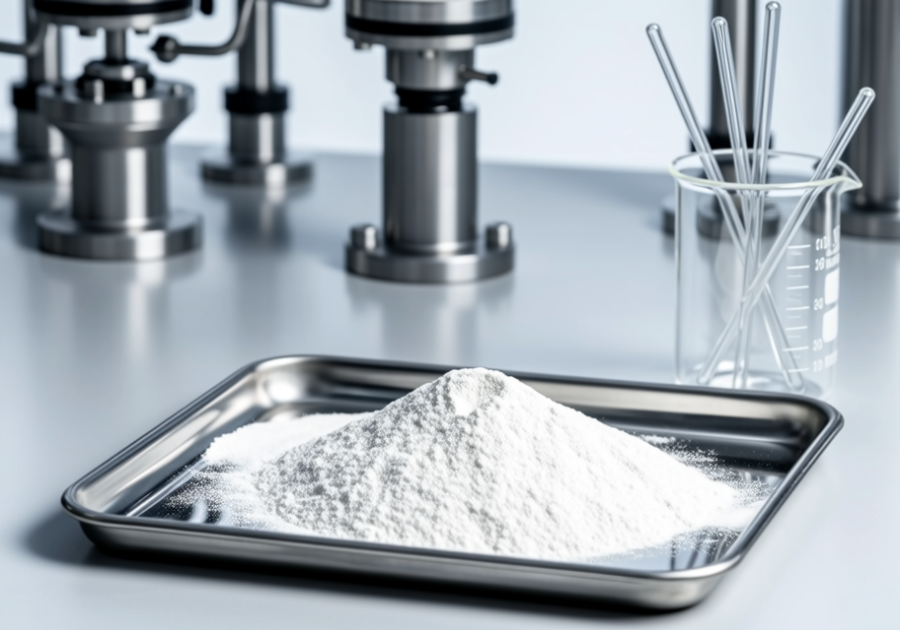
How long can titanium dioxide remain 'white'?
On September 1, 2021, Brazil's ANVISA (Agência Nacional de Vigilância Sanitária) held a webinar on food additives, titanium dioxide. The event was hosted by Dr. Thalita Antony de Souza Lima (ANVISA board member) and discussed the evidence on the toxicity of edible titanium dioxide.
This discussion is based on the conclusion issued by the European Commission not long ago that “it is no longer considered safe to use TITANIUM dioxide as a food additive”, and the Brazilian authorities decided to launch a scientific investigation on this.
Next, let's take a look at this coloring agent-Titanium dioxide (Titanium dioxide).
Overview of Titanium Dioxide
Friends who have done some research on cosmetic ingredients may be very familiar with titanium dioxide. Because of its excellent light scattering, whiteness, and better stability, titanium dioxide is a common sunscreen ingredient. In addition, toothpaste is also one of the daily products in which titanium dioxide is widely used.
It is also due to the excellent light scattering properties of titanium dioxide, which makes it a kind of food coloring, and can also be used for medicine or capsule coating to prevent its premature degradation. The main food categories that use titanium dioxide (E171) are baked goods, soups, sauces and processed nuts.
However, with the rapid development of the chemical industry, nano-sized titanium dioxide has appeared and has been more widely used in food and cosmetics. Many scientific research institutions and scholars have questioned its safety.
Global usage regulations
Let's take a look at the regulatory status of titanium dioxide in various countries/regions around the world.
France
France is the first country in Europe to ban titanium dioxide in food. As early as January 2017, the French Institute of Agriculture (INRA) released a study on food additive E171. It emphasizes that non-malignant, pre-tumor-like lesions were found in the colon of rats fed with TiO2 nanoparticles. The French Food Safety Agency (ANSES) was commissioned by the French Ministry of Health, Consumption and Agriculture to evaluate the INRA report and make recommendations on the potential dangers of TiO2. It confirms the carcinogenic effects of TiO2 nanoparticles that have not been evaluated before, as highlighted in the INRA research report, and suggests that further research should be conducted. Therefore, ANSES recommends that the European Chemicals Agency (ECHA) classify TiO2 as a substance that may cause cancer through inhalation. At the same time, ANSES also launched a risk assessment within the REACH framework in 2018. The relevant ban was announced in April 2019 and will be implemented in January 2020.
Previously, titanium dioxide has been widely used in industrial processed cakes, instant foods, chocolate and even candy.
European Union
On May 6, 2021, the European Food Safety Authority (EFSA) updated its safety assessment of the food additive TiO2 (E171). As concerns about the genotoxicity of TiO2 particles cannot be ruled out, EFSA experts no longer believe that titanium dioxide is safe when used as a food additive. This means that an acceptable daily intake (ADI) cannot be established for E171.
One month later, the European Food Safety Authority (EFSA) continued to update their assessment of the safety of titanium dioxide in feed, following the same conclusion that it is no longer considered safe to add titanium dioxide to feed.
The above regulations will not cause the entire EU to immediately ban the use of titanium dioxide as a food additive.
In addition, from October 1, 2021, the new EU list of banned and restricted substances in cosmetics will also come into effect, among which titanium dioxide has also been added as a restricted substance.
China
At present, it has not been listed in the catalog of hazardous chemicals and can be used as a legal food additive. And on February 22, 2021, the new GB 1886.341-2021 Standard was released and officially started to be implemented on August 22. Compared with 2020, the standard has adjusted the following aspects.
Modified scope
Deleted the smell requirements and inspection methods in the sensory requirements
Modified the arsenic index
Modified the water-soluble substance inspection method;
Deleted heavy metal indicators and inspection methods;
Added lead indicators and inspection methods
Modify the arsenic inspection method to GB 5009.76 or 5009.11
other
As early as 2006, the International Agency for Research on Cancer (IARC) listed titanium dioxide as a 2B carcinogen. Category 2B generally refers to the possibility of carcinogenicity to humans. There is insufficient evidence to prove that it is carcinogenic to laboratory animals, and there is insufficient evidence of carcinogenicity. Subsequently, South Korea, Canada, and Japan also classified it as the second category of carcinogenicity.

You May Interested In


Glow70/KLOW80 99% China Peptides Warehouse Direct Delivery Lyophilized Powder in Stock
$169/UNIT FOB


2026-10-18
Trade Alert
Delivering the latest product trends and industry news straight to your inbox.
(We'll never share your email address with a third-party.)

Related News
-
China’s TiO₂ Industry Launches Sixth Price Hike Wave as More Than 20 Producers Follow
-
This Week's Titanium Dioxide Prices in China Decline (8.17-8.21)
-
This Week, China's Titanium Dioxide Market Trended Downward (7.10-7.17)
-
In April, China's titanium dioxide market price increased by 23.6%
-
25 Companies Raise Prices Three Times Within a Month: China’s Titanium Dioxide Industry Shifts from “Price Wars” to a “Pricing Alliance”
-
On March 24, China's titanium dioxide market prices increased
-
January China Titanium Dioxide Market Prices Increase
-
On January 15, China's titanium dioxide market remains firm and upward
-
Understanding Titanium Oxide: Properties and Uses
-
September China's titanium dioxide market sees steady growth with some increases
Recommend Reading
-
![South Korea’s Largest Petrochemical Hub Moves to Cut Cracker Capacity by 40%]()
South Korea’s Largest Petrochemical Hub Moves to Cut Cracker Capacity by 40%
-
![Pakistan Launches Successive Anti-dumping Investigations against Chinese Products, Involving Soda Ash, Ibuprofen and Other Raw Materials]()
Pakistan Launches Successive Anti-dumping Investigations against Chinese Products, Involving Soda Ash, Ibuprofen and Other Raw Materials
-
![FDA Revokes Orange B Authorization and Proposes Removing Citrus Red No. 2]()
FDA Revokes Orange B Authorization and Proposes Removing Citrus Red No. 2
-
![EFSA’s Updated Food-Additive Application Guidance Takes Effect]()
EFSA’s Updated Food-Additive Application Guidance Takes Effect
-
![India Approves ₹30.3 Billion Chemical-Park Scheme to Build Three Mega Industrial Hubs]()
India Approves ₹30.3 Billion Chemical-Park Scheme to Build Three Mega Industrial Hubs
-
![Soda Ash Market Trends Remain Stable]()
Soda Ash Market Trends Remain Stable
-
![Business Society September 30, 2026 Hydrogen Peroxide Trend Analysis: Volatility]()
Business Society September 30, 2026 Hydrogen Peroxide Trend Analysis: Volatility
-
![Ammonium Sulfate Market Trend in October Shows a Strong Increase in China]()
Ammonium Sulfate Market Trend in October Shows a Strong Increase in China
-
![September Pure Benzene Market Overview (September 1, 2026 - September 30, 2026) in China]()
September Pure Benzene Market Overview (September 1, 2026 - September 30, 2026) in China
-
![Supply and Demand Game: Flexible Trends in the Chinese Melamine Market]()
Supply and Demand Game: Flexible Trends in the Chinese Melamine Market